Chislehurst
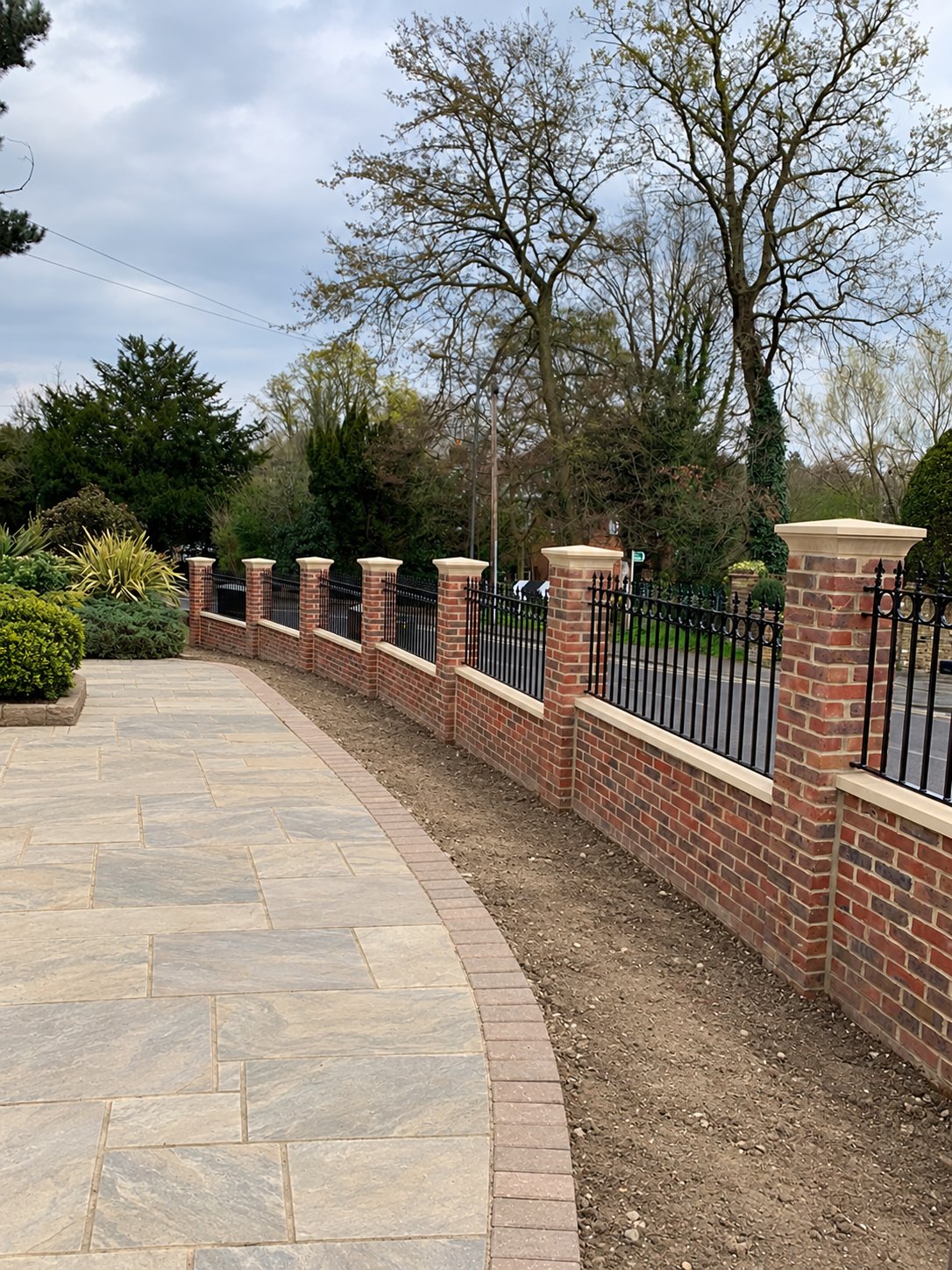
Brick piers, stone coping and railings
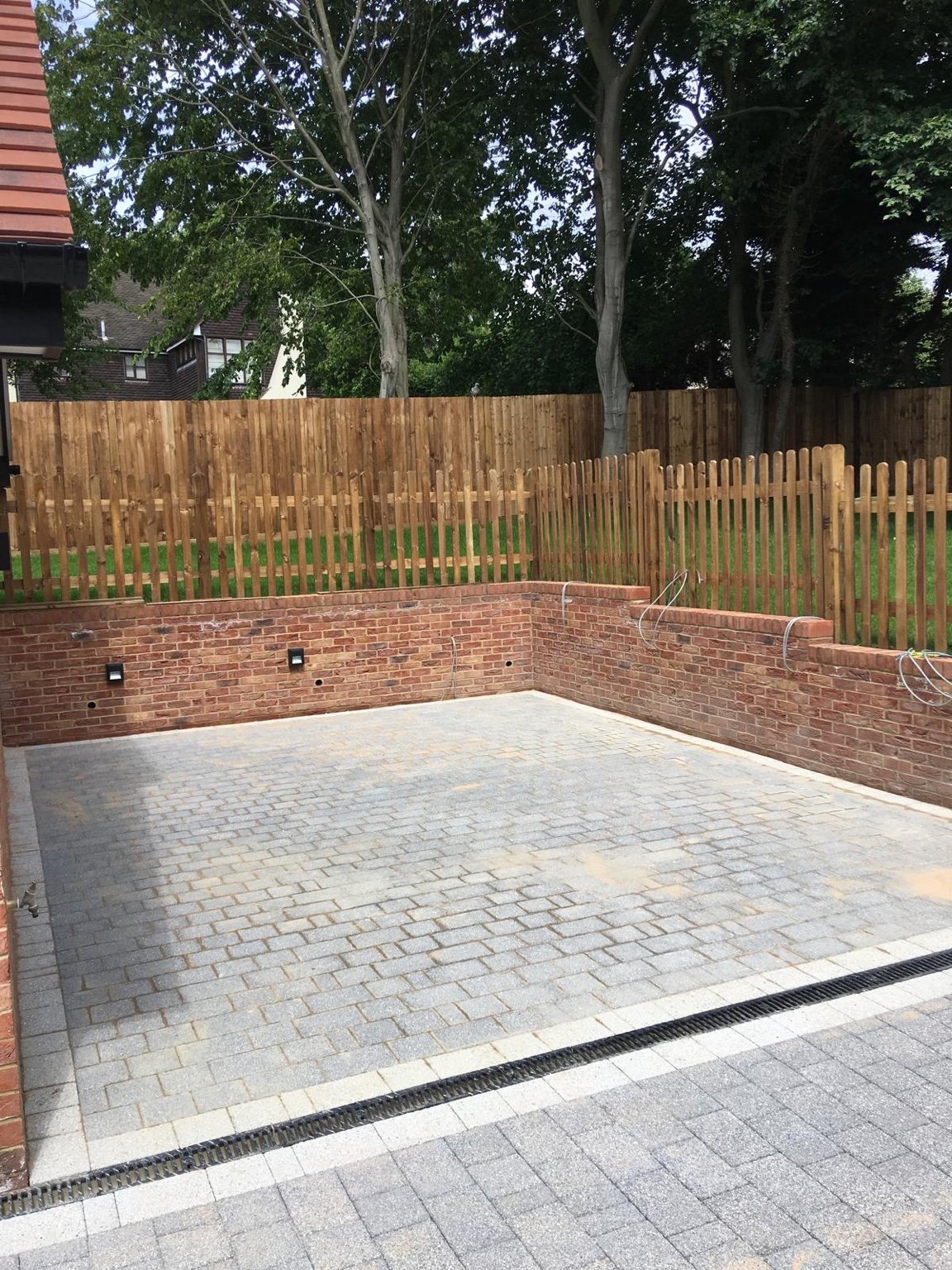
A brick boundary with pale stone coping and pier caps, finished with decorative railing panels.
View Chislehurst projectNEW LAWNS · TURF SUPPLY & LAYING · RETURFING
Landscape Gardener of Kent provides turf supply and laying in Margate, for new gardens, lawn replacements and landscaping projects. We plan the growing surface, finished levels and lawn edges before fresh turf is laid. The work includes the preparation agreed for your garden, with guidance on watering and letting the grass establish.
For a lawn after building work, a garden makeover or a replacement lawn, send your postcode, approximate dimensions and photographs. Include the access route and any wet or shaded patches for a free, no-obligation turfing quote.
For gardens in Margate, Cliftonville, Garlinge and Westbrook, start by showing the whole lawn and the route from the street to the garden. A worn family lawn, bare ground after building work and isolated damaged patches need different amounts of preparation. Mark healthy grass you want to keep and photograph recurring wet spots, exposed roots and dips.
Tell us how the space is used: pets and play, an open seating lawn or a smaller area between beds and paving. Show shade from buildings and fences, the narrowest access point, steps and where water is available. Exposure and the existing soil need assessing at your property; a postcode alone cannot tell us how your lawn will grow.
If the route to a gate or shed repeatedly wears bare, consider a paved walking route alongside the new lawn. Agree the areas for repair, replacement and retention before comparing quotes.
Preparation for a Margate turfing project starts with the growing soil, existing grass and surrounding levels. Turf can be laid on existing soil when it has been properly prepared. That means dealing with weeds and debris, loosening compaction, creating suitable levels and a firm, even growing surface. Fresh rolls are not a substitute for those steps. Agree how the old surface, weeds and debris will be removed, and how compacted or disturbed soil will be prepared. If builders have recently used the garden, show us the access track and any areas containing rubble or excess material.
The amount of extra topsoil depends on the existing growing layer and the levels being created. Do not assume every garden needs a standard 100–150mm layer of new topsoil. Assess the existing growing soil, compaction and finished levels first. Extra soil must have a purpose; raising a lawn unnecessarily can leave awkward joins with paving and beds. Turf delivery should follow completed preparation, with the laying team and watering arrangements ready.
Take photographs after rain if the lawn regularly holds water. Explain where water enters the area and whether neighbouring paving or higher ground contributes runoff. New rolls of grass will not correct the cause of pooling; any additional drainage belongs in the agreed scope.
Agree edges against patios and beds before changing the ground height. The lawn should connect comfortably to the rest of the garden while allowing water to be managed appropriately. Significant changes of level may require garden steps or retaining features rather than adding soil without considering the surrounding features.
A supply-and-lay quote covers more than the turf rolls. The amount of clearance, soil work, waste and levelling affects the installed cost, as does access for moving materials. A small lawn with substantial preparation can require more work than a larger area of suitable, prepared soil.
For example, a 5m by 8m lawn has a finished area of 40m². Compare a complete replacement quote against laying onto ground that is already prepared: both cover the same area, but the work differs. Ask for the ordered turf quantity and cutting allowance separately. If a rate covers all the agreed installation work, multiplying it by 40 gives the area-based subtotal; confirm VAT, minimum charges and separately priced items before treating that as the final total. This is a calculation example, not a quoted rate for your garden.
Compare quotes listing the turf specification, removal, soil work, additional materials, disposal, laying, VAT treatment and aftercare. Ask what is excluded and how unexpected ground conditions will be handled. Send dimensions and photos for a free turfing quote for your garden rather than relying on a headline price per square metre.
Measure rectangles individually and add their areas, leaving out retained paths and beds. For curved edges or several narrow strips, share a sketch and photographs rather than assuming the outer rectangle is all lawn. Keep measurements in metres so the resulting area is in square metres.
For the 40m² example, check the supplier’s stated roll coverage before calculating the number of rolls. Include cutting allowances appropriate to the layout. Do not order turf while clearance or soil work is still unresolved: delivery, preparation and laying need to follow an agreed sequence.
A square metre describes the area covered, not a complete installation service. A supplier’s advertised price for turf depends on the grass specification, order quantity and delivery. Measure in square metres: a rate per linear metre does not tell you lawn coverage unless the width is stated. Check a current supplier price for the exact product; it does not include the work needed to prepare your garden and lay it. Confirm the area covered by each roll rather than assuming every roll is exactly 1m².
Ask whether a quoted rate is for turf supply only, laying onto already prepared ground, or the complete replacement of your lawn. A low material price cannot tell you the cost of clearing, preparing and finishing your garden. Small orders may also be affected by delivery charges or minimum quantities. We quote for the installation scope at your property.
B&Q lists different natural lawn turf products and pack sizes, so there is no single price for turf there. Compare the named product, total pack coverage, delivery charge and availability for your postcode. Make sure the listing is fresh natural turf rather than artificial grass or a seeded lawn mat.
Check B&Q’s current lawn turf listings when ordering. The retailer’s supply price is separate from our preparation and installation quote. Do not use the price of a turf pack as the total for removing and replacing your lawn.
One square metre is an area 1m long by 1m wide. To compare supply prices, divide the pack price by its stated coverage. For example, a hypothetical £200 pack covering 40m² costs £5 per m² before any separate delivery charge. This is a calculation example, not a current supplier price or our fitted rate.
Confirm roll coverage and order quantities with the supplier. Your lawn may need additional turf for cutting around curves and borders, and minimum orders or delivery can affect a small purchase. Preparation, soil materials and laying are separate unless the written quotation includes them.
Once the prepared ground is settled, firm and level, fresh turf is fitted with close joints and staggered seams. Edges are trimmed to the agreed shape around paths, beds and retained features. Delivery and laying need coordinating so rolls are not left stored while preparation is still underway.
Tell us whether the lawn is intended for family play, pets or a quieter seating garden, and photograph shade from fences or trees. Discuss the turf specification for sun, shade and expected wear. A lawn used for family play has different priorities from a fine ornamental area; choosing grass cannot remove the effects of persistent shade or poor ground conditions.
Show how shade changes across the garden and tell us whether the lawn is used for pets, play or a quieter seating space. Ask for the named turf specification and its intended use. A grass mix selected for some shade does not remove the effects of persistent deep shade or unsuitable soil.
Where the same route repeatedly wears bare, consider a path or stepping route rather than relying on a new lawn to withstand exactly the same concentrated traffic. Keep planting and useful access in the plan, and compare patch repairs with whole-lawn replacement where healthy grass can remain.
The RHS recommends mid-autumn, with turf laying possible into early spring when the soil is neither excessively wet nor frosty. Hot, dry conditions make establishment more demanding, so timing needs to account for weather and watering.
Allow time for preparation before scheduling fresh turf. Choose a period when someone can look after the lawn, rather than immediately before a holiday. See the RHS guide to creating a lawn from turf for seasonal guidance.
Before delivery, identify who will look after the new lawn and make sure water can reach its full area. Include distant corners and strips beyond a patio. Show the tap location and any access restrictions in your enquiry; a new lawn needs care after the laying team leaves.
Check your own water supplier’s current watering rules when planning the work. Arrange delivery for a period when you can provide suitable establishment care, and discuss postponing if that care cannot be organised. Tell us about holidays, pets and routes that must stay usable.
Before laying, check that the hose reaches every part of the lawn and agree who will water it. Moisture needs to reach beneath the turf, not just wet the blades. Follow the handover guidance and check actual conditions; rainfall, warmth and wind affect what the lawn needs.
Give the roots time to establish before regular use. Plan another route to gates or storage and keep children and pets off the new surface during establishment. Mow only once rooted sufficiently, starting with a high blade setting. Agree readiness from the condition of the lawn rather than a fixed handover date.
Measure the narrowest gate or passage and mention steps, steep sections and any route through the house. Materials and removed soil may need to be moved by hand; those access details help us quote for the actual work. Tell us whether the lawn must be completed alongside a patio or other landscaping so the sequence can be agreed. For a wider garden project, explore our Margate landscaping services.
Mid-autumn is generally a good time. Laying can continue into early spring when ground conditions are suitable. Avoid excessively wet or frosty soil, and discuss the watering needed if work is planned in warmer weather.
Confirm whether the rate covers supply only, laying on prepared ground or complete lawn replacement. The total depends on clearance, soil work, levels, access, turf and disposal. A measured area such as 40m² helps calculate quantities, but cannot establish all the installation work.
Ask whether the quote covers supply, laying on prepared soil or full lawn replacement. Clearance, soil preparation, levels, access, disposal and turf specification affect the total. Compare written quotes for the same scope.
The price varies with product and pack coverage. Check the current retailer listing for fresh natural turf, delivery and postcode availability. A turf supply price does not include preparing and laying your garden.
Divide the supply pack price by its stated area to compare cost per square metre. Check delivery, minimum quantities and cutting allowances. One square metre is 1m by 1m; roll coverage and installation cost need separate confirmation.
Our installation scope should identify turf supply and laying alongside the preparation agreed for your garden. Check the written quotation for soil work, disposal and any additional items before booking.
Yes, on a suitable prepared growing surface. First remove weeds and debris, address compaction, settle and level the ground, and agree the finished lawn height. Simply rolling turf over untreated soil or old grass leaves underlying problems in place.
Not every garden needs additional topsoil. Existing soil quality, the growing layer and the required finished level determine whether extra soil is appropriate.
Fresh turf alone will not cure an underlying drainage problem. Wet areas should be assessed before laying, with any necessary additional work included in the agreed scope.
Wait until the turf has rooted sufficiently and follow the handover advice. Avoid heavy use while it establishes and use a high blade setting for the first cuts; timing varies with growing conditions.
Natural turf needs mowing and care as a living lawn. A synthetic surface needs a constructed base and ongoing cleaning. If you are comparing the options, see our artificial grass installation in Margate page and discuss the ground conditions, use and upkeep you want.
MORE IN MARGATE
Explore the other work available in Margate.
OUR WORK · KENT
Chislehurst
A brick boundary with pale stone coping and pier caps, finished with decorative railing panels.
View Chislehurst projectSt Margaret’s Bay
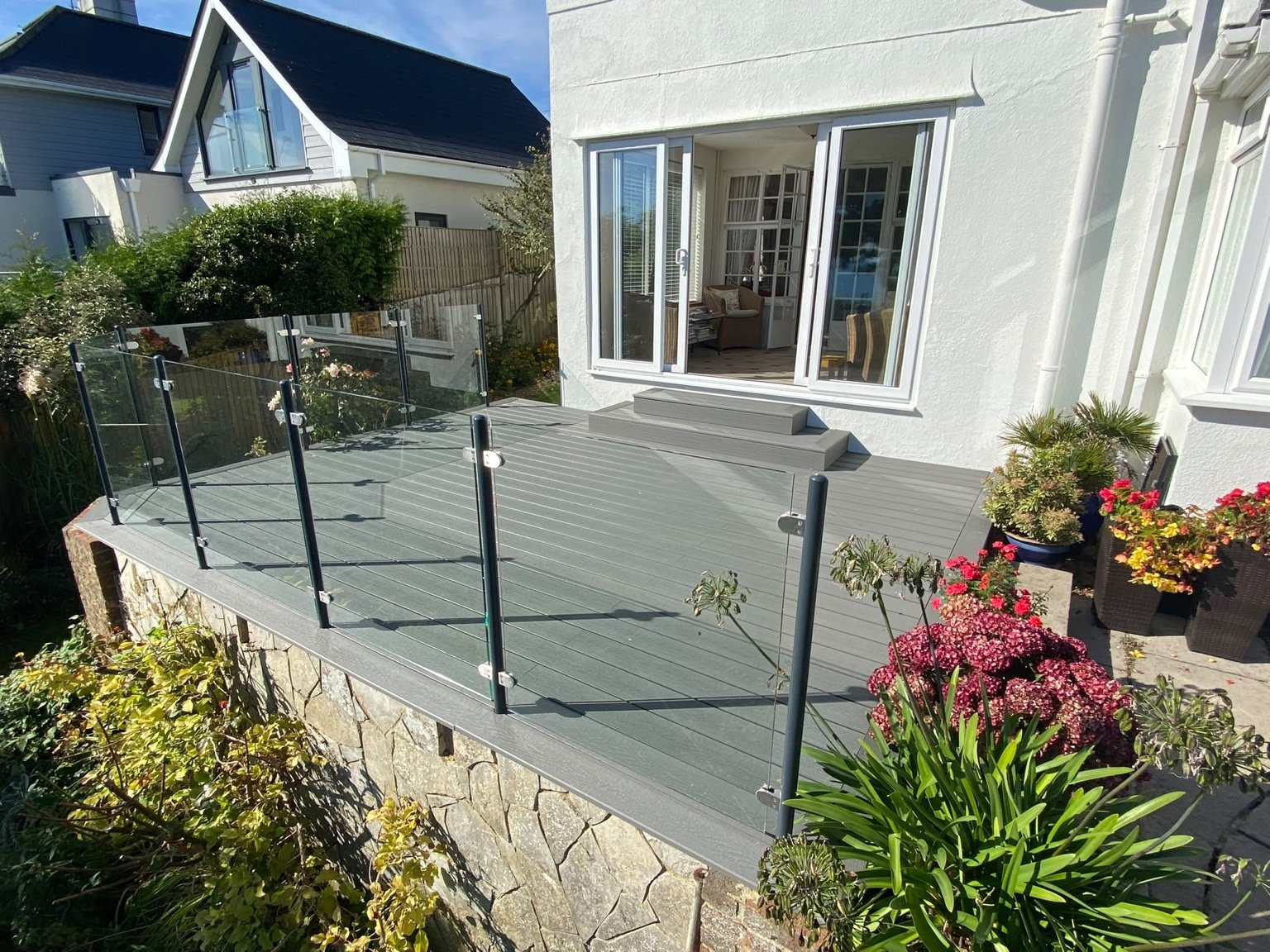
Grey composite decking, glass panels, powder-coated steel posts and matching steps.
View St Margaret’s Bay projectFolkestone
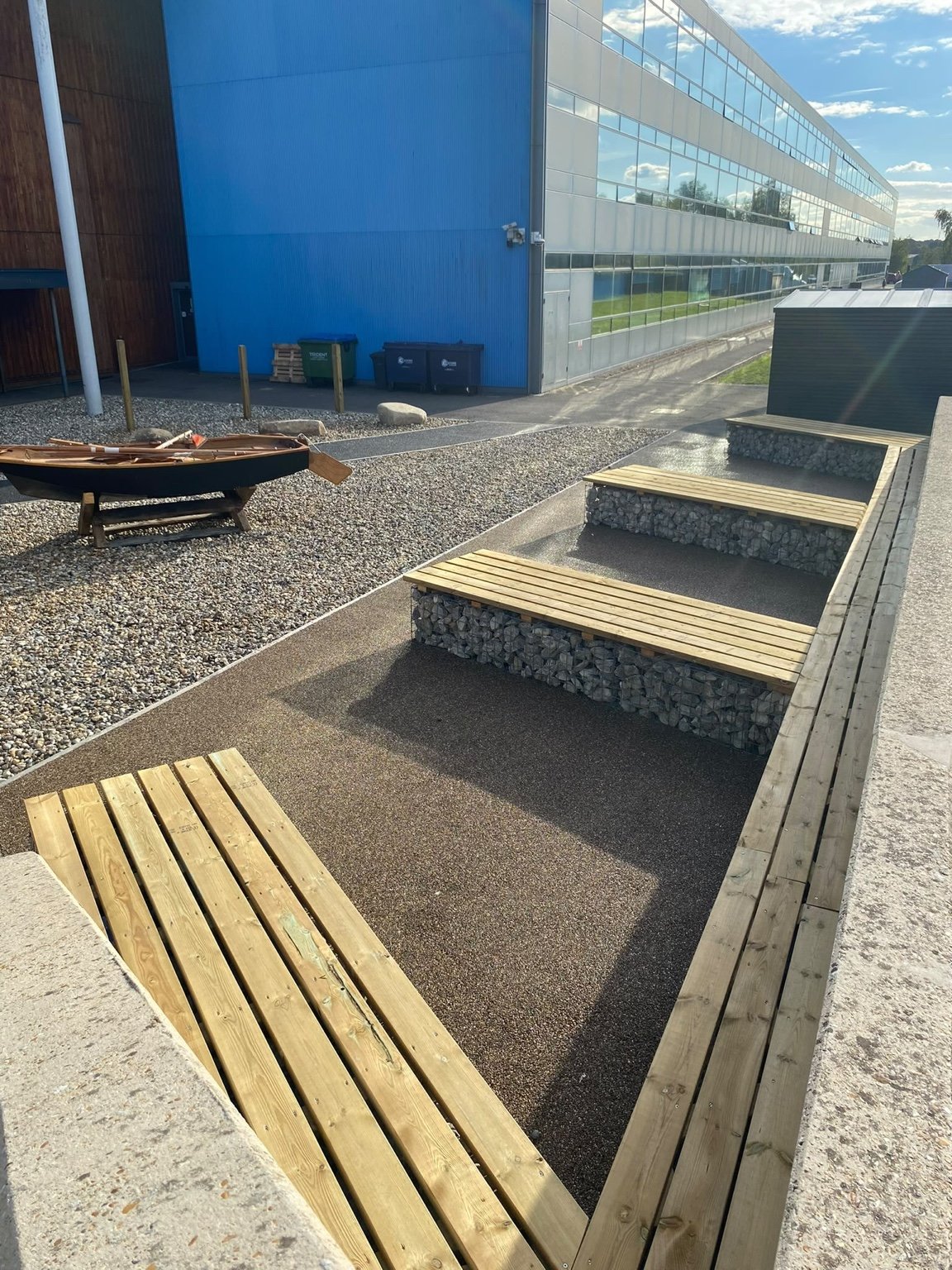
Timber-topped gabion benches, resin-bonded surfacing, shingle and a boat feature at the academy entrance.
View Folkestone projectCanterbury
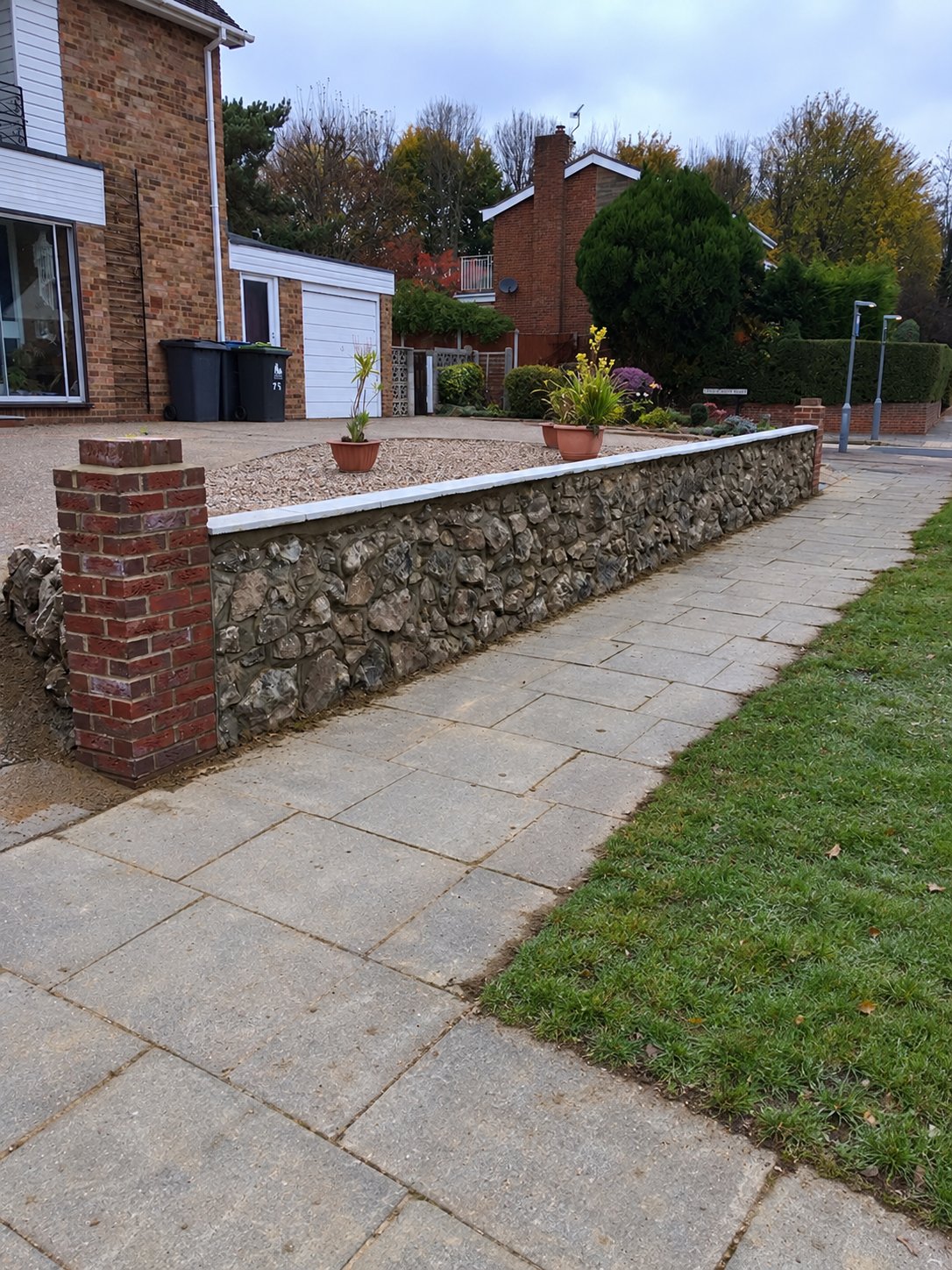
The stones from a customer’s late husband’s rockery kept and reused in a new front wall.
View Canterbury projectCanterbury
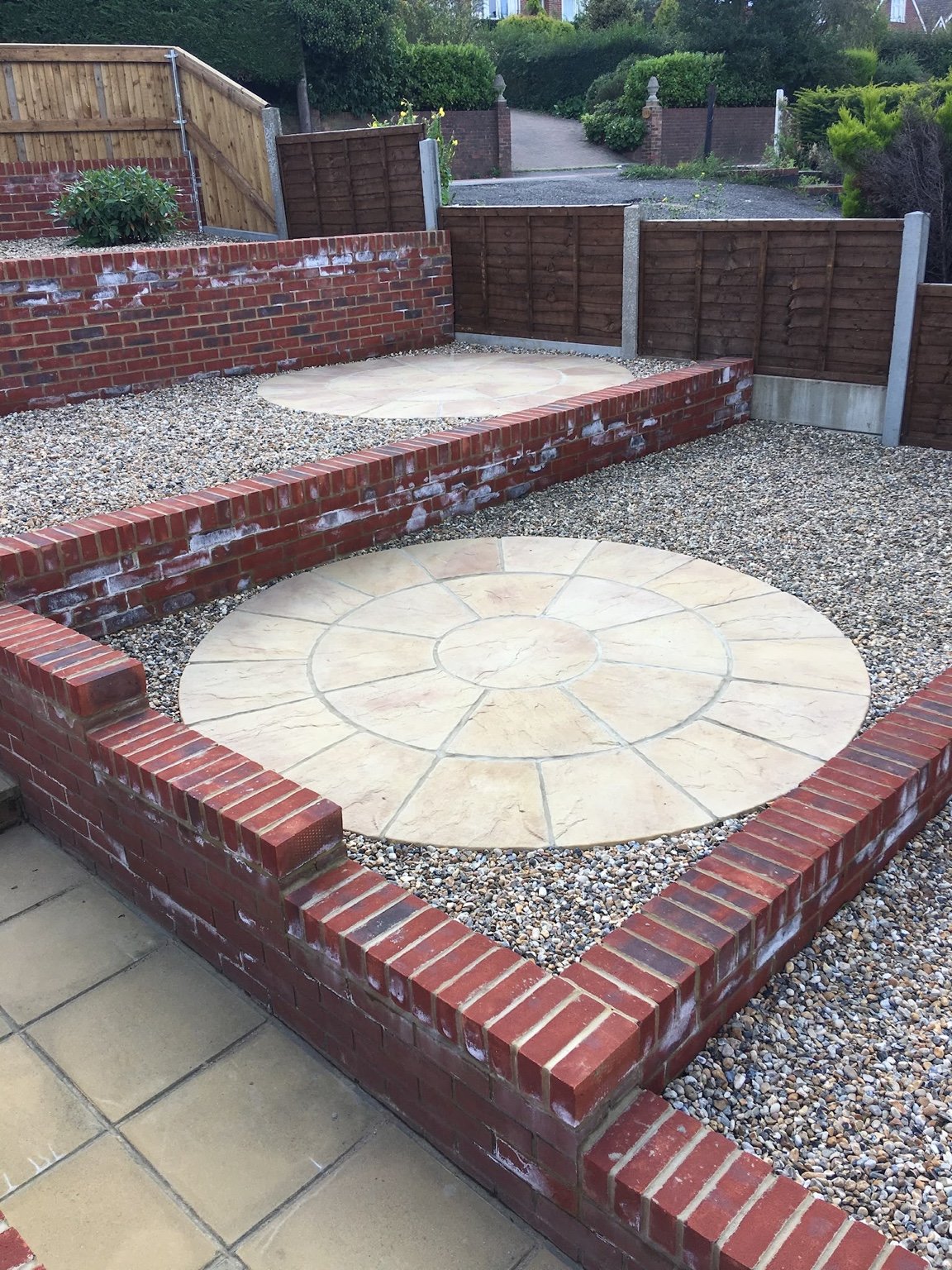
Retaining walls, shingle infill and riven buff slab circles across connected garden levels.
View Canterbury projectAshford
Before, during and after a timber decking replacement, from the old deck to the finished terrace.
View Ashford projectBorough Green
1800mm closeboard fencing, softwood sleeper planters, a 450mm buff slab patio and new turf.
View Borough Green projectCanterbury
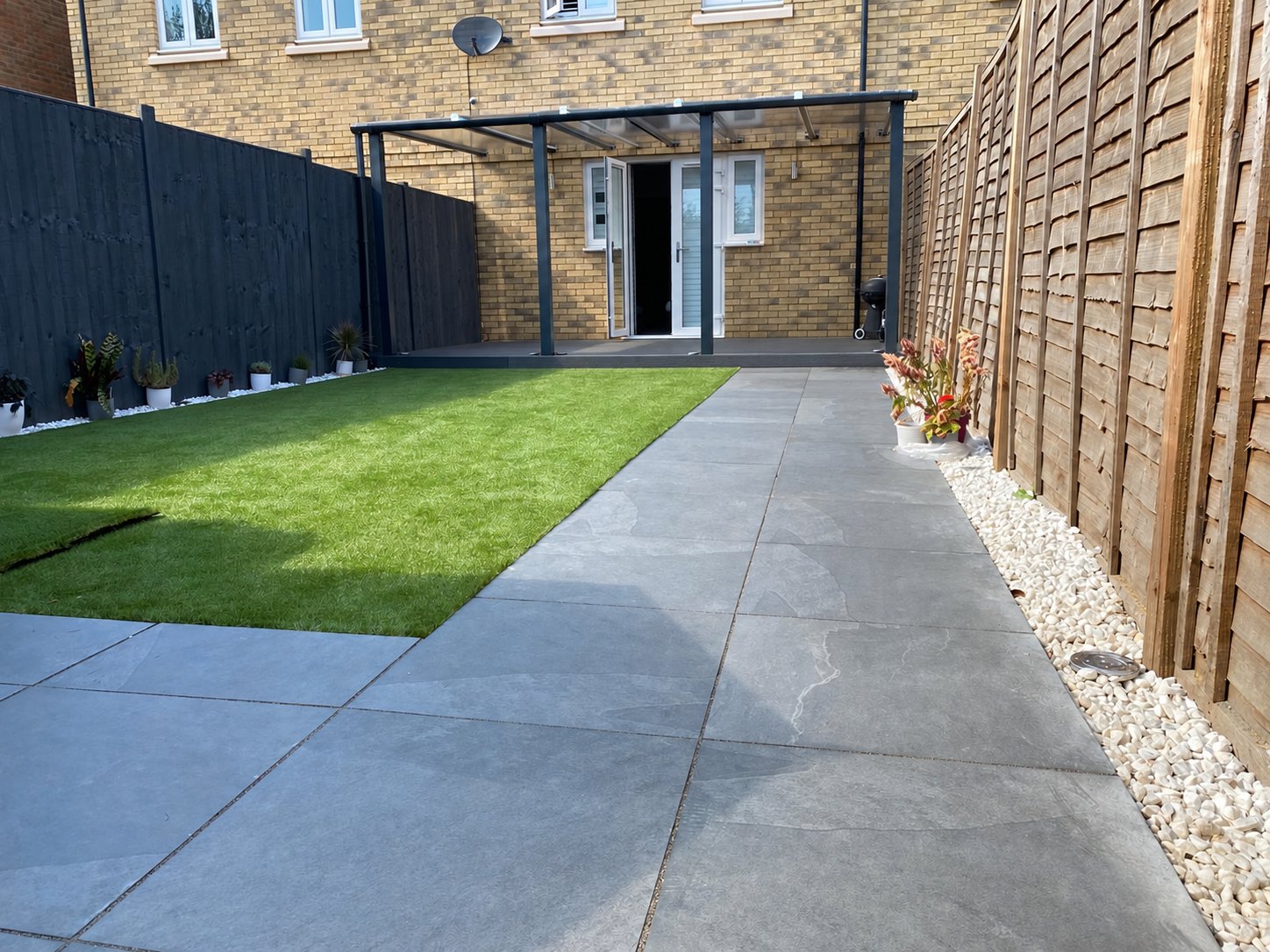
Porcelain paving, artificial grass and a custom steel-frame pergola with polycarbonate roof.
View Canterbury projectStrood
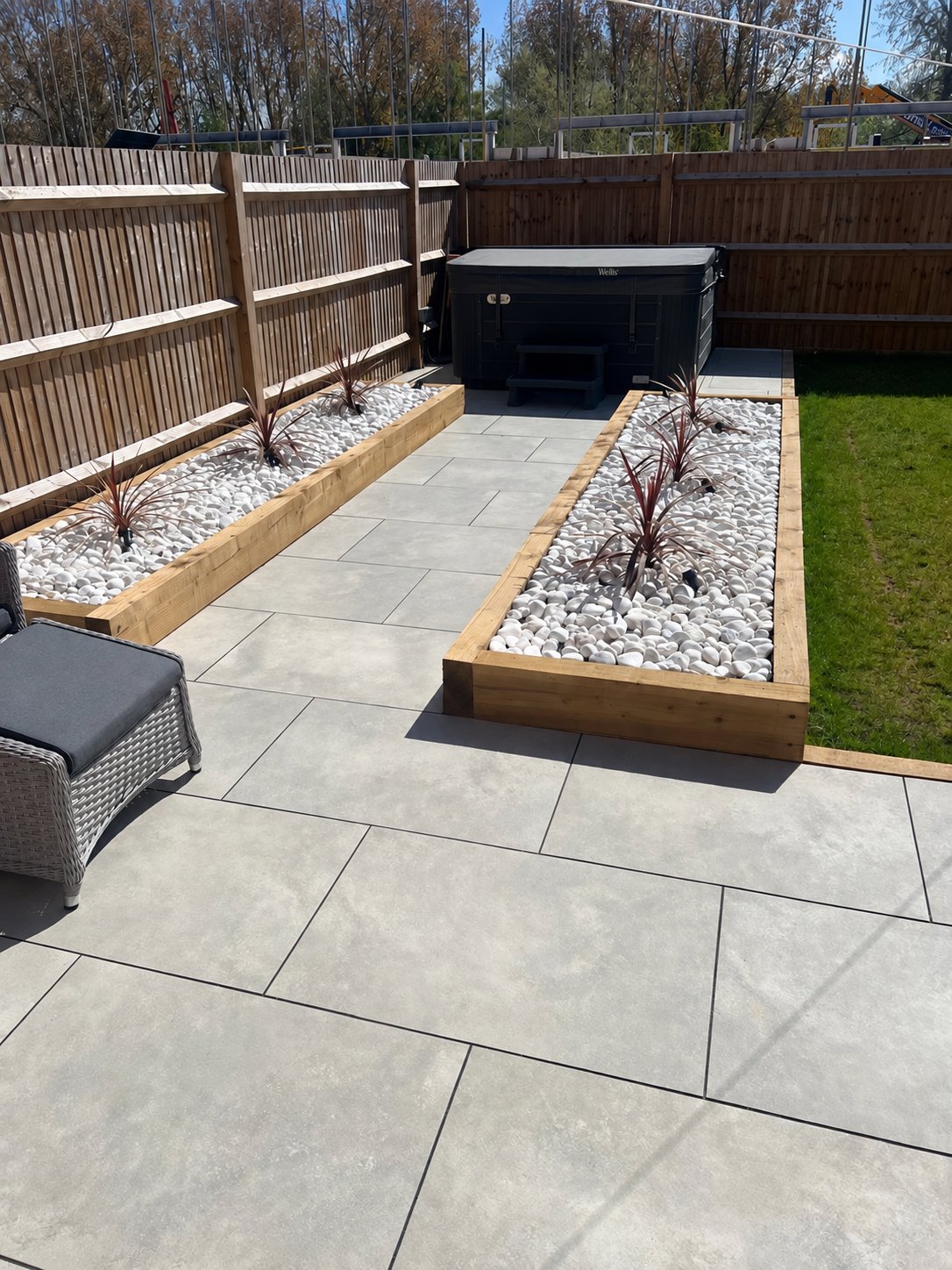
Grey porcelain paving framed by timber sleeper planters, white decorative stones and planting.
View Strood projectWest Malling
Block paving, porcelain patio, brick retaining walls and two styles of timber fencing.
View West Malling projectAshford
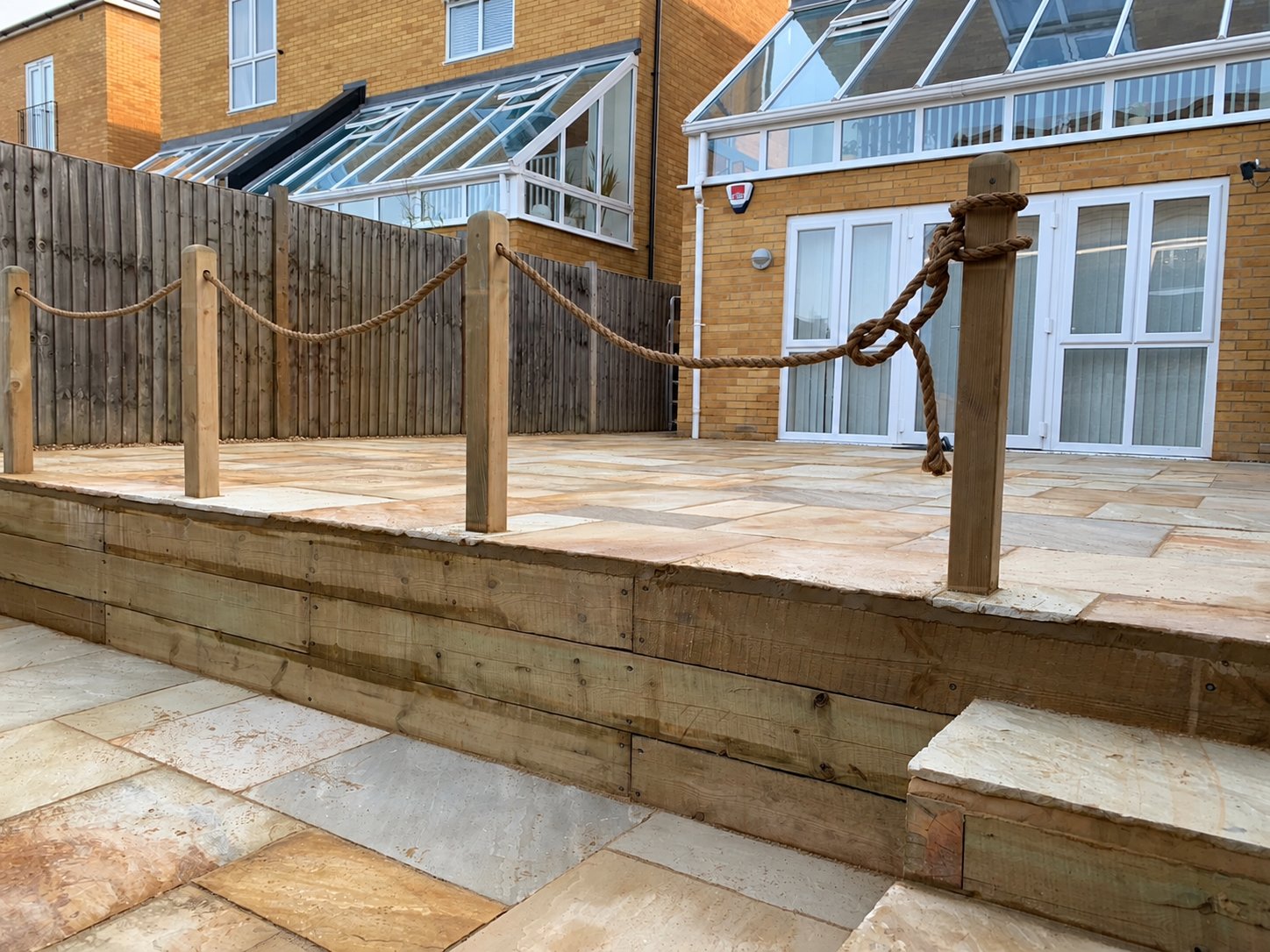
Sandstone paving across two levels, with timber sleeper retaining walls.
View Ashford projectDeal
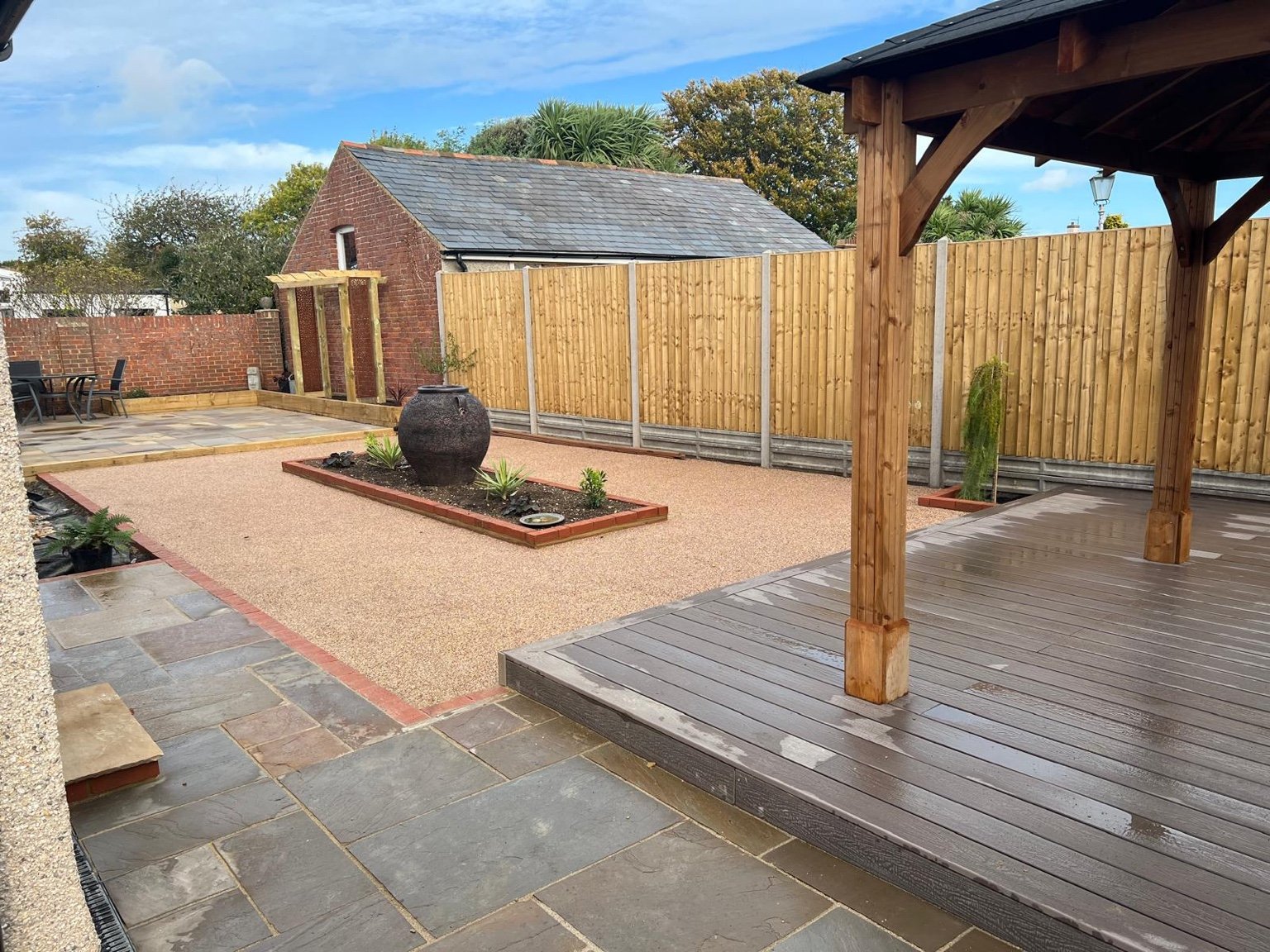
A sandstone patio, ash-coloured composite decking, pitched-roof pergola and sleeper planters.
View Deal projectSevenoaks
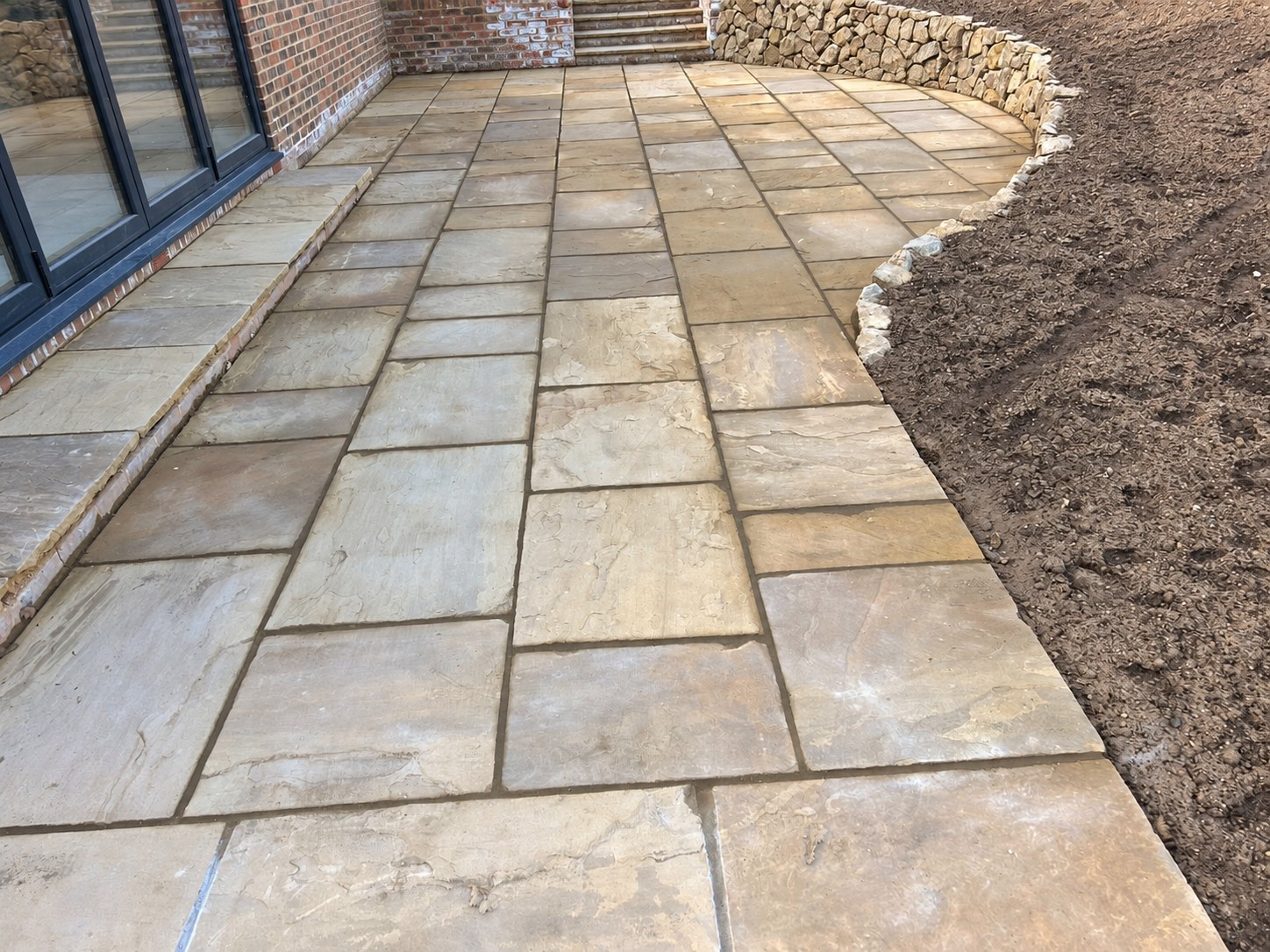
75mm thick York stone paving, curved paths, brick walls and Kentish ragstone walls.
View Sevenoaks projectHerne Bay
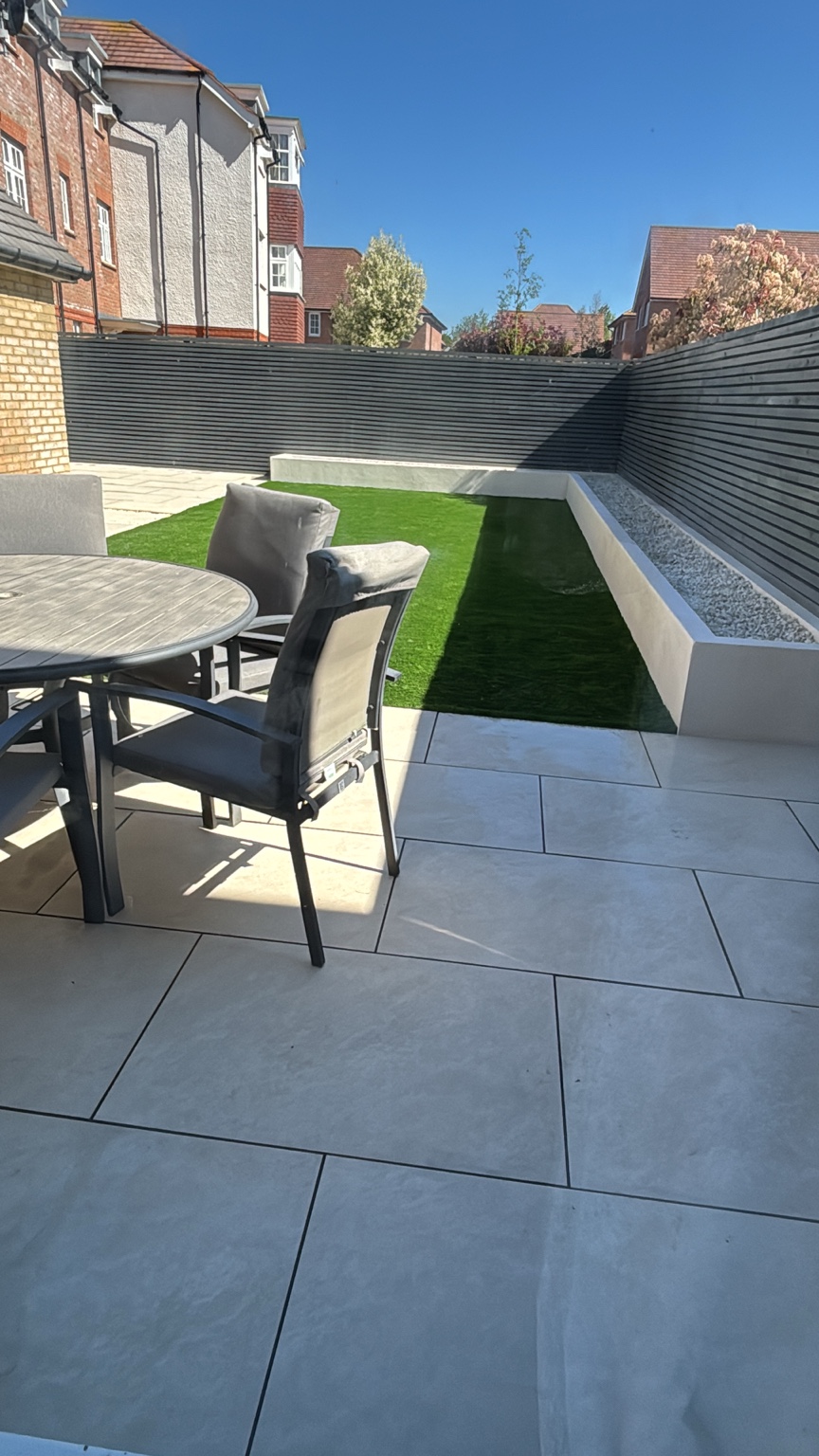
Porcelain patio, raised bed, artificial grass and slatted fencing. See the garden before and after.
View Herne Bay projectSittingbourne
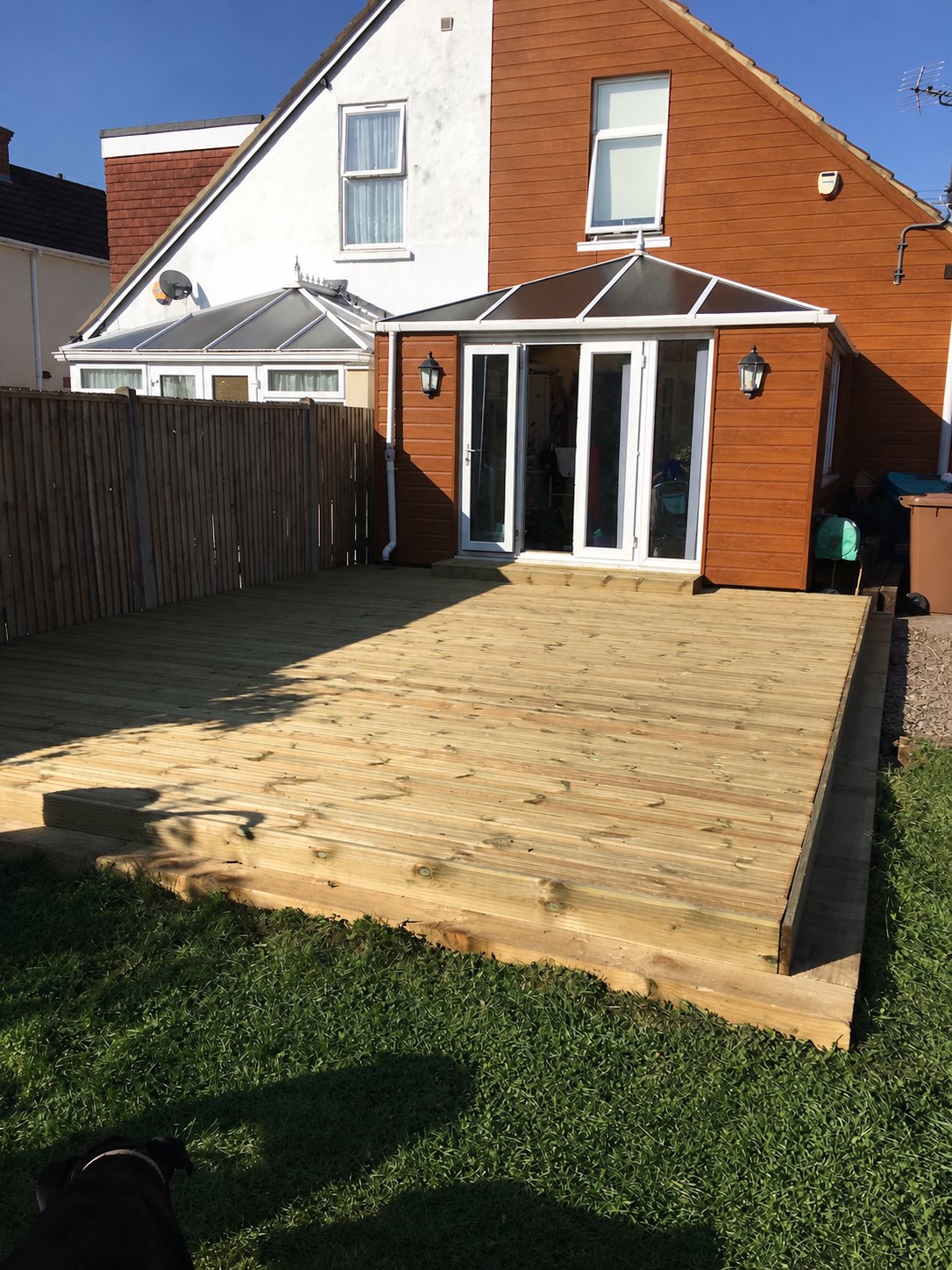
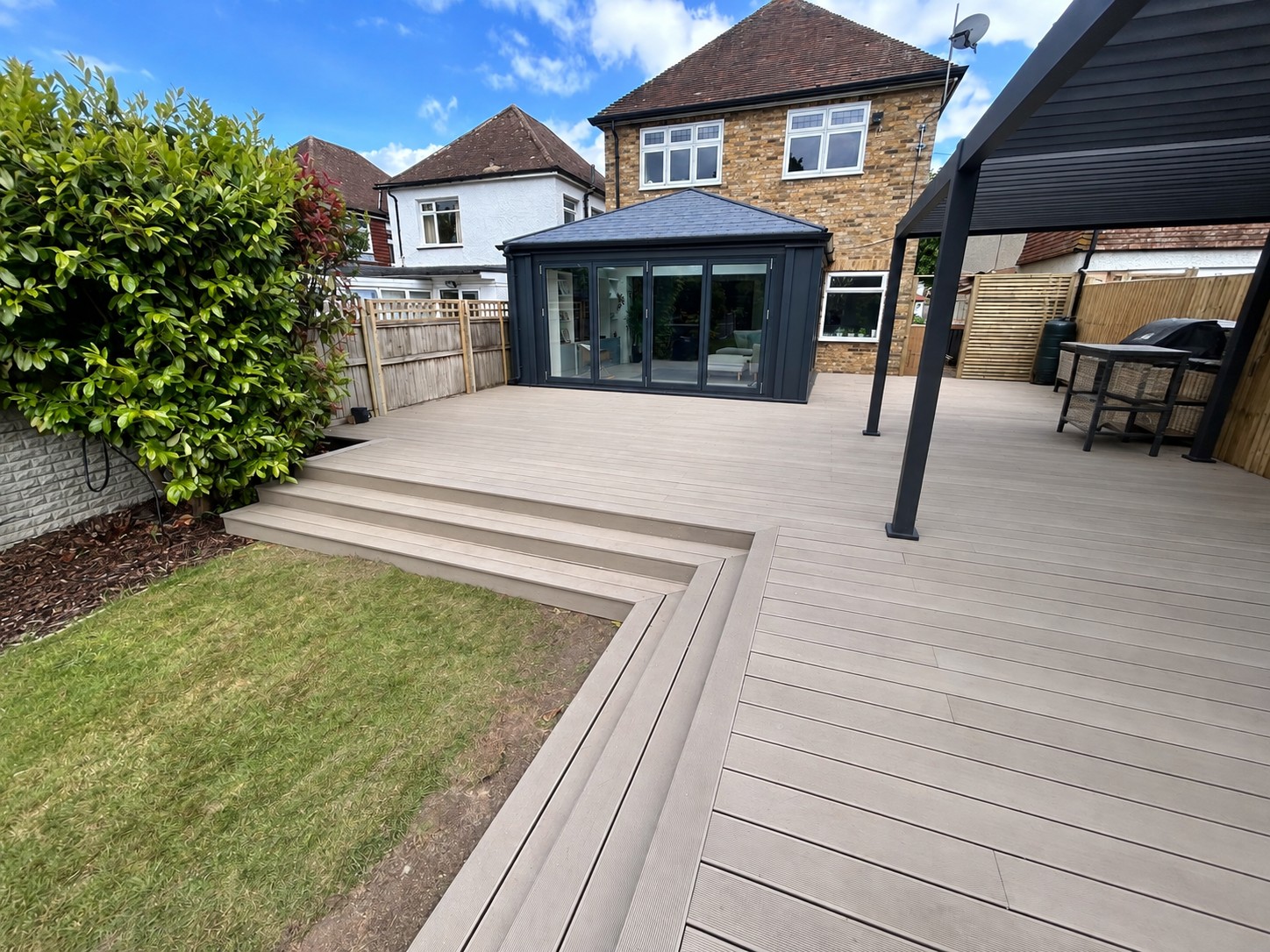
A broad decking terrace with defined board lines and steps connecting the house to the lawn.
View Sittingbourne projectDeal
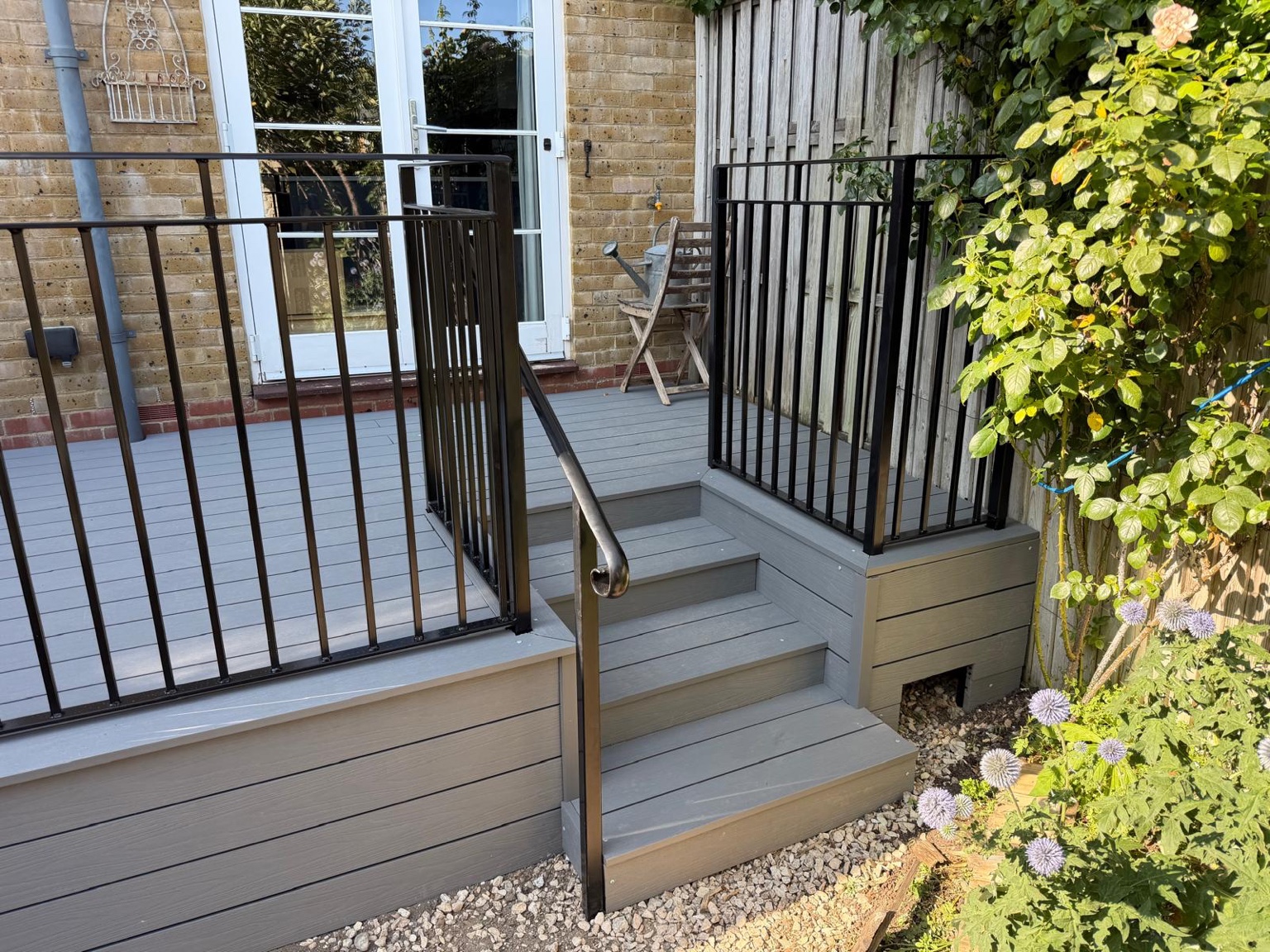
Raised grey decking with black railings, inset steps and a matching handrail.
View Deal projectCOMPLETED PROJECT · BOROUGH GREEN
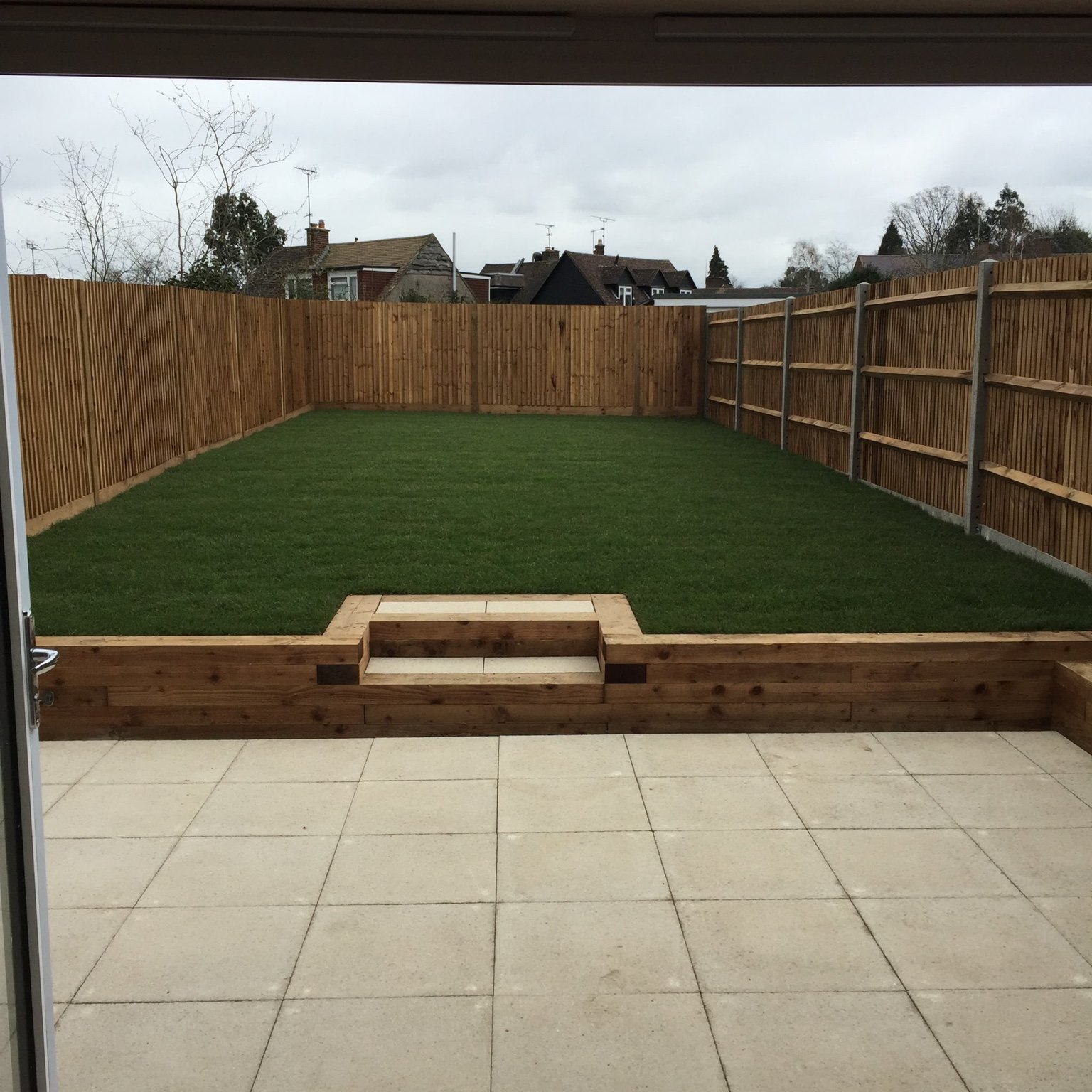
1800mm closeboard fencing, softwood sleeper planters, a 450mm buff slab patio and new turf.
This completed Borough Green project illustrates the work shown in the photographs. We can discuss the requirements of your own Margate property.
View this project →PLAN YOUR NEW LAWN
Share your postcode, lawn dimensions and photographs, including the access route and any areas that stay wet.