Build a seating area with room to relax and a clear connection to the house and garden. Our patio installation service in Dover covers layout, paving selection, groundwork, edges and drainage. Compare porcelain, sandstone and other suitable paving before requesting a free quotation.
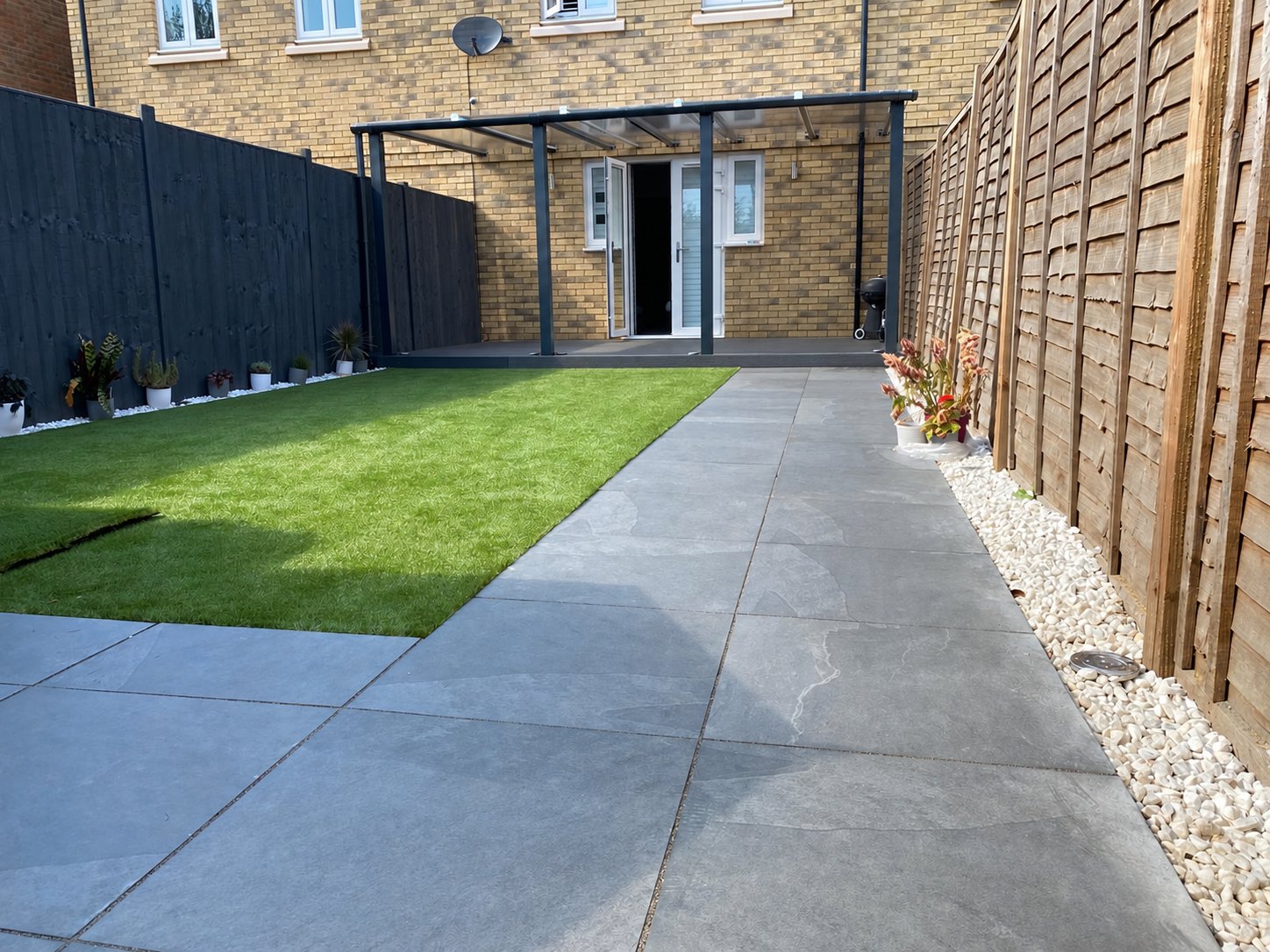
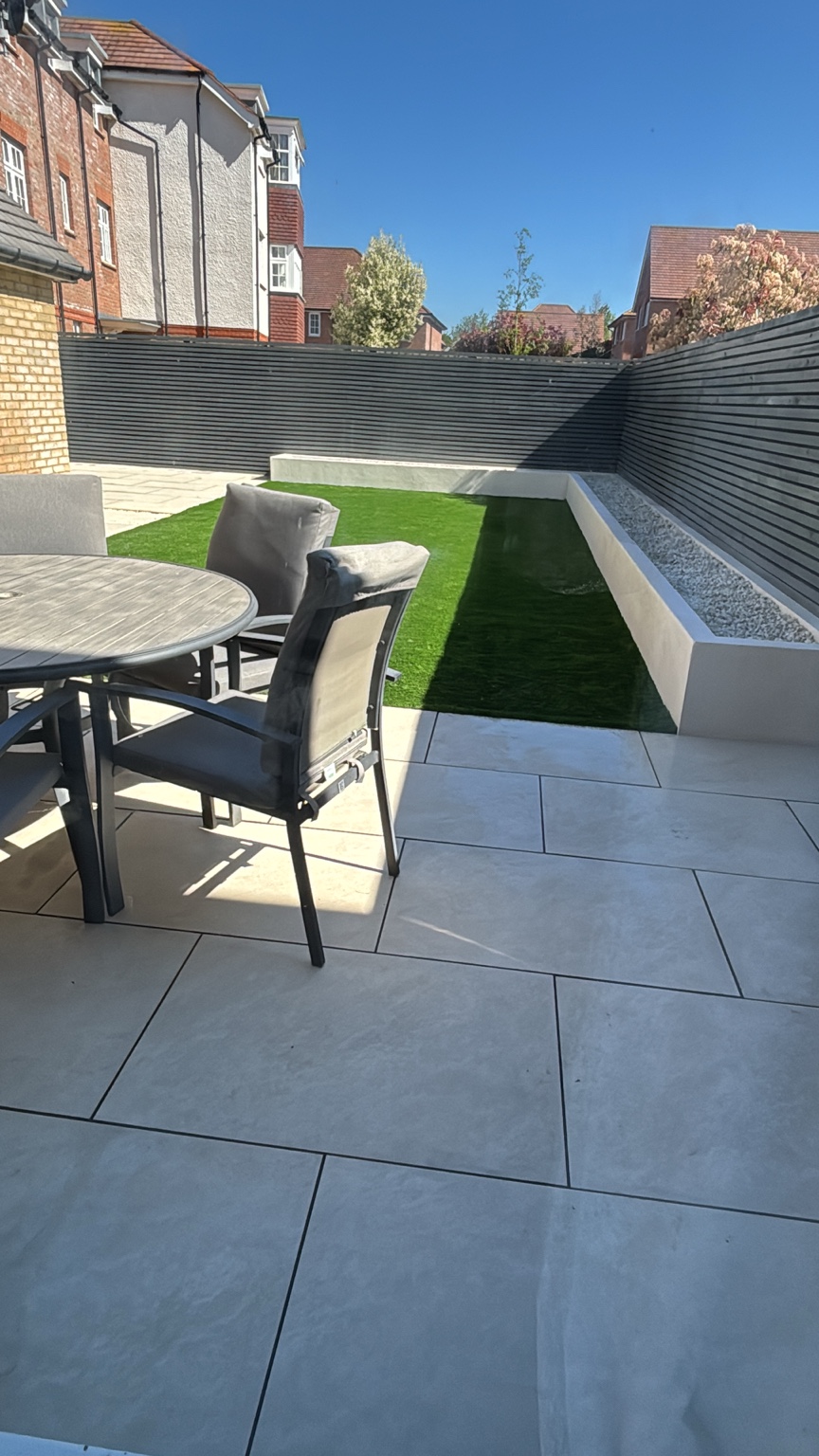
Patio, artificial grass and steel pergola — Canterbury.
PATIO MATERIALS & FINISHES
Types of patios we install in Dover.
The best fit depends on how you will use the space, the surrounding garden and the maintenance you prefer. Sandstone and limestone are specific types of natural stone.
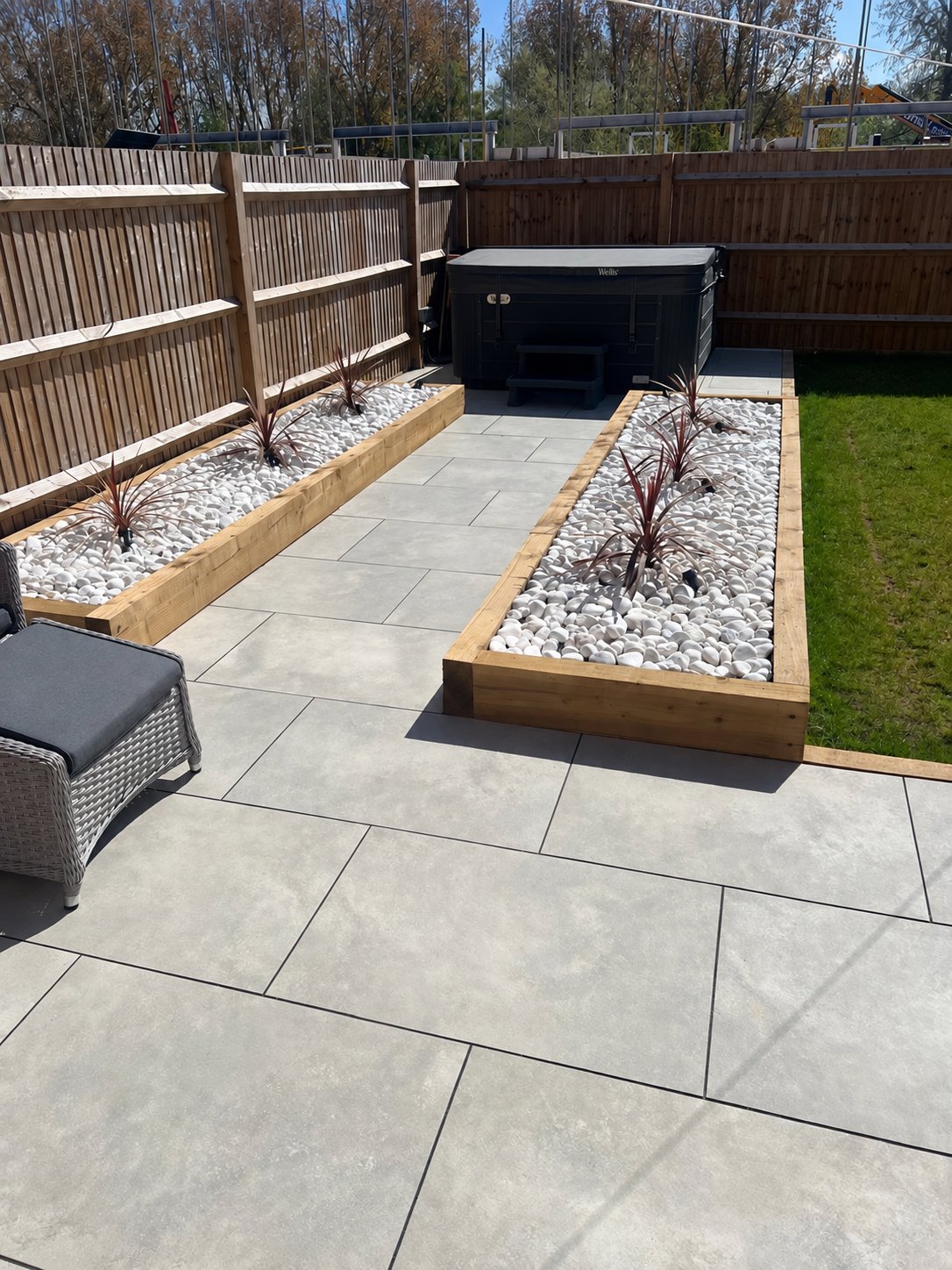
Porcelain patios in Dover
A neat, contemporary finish with consistent sizing and a wide choice of colours. Porcelain is durable and generally easy to clean, making it a practical choice for modern gardens. Outdoor paving should be selected with an appropriate grip rating.
Contemporary appearance
Low routine maintenance
Consistent size and colour
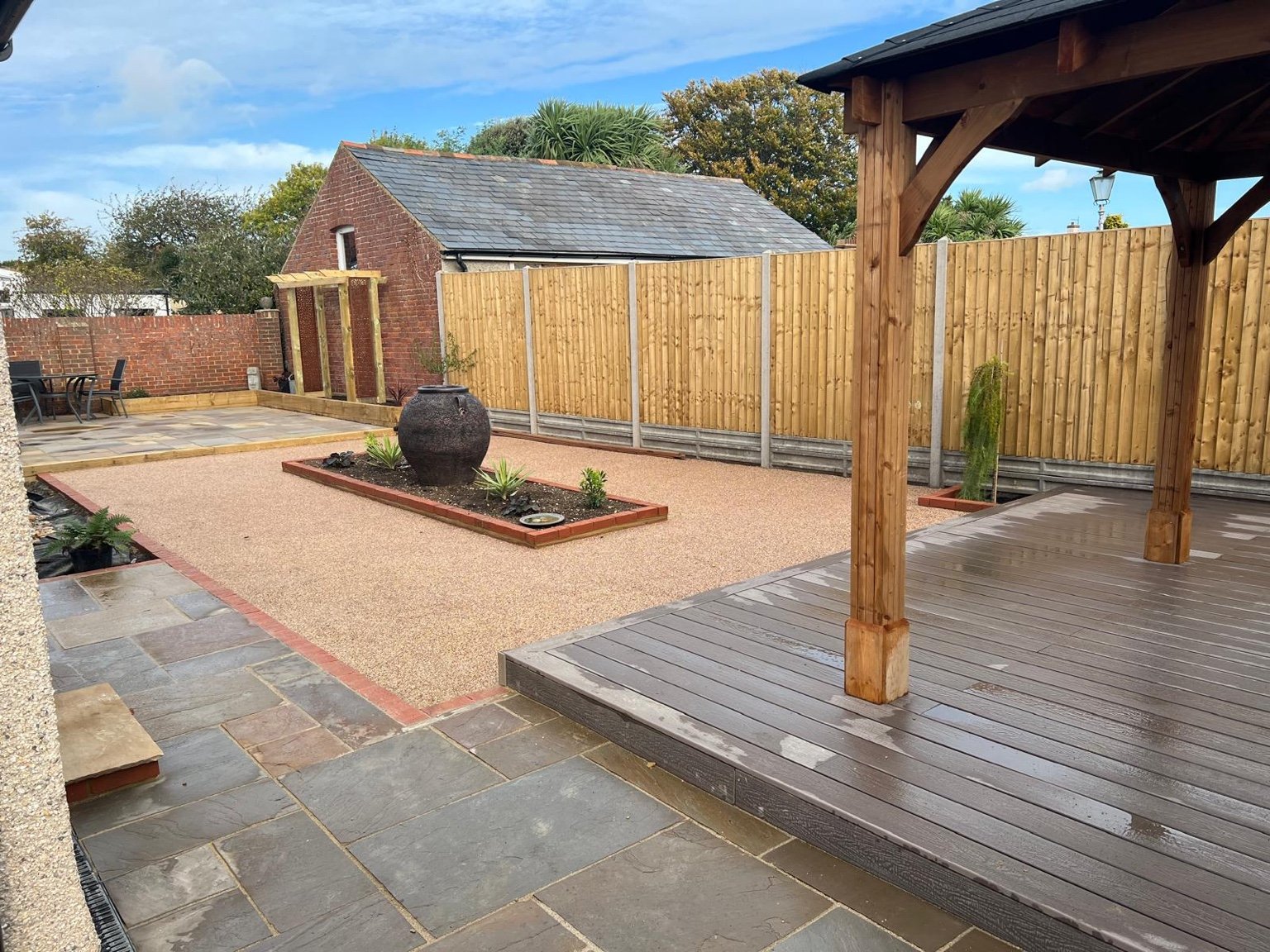
Natural stone patios in Dover
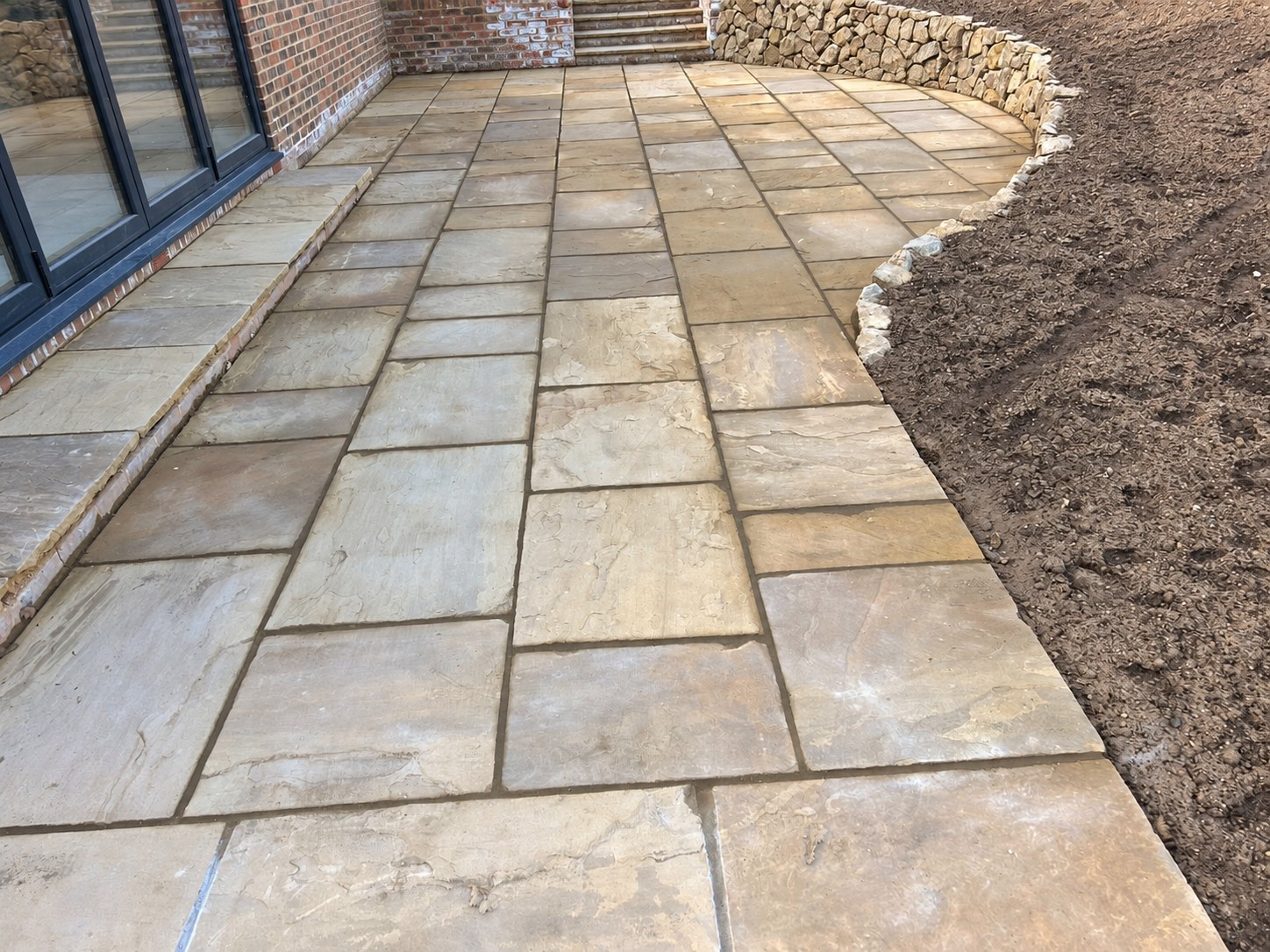
Natural stone brings varied texture and colour to a garden. Sandstone and limestone are two of the options we can discuss, particularly for spaces where planting and traditional materials are part of the design.
Individual character in each piece
Works with planting and softer edges
Several stone and laying options
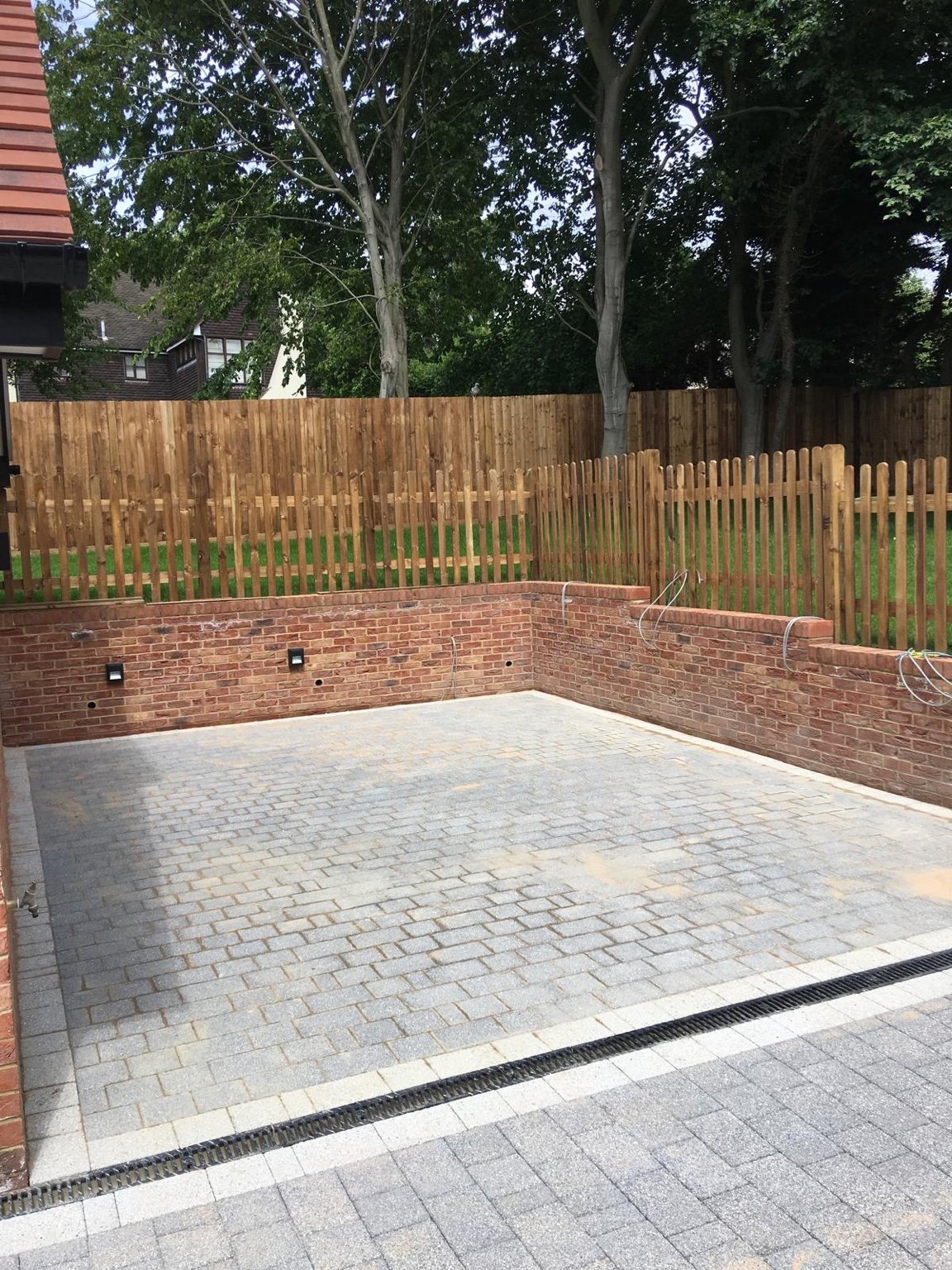
Block paving patios in Dover
Individual blocks give flexibility for patterns, borders and edges. This can work especially well when the patio needs to connect visually with a path or driveway.
Pattern and border choices
Defined edging
Adaptable layouts
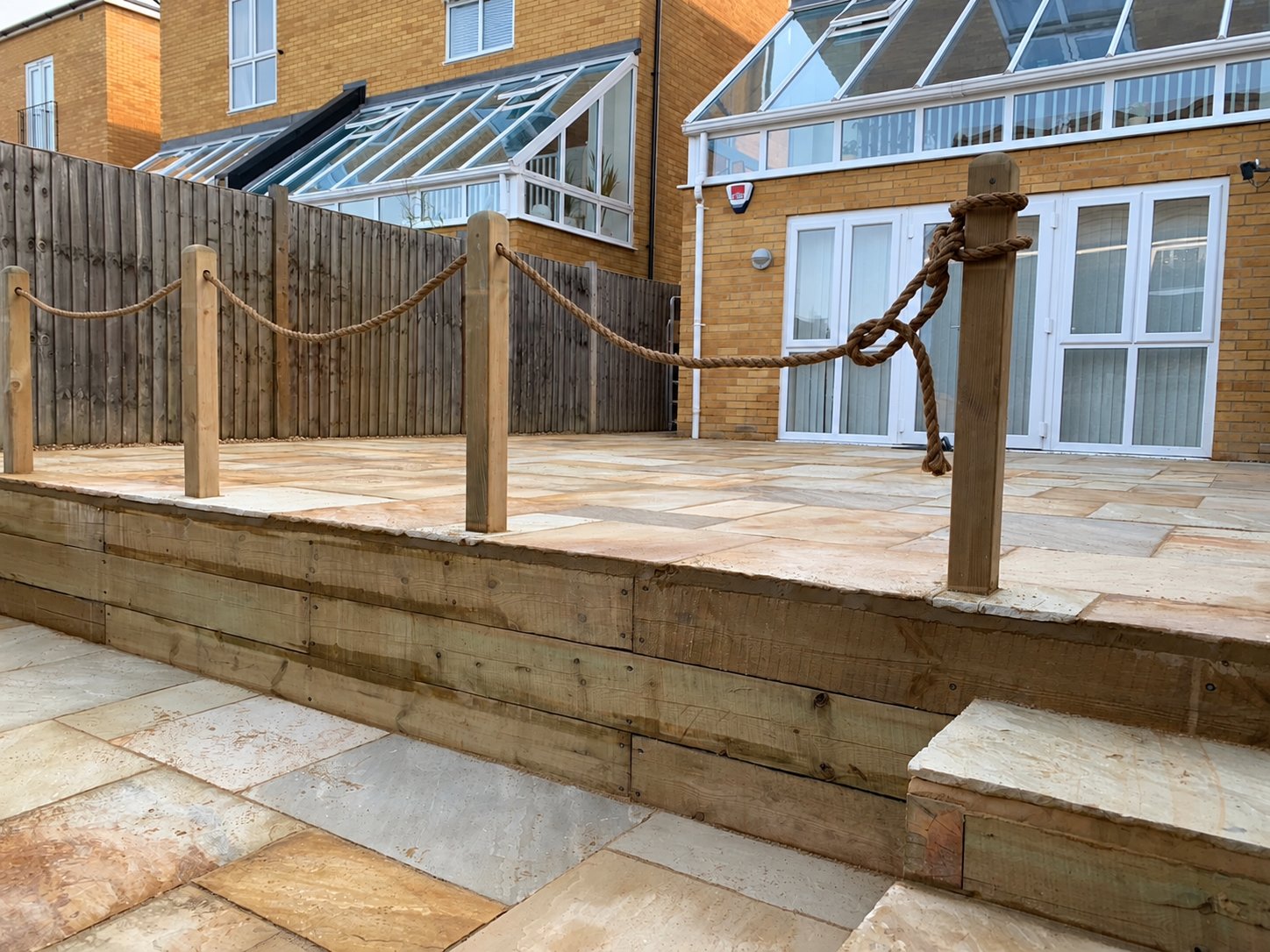
Sandstone patios in Dover
Sandstone is a natural stone with warm tones and variation between pieces. It can suit both traditional gardens and relaxed contemporary layouts when the colour and joint detail are chosen carefully.
Natural colour variation
Versatile for many garden styles
Durable with suitable installation and care
Limestone patios in Dover
Limestone offers a more restrained, often smoother appearance. Colour, texture and finish vary by product, so we can review samples and discuss cleaning and sealing before you decide.
Elegant, even-toned look
Choice of finishes
Pairs well with simple planting
Flagging patios in Dover
Large paving flags can make a structured surface for a seating area or path. The format can be laid in different patterns and individual flags can be lifted for repair if needed.
Flexible sizes and layouts
Strong, defined surface
Practical for paths and seating areas
BELOW THE SURFACE
Preparation, levels and drainage matter.
A lasting patio needs more than a paving choice. We assess the existing ground, plan the finished levels and prepare a suitable base. Falls and drainage need to direct water away from the house and prevent avoidable pooling.
The patio can also be planned alongside paths, steps, lawn, planting or fencing so it works as part of the whole garden.
Give the patio enough usable space
Measure the furniture you plan to use, including pulled-out chairs. Allow a comfortable route past it and check that doors and gates can open. A nominal 25m² patio can be arranged in several shapes, with very different amounts of usable seating space.
Where the garden changes level, decide whether the patio should connect directly to the house or sit elsewhere. Include steps and paths in the initial layout.
Choose paving for the setting and maintenance
Porcelain offers a consistent finish, while natural stone brings variation in texture and colour. Concrete paving can be another practical option. Compare actual outdoor-rated samples and consider how their surface looks when wet.
There is no universally best patio material. Suitability depends on the use, installation requirements, budget and care you prefer. Discuss slip performance, joints and the appearance beside existing brickwork or decking.
Groundwork determines the finished result
Clear unsuitable material and establish the supporting construction for the site and chosen paving system. The specification should describe excavation, base preparation, bedding and jointing instead of only naming a slab.
Agree finished levels relative to the building, thresholds and drainage. Water needs a planned route; a new patio should not simply trap it at a doorway. Any drain covers or existing services need considering before the layout is fixed.
Edges, steps and planting complete the layout
An edge can meet a lawn, planting bed or adjoining path. Decide how that junction will be maintained and whether it needs an upstand or flush finish. A small planting strip can soften a large paved area without interrupting the route across it.
Step proportions and changes in level should feel predictable. Discuss garden lighting or future features early where cables or foundations would otherwise require reopening finished paving.
How much does a 25m² patio cost?
Area alone does not set the total. Removing concrete, bringing materials through a passage, changing levels or adding steps can make two 25m² patios different jobs. Material price is only one part of the installed quotation.
Compare preparation, paving, joints, drainage, edges and waste removal on a like-for-like basis. A simple shape may reduce cutting and construction, but the supporting work still needs to suit the site.
Installation, planning and aftercare
A straightforward ground-level patio is a different proposal from a raised terrace or retaining structure. Check the relevant planning conditions where levels, listed status or property restrictions are involved. Agree the construction programme after the scope is known.
Allow the installed materials to become ready for use before placing furniture on the surface. Follow the actual handover for jointing and cleaning. Treat spills promptly and avoid unsuitable chemicals or aggressive washing.
Request a complete quotation for the materials, preparation, access, drainage and edges. A square-metre supply price does not cover all installation work.
What is the easiest patio to put in?
A simple accessible layout can be easier to construct. Paving type alone does not remove the need for proper levels, support and drainage.
What is the best paving for a patio?
Compare outdoor-rated porcelain, stone and concrete against your use, maintenance preferences and budget.
How much does patio installation cost in the UK?
Published averages describe different scopes. Use them cautiously and compare itemised quotations for your own garden.
Can you replace an old patio?
We can discuss removal and replacement. Existing levels, drainage and underlying support need assessing.
Can a patio have steps?
Yes, include steps and adjoining levels in the initial design and quotation.
Does a patio need planning permission?
Ground-level garden surfacing is often permitted, but raised work and property restrictions can change the position. Check the linked official guidance.
When can I use it?
Follow the handover for the installed bedding and jointing materials rather than assuming a fixed waiting time.
The format and pattern influence cuts, borders and the appearance of the finished terrace. Sketch the paving against doors and fixed features before ordering. Check where a narrow strip or awkward corner would occur and whether the proposed layout gives a sensible edge to planting or lawn.
A sample should be reviewed outdoors alongside retained materials. Discuss the surface texture, outdoor suitability, joint appearance and required care. Confirm the intended bedding and jointing system with the selected paving. A large format, natural variation or a curved border can change the installation work without changing the measured area.
What the complete Dover quotation should cover
Use the same agreed scope when comparing proposals. Confirm the materials and work below the visible finish, together with any retained construction. Ask how exclusions or provisional work will be handled and keep the written specification with the quotation.
Measured patio, paths, steps and selected paving product
Removal of existing surfaces and disposal
Excavation, supporting construction and bedding
Levels, runoff, access covers and threshold details
Borders, joints, cuts and any specified treatment
Labour, access arrangements, VAT and exclusions
Photographs, dimensions and access details help define the work. They can start the discussion, with a visit or further assessment where needed. A quoted total is useful when it is clear what the finished result includes.
From the first enquiry to handover
Measure usable seating and circulation space with furniture in mind.
Agree paving, laying pattern and connections to surrounding features.
Assess ground, prepare support and establish the agreed levels.
Install the paving, edges and joints using the specified system.
Allow the materials to become ready for use and follow their cleaning advice.
Agree the programme after the scope and materials are confirmed. Include delivery arrangements, protection of retained features and any periods when the area cannot be used. At handover, confirm how the completed work should be used and cared for, and retain the relevant product details.
YOUR DOVER PROJECT
Send photographs and your ideas.
Include your postcode, approximate dimensions and access details for a free, no-obligation quotation.