Panels and feather edge boards
Replace an isolated damaged section where the supporting posts and rails remain suitable. Measurements and fixing details establish which replacement will fit.
BROKEN PANELS · LEANING POSTS · STORM DAMAGE
Landscape Gardener of Kent repairs garden fencing in Tenterden, assessing broken panels, leaning posts and loose rails alongside the adjoining sections. Replacing one panel can be appropriate between sound posts; leaning supports, decayed rails or repeated storm failures need a wider assessment.
Send your postcode, approximate fence height and photographs for a free, no-obligation repair quote. Show the complete run, the affected panels and posts, and the access route. Tell us whether the damage followed a storm or developed gradually.
A loose panel can indicate damaged fixings, weakened rails or a post moving in the ground. The repair needs sound material to fix into. Changing the visible panel alone will not resolve an unstable support.
Photograph the fence along its length as well as the damaged opening. Include board ends, post bases and connections where they can be seen safely. Pictures help the initial discussion, but concealed decay and old foundations may need inspection before the final repair scope is agreed.
Replace an isolated damaged section where the supporting posts and rails remain suitable. Measurements and fixing details establish which replacement will fit.
Assess the post and its support before deciding whether resetting or replacement is appropriate. Paving, walls and planting beside the post can affect removal and installation.
Check loose connections and damaged components at the base. New fixings need sound material to hold them; weakened timber may also need replacement.
Keep people and pets away from loose or leaning sections, and photograph them from a safe position. Include the neighbouring sections in the photographs even if only one panel has fallen.
Tell us if the damage has opened the garden or blocked access. We can discuss availability after reviewing the details. If an insurance claim is involved, check the insurer’s requirements and record the damage before authorising repairs.
For an exposed boundary, discuss whether the remaining height, design and supports are still appropriate. Repeated failures may warrant a wider assessment rather than replacing the same part again.
A limited repair can be practical where most of the fence remains sound. Several decayed posts or failing rails may make replacing a longer run more sensible. Compare which older components each option retains.
If you also want a different height, privacy level or style, see fencing installation in Tenterden and request a replacement option alongside the repair. New timber may look different from weathered sections, and an exact match to older panels cannot be assumed.
A panel replacement price depends on the panel dimensions, construction and condition of its supports. Removing a damaged post and its old foundation can involve substantially different work from fitting a compatible panel between sound posts. A retail panel price does not include the whole repair.
Compare complete quotations identifying materials, labour, disposal, retained components, VAT treatment and provisional items. For a longer boundary, ask for the affected sections to be listed separately so you can compare a local repair with replacing the run. Online averages and hourly rates do not account for the condition of your particular fence.
Confirm the opening dimensions, panel construction and fixings. Include removal and disposal of the damaged section, and check the retained posts and gravel board are suitable.
Allow for assessing or replacing the post, removing its old base where required and reinstating adjoining surfaces. This is a different job from simply sliding in a replacement panel.
List the panels, rails and supports being changed. Compare the targeted repair with renewing the affected run, identifying which older components remain under each option.
Ask for materials, labour, disposal, VAT treatment and any provisional work to be clear. A general average cannot distinguish these scopes. Share the number of damaged bays and overall photographs so the quote starts with the whole problem.
First establish whose fence it is and whether the property documents contain a maintenance obligation. A fence facing your garden is not automatically yours to alter. Discuss the damage and agree any proposed repair or contribution before arranging removal.
Citizens Advice explains that ownership, legal obligations and whether the fence is safe affect the options. If a disagreement remains, follow its linked guidance or seek advice about the particular boundary. Keep clear of unstable sections and raise safety concerns separately; a disagreement about appearance is different from a dangerous structure.
A gate that drags or will not latch may need adjustment, but the gate frame and supports also need checking. Photograph the hinges, latch, post and ground below the opening.
We can assess whether hardware repairs, rehanging or replacement components are suitable. Check clearance and swing direction alongside adjoining paving. New hinges will not correct a decayed frame or moving support.
For a Tenterden repair, photograph the route from the delivery point to the damaged section. Include narrow gates, steps and any finished paving or lawn that needs protection. Mark posts beside walls, planting beds or an old concrete base. Tell us which side of the fence is accessible and whether pets need to be kept contained while sections are removed. Agree any access through neighbouring land before arranging the programme.
Check the relevant property documents and agreements before authorising boundary work. Most title plans show general boundaries. There is no universal rule that you own the fence on the left or right; check deeds and maintenance agreements rather than relying on which way the posts face. GOV.UK explains property boundary records.
If work needs access through a neighbour’s garden, arrange permission, timing and protection beforehand. Discuss disagreements about ownership or payment before removal; Citizens Advice explains wall and fence disagreements.
The panel dimensions, construction, support condition, access and disposal determine the fitted price. A compatible panel between sound posts needs different work from a repair involving post and foundation replacement. Ask for the complete scope, including materials, labour and VAT treatment.
Yes, where a compatible section is available and the supports are suitable. Photograph the opening, posts and fixings as well as the panel. Adjoining weak components may need attention too.
Check the deeds, title register and relevant agreements for ownership and maintenance responsibilities. There is no universal left-side or right-side rule, and the position of posts is not a reliable guide. Agree who can authorise the repair before work starts.
The usual permitted development height limits in England are two metres away from a highway, or one metre next to a highway used by vehicles including its footpath. Existing-height provisions and property restrictions need checking. See the linked fencing guide for official planning guidance.
Check the deeds and agreements: they may contain repair obligations. Where a fence is safe and no legal requirement applies, its owner can generally decide whether to repair it. An unsafe fence needs separate attention. Discuss responsibility before altering or removing a neighbour’s fence.
Arrange permission and agree timing, access and protection of their garden before work. Owning the fence does not mean you should assume access is available. If access is refused, seek advice about your circumstances before arranging work from their land.
A local repair may be suitable when the adjoining panels, rails and supports remain sound. Several weakened posts or repeated failures may require a wider repair or replacement. Send an overall photograph and close-ups taken safely so both options can be assessed.
If a replacement changes the height, check the total including gravel boards and trellis. Planning Portal gives usual limits in England of one metre next to a highway used by vehicles, including its footpath, and two metres elsewhere, with conditions and exceptions. Our Tenterden fencing guide links to the official guidance and local council.
For the question about giving a neighbour the good side, check any deed, covenant or agreed specification and discuss the finish from both gardens before fitting. Different fence designs have different faces. Do not use the direction of posts or rails as an ownership test, or assume that an agreed appearance resolves boundary responsibility.
Visit our Tenterden fencing page for styles, supports and height guidance. Explore all landscaping services in Tenterden if the repair is part of wider work to paving, decking, walls or lawns.
OUR WORK · KENT
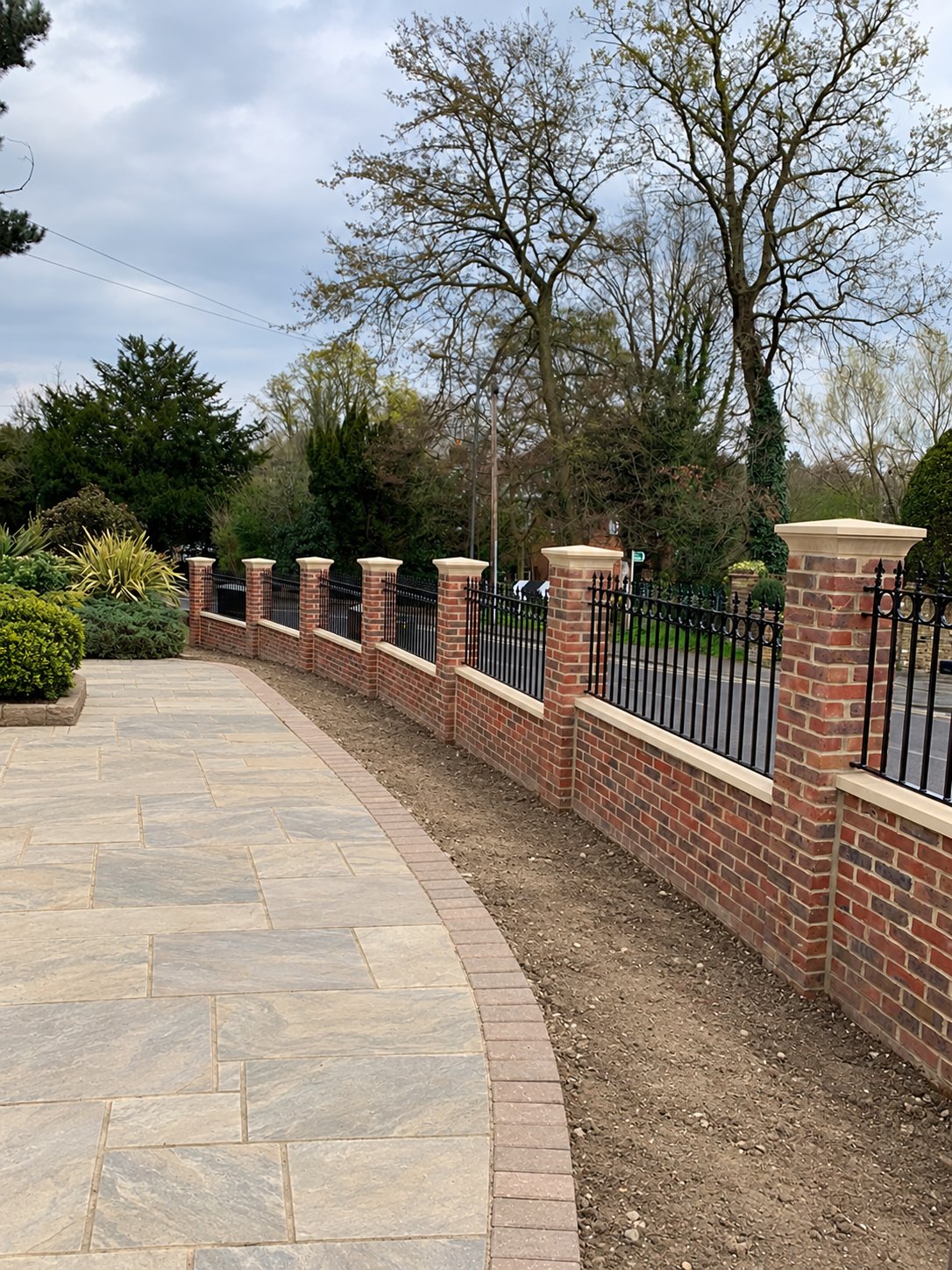
Chislehurst
A brick boundary with pale stone coping and pier caps, finished with decorative railing panels.
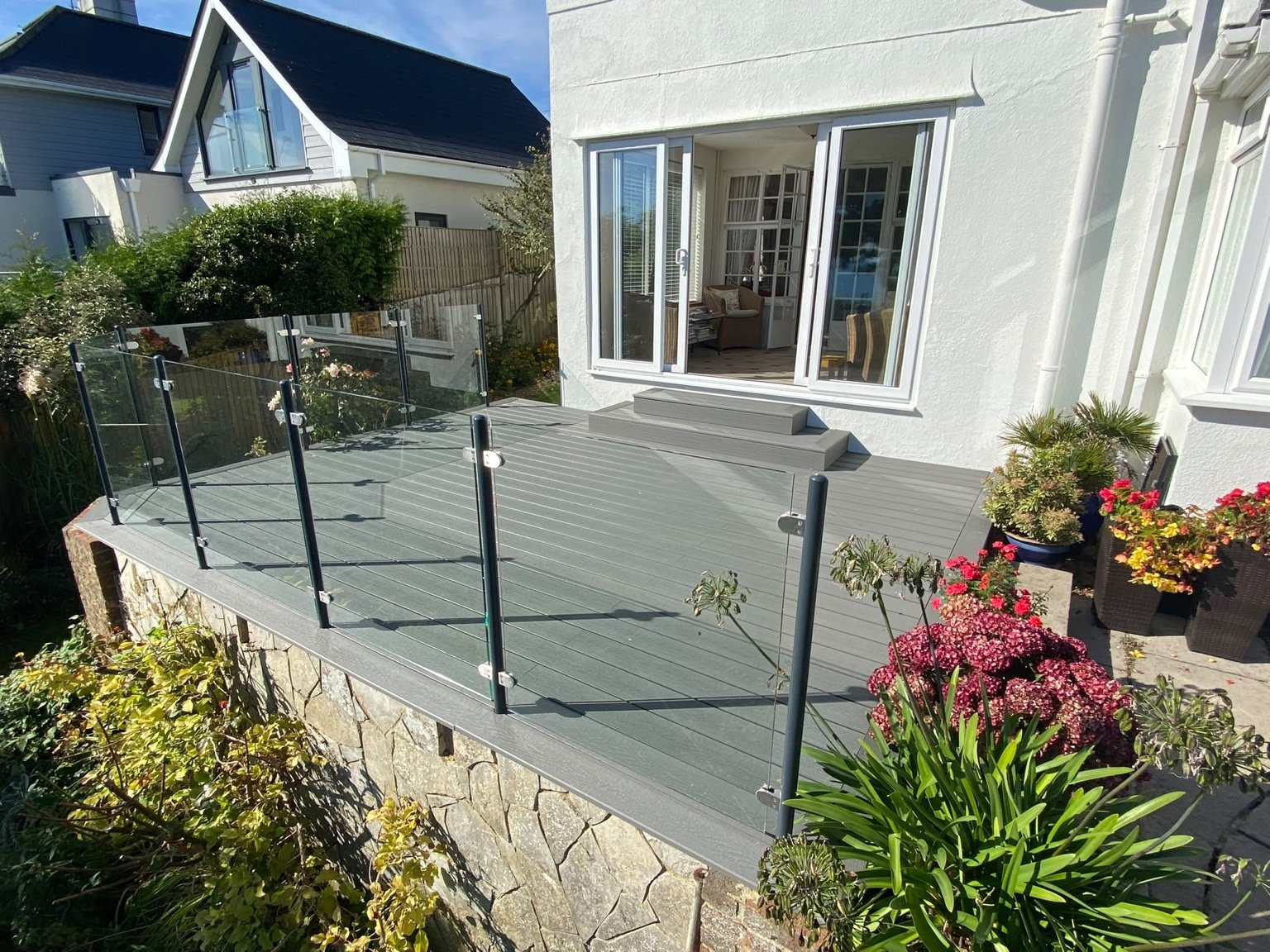
View Chislehurst projectSt Margaret’s Bay
Grey composite decking, glass panels, powder-coated steel posts and matching steps.
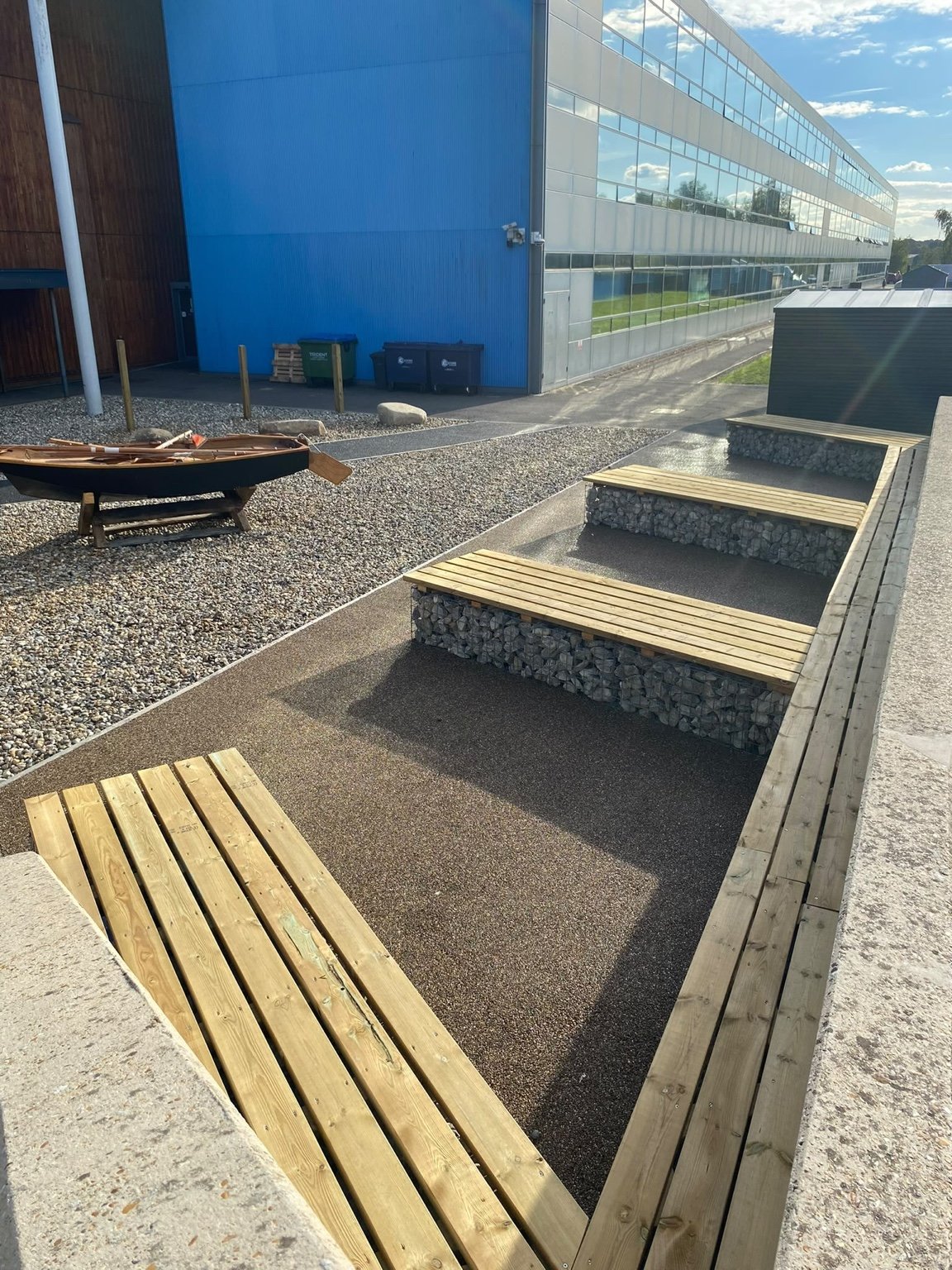
View St Margaret’s Bay projectFolkestone
Timber-topped gabion benches, resin-bonded surfacing, shingle and a boat feature at the academy entrance.
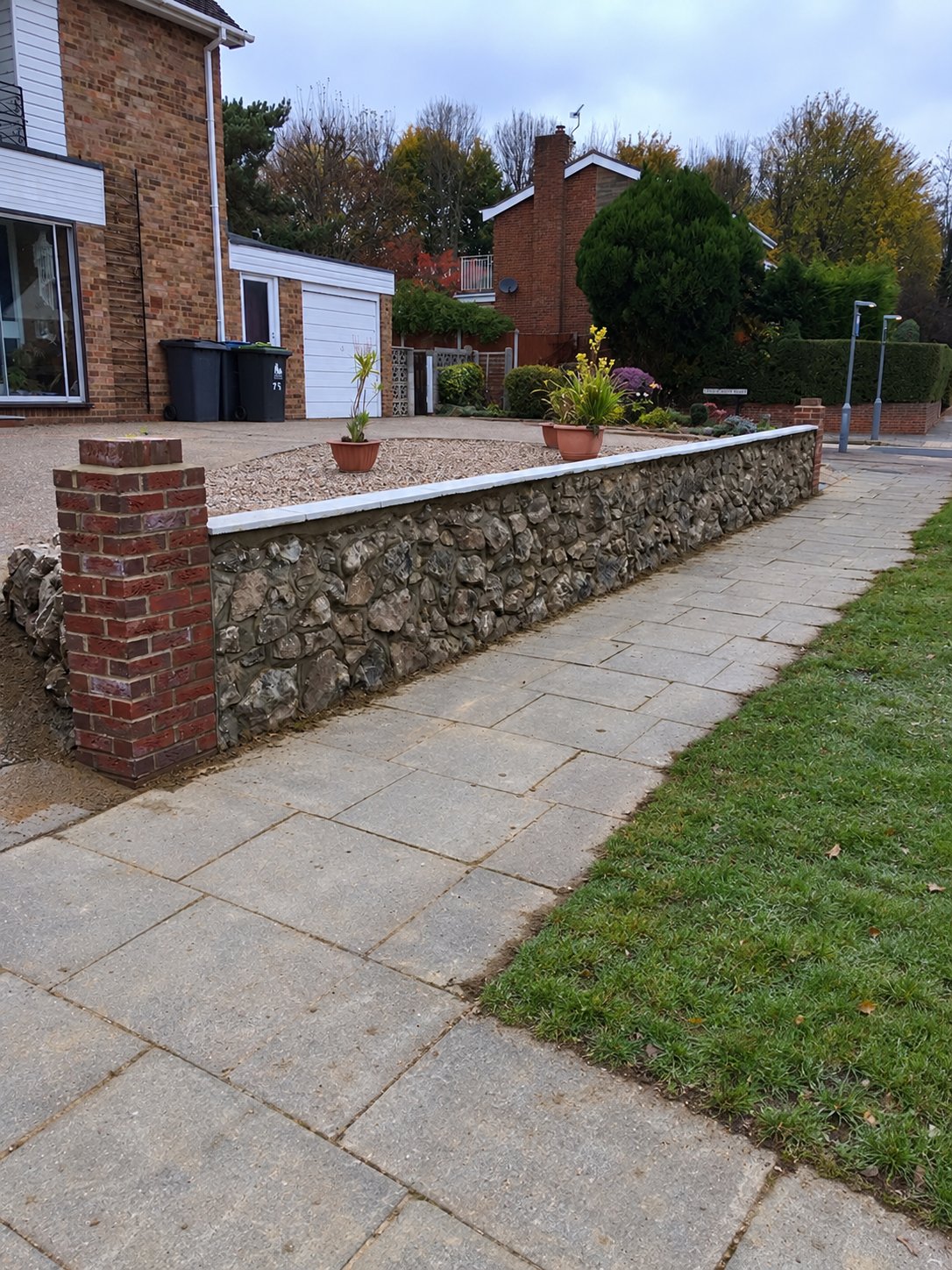
View Folkestone projectCanterbury
The stones from a customer’s late husband’s rockery kept and reused in a new front wall.
View Canterbury projectCanterbury
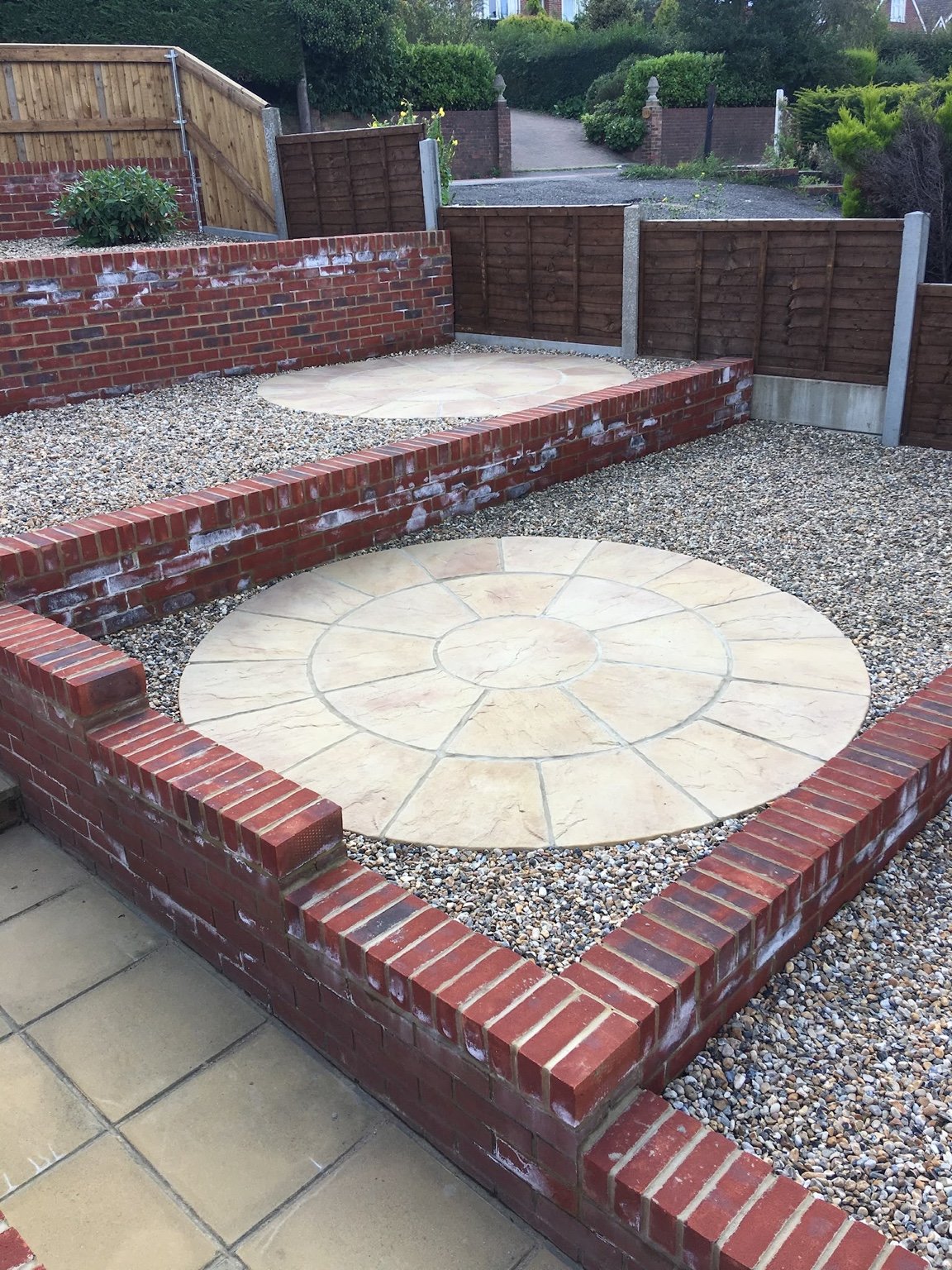
Retaining walls, shingle infill and riven buff slab circles across connected garden levels.
View Canterbury projectAshford
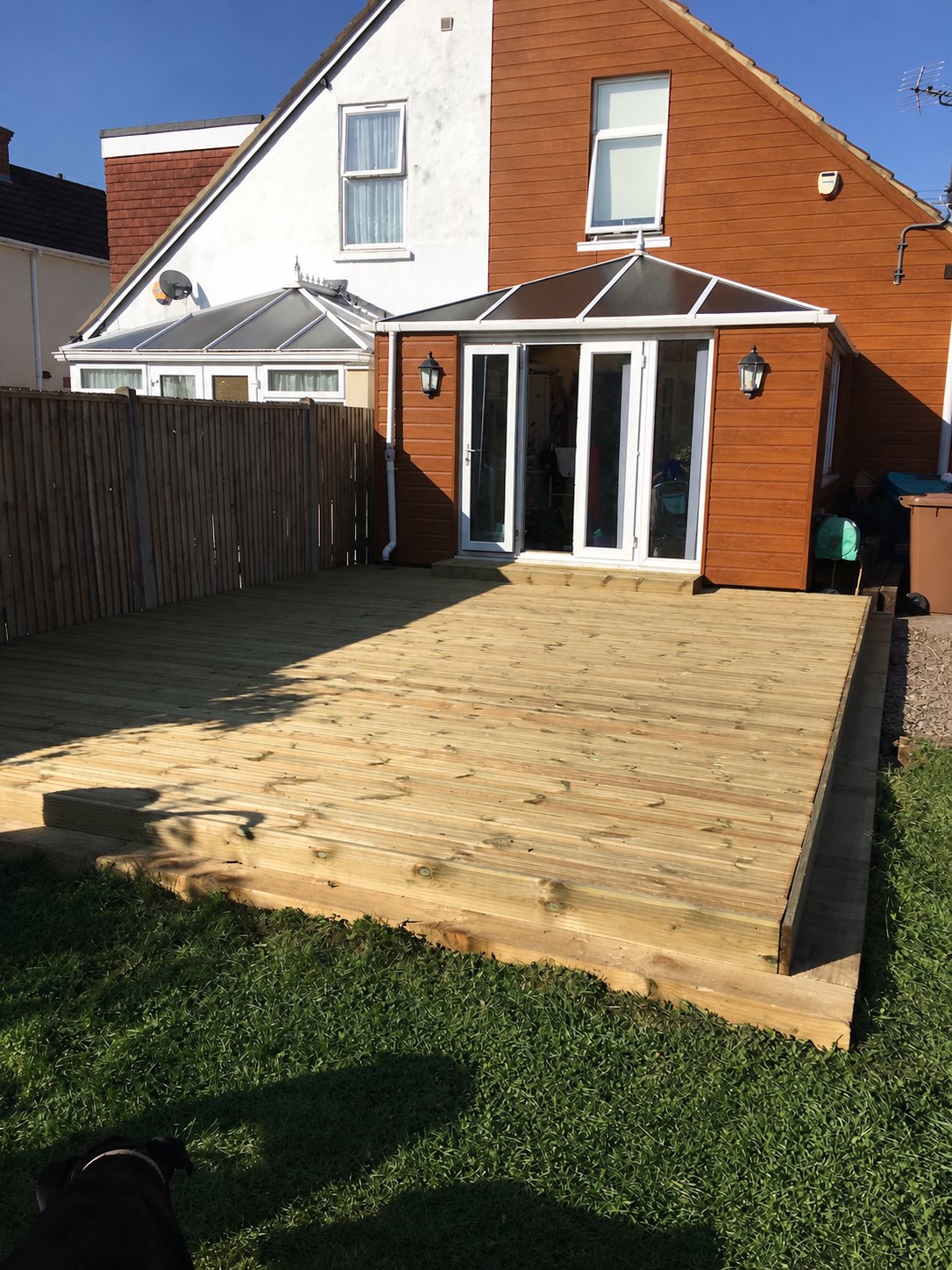
Before, during and after a timber decking replacement, from the old deck to the finished terrace.
View Ashford projectBorough Green
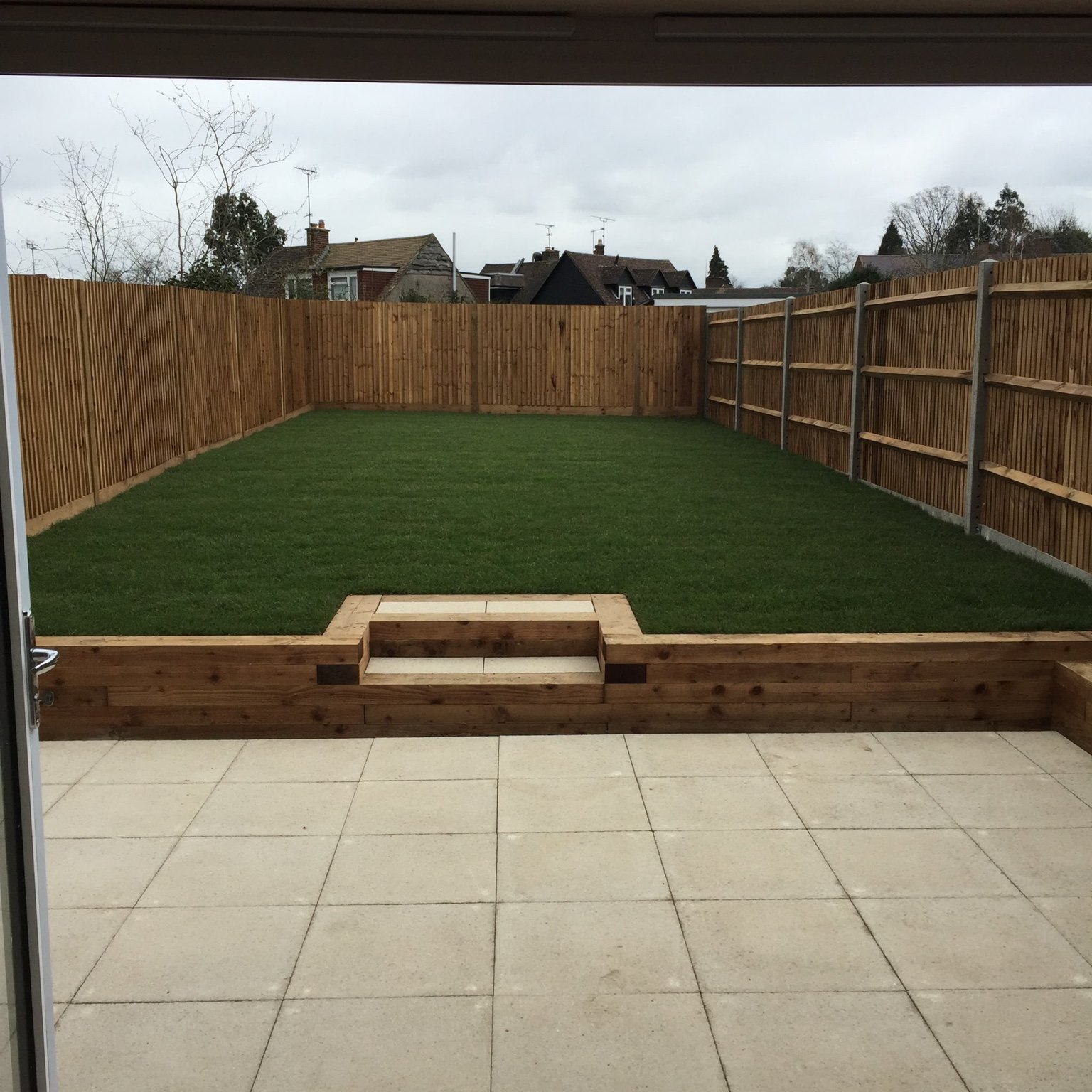
1800mm closeboard fencing, softwood sleeper planters, a 450mm buff slab patio and new turf.
View Borough Green projectCanterbury
Porcelain paving, artificial grass and a custom steel-frame pergola with polycarbonate roof.
View Canterbury projectStrood
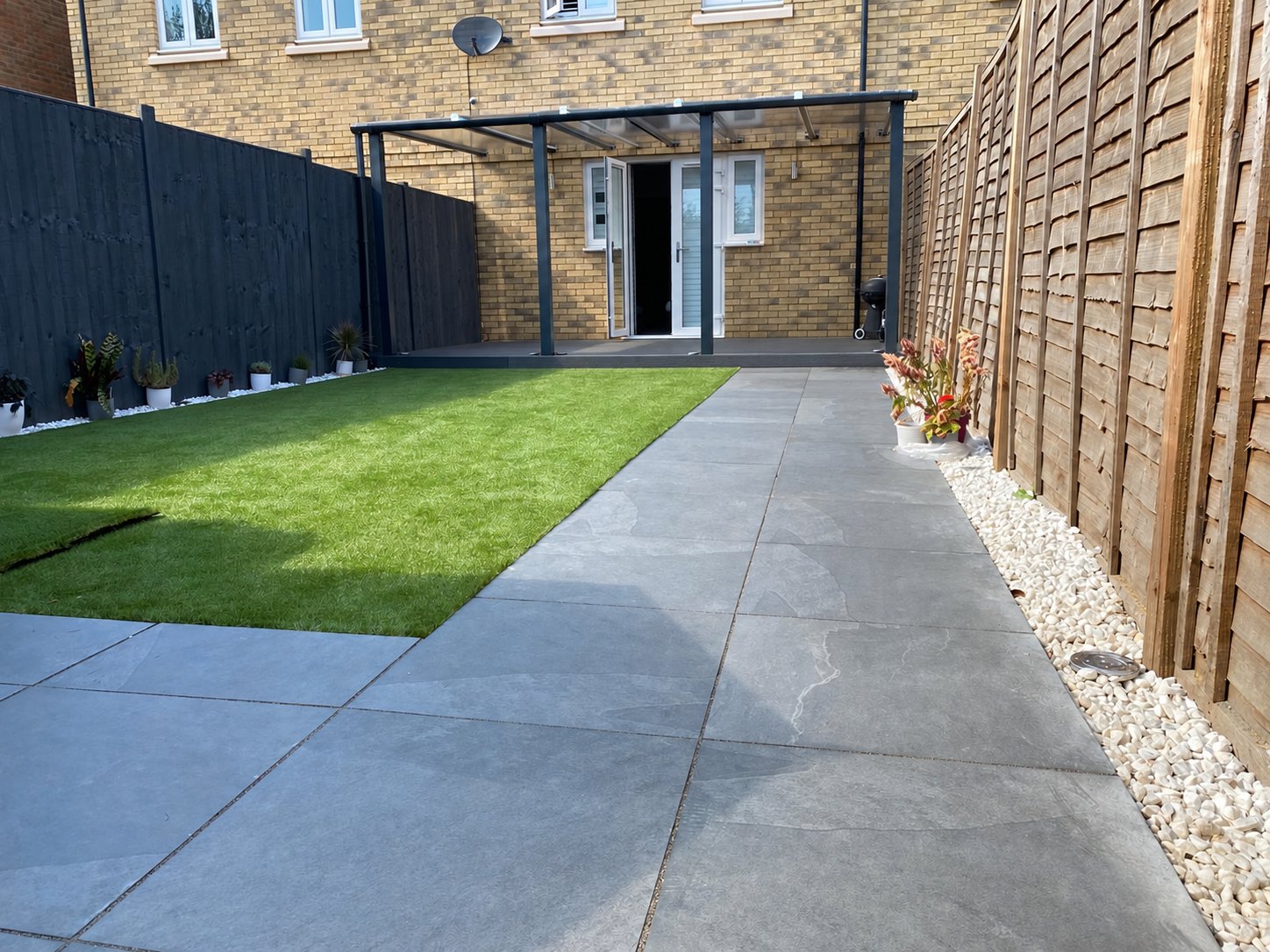
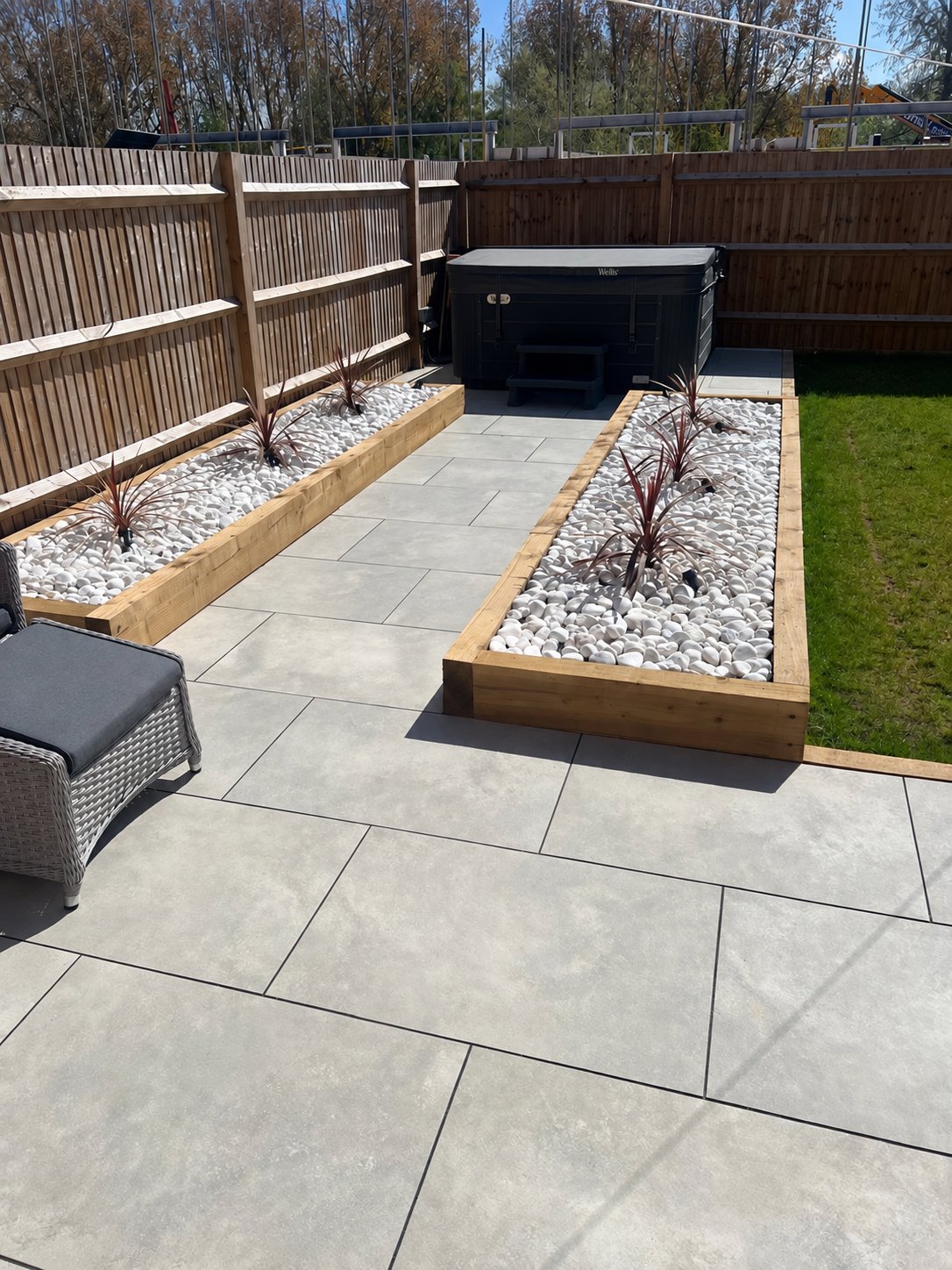
Grey porcelain paving framed by timber sleeper planters, white decorative stones and planting.
View Strood projectWest Malling
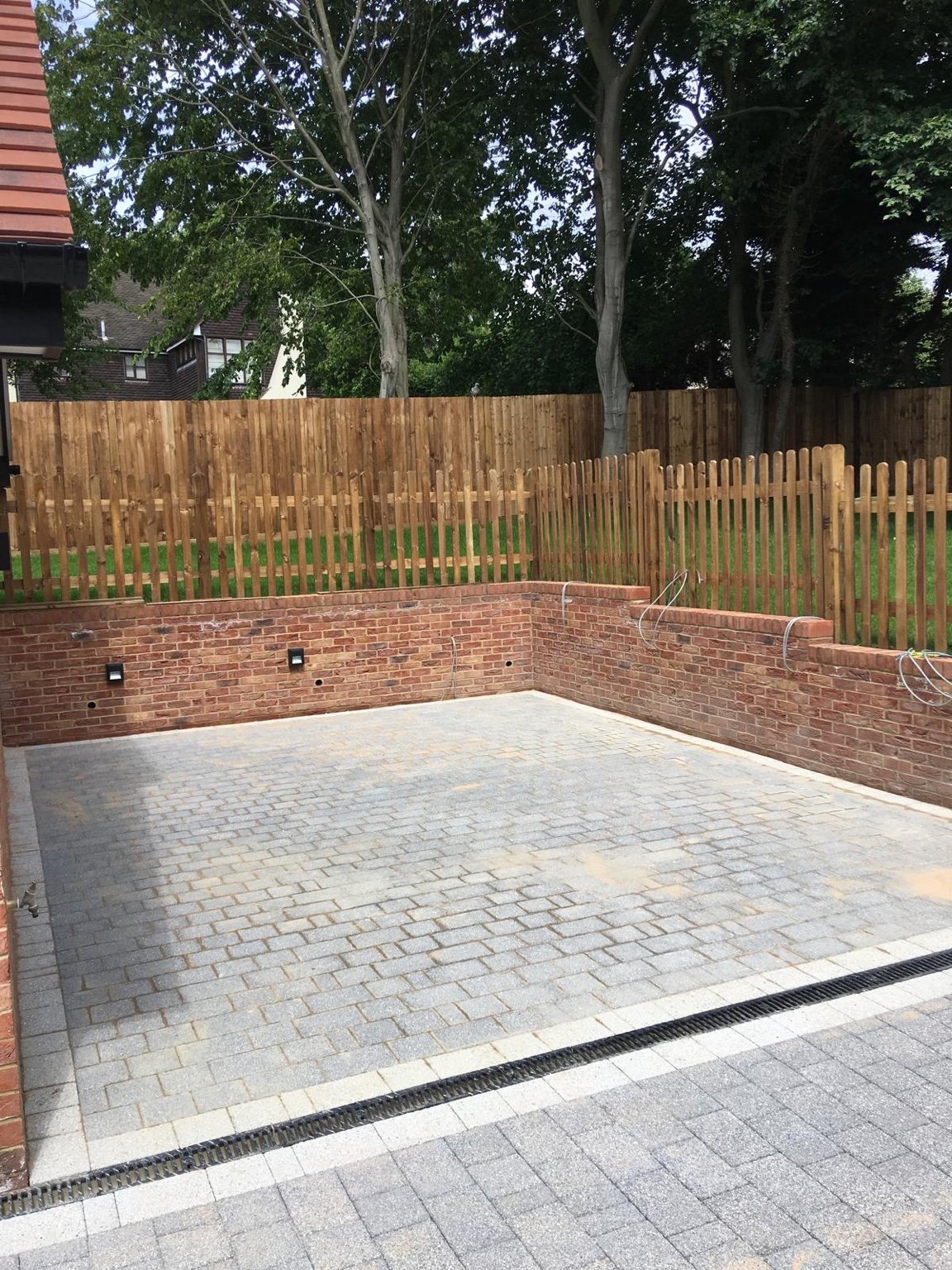
Block paving, porcelain patio, brick retaining walls and two styles of timber fencing.
View West Malling projectAshford
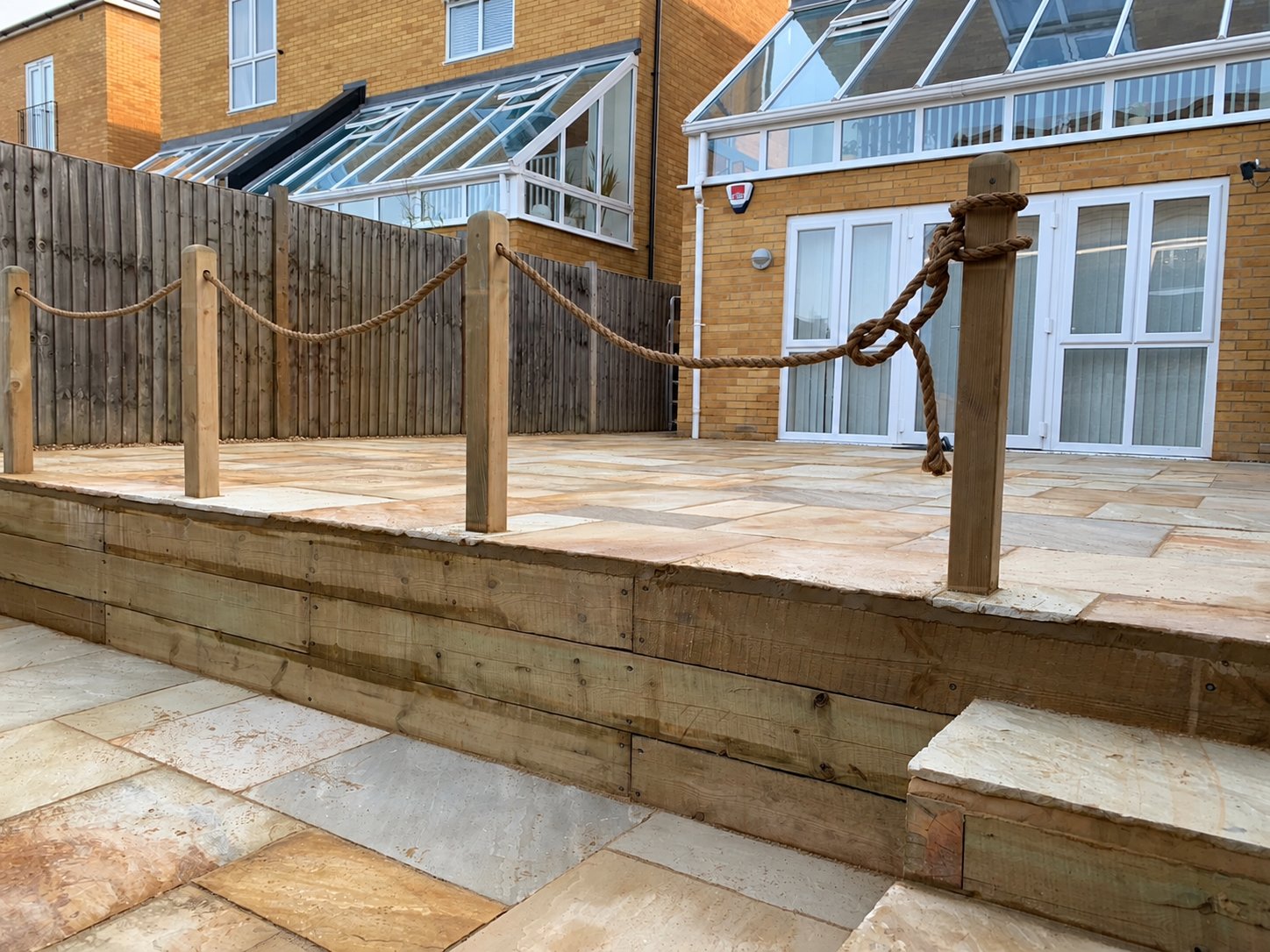
Sandstone paving across two levels, with timber sleeper retaining walls.
View Ashford projectDeal
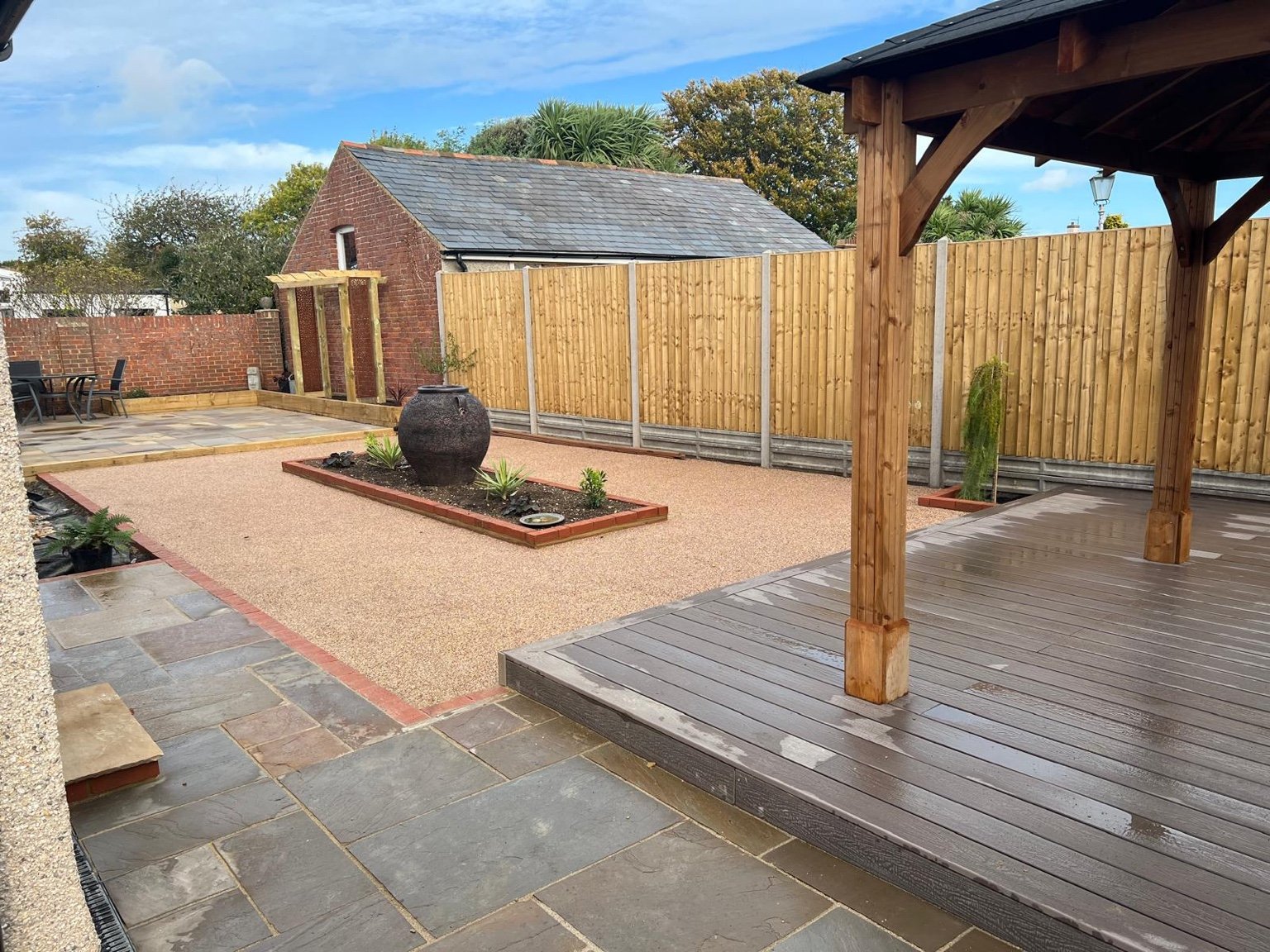
A sandstone patio, ash-coloured composite decking, pitched-roof pergola and sleeper planters.
View Deal projectSevenoaks
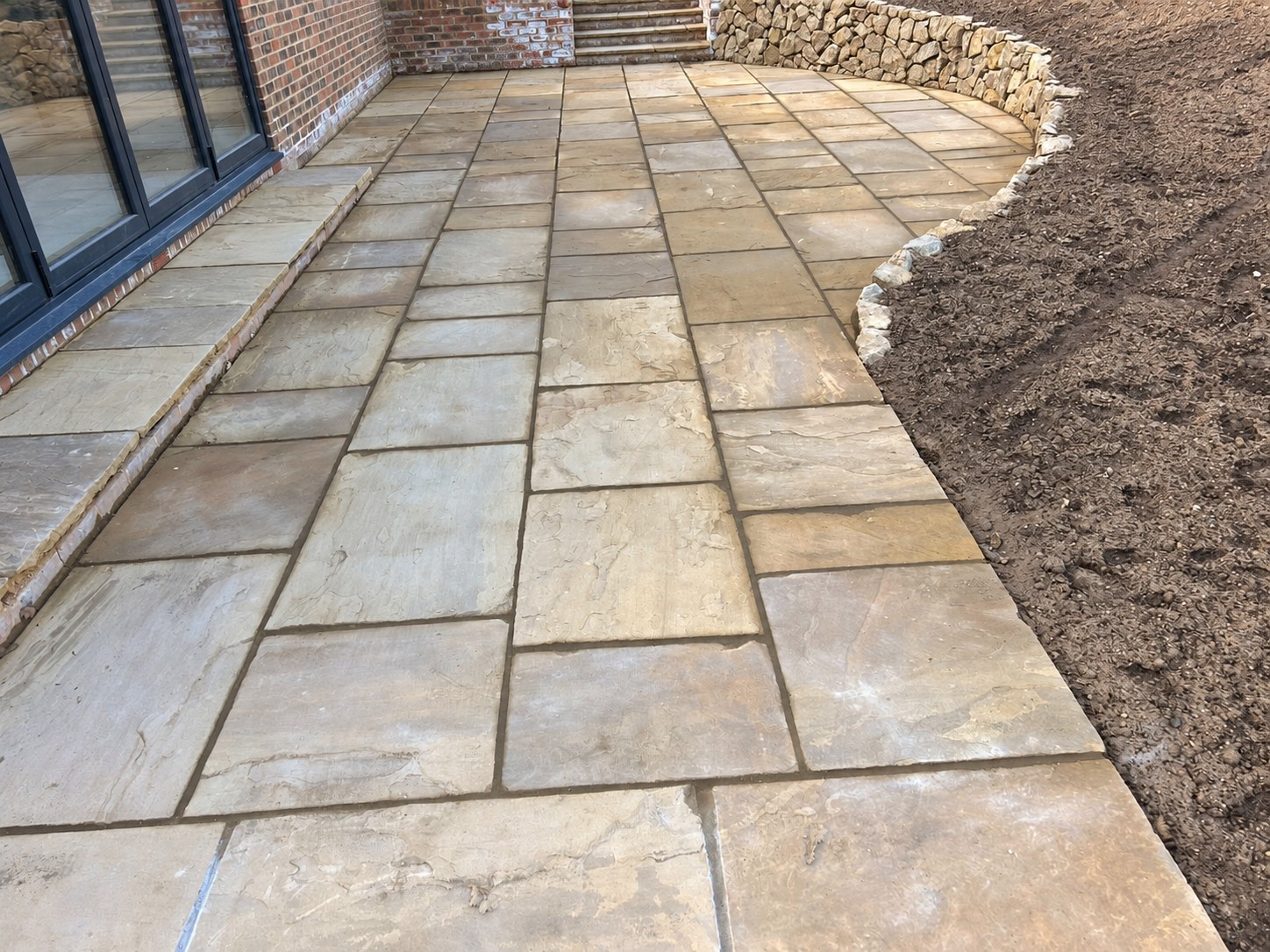
75mm thick York stone paving, curved paths, brick walls and Kentish ragstone walls.
View Sevenoaks projectHerne Bay
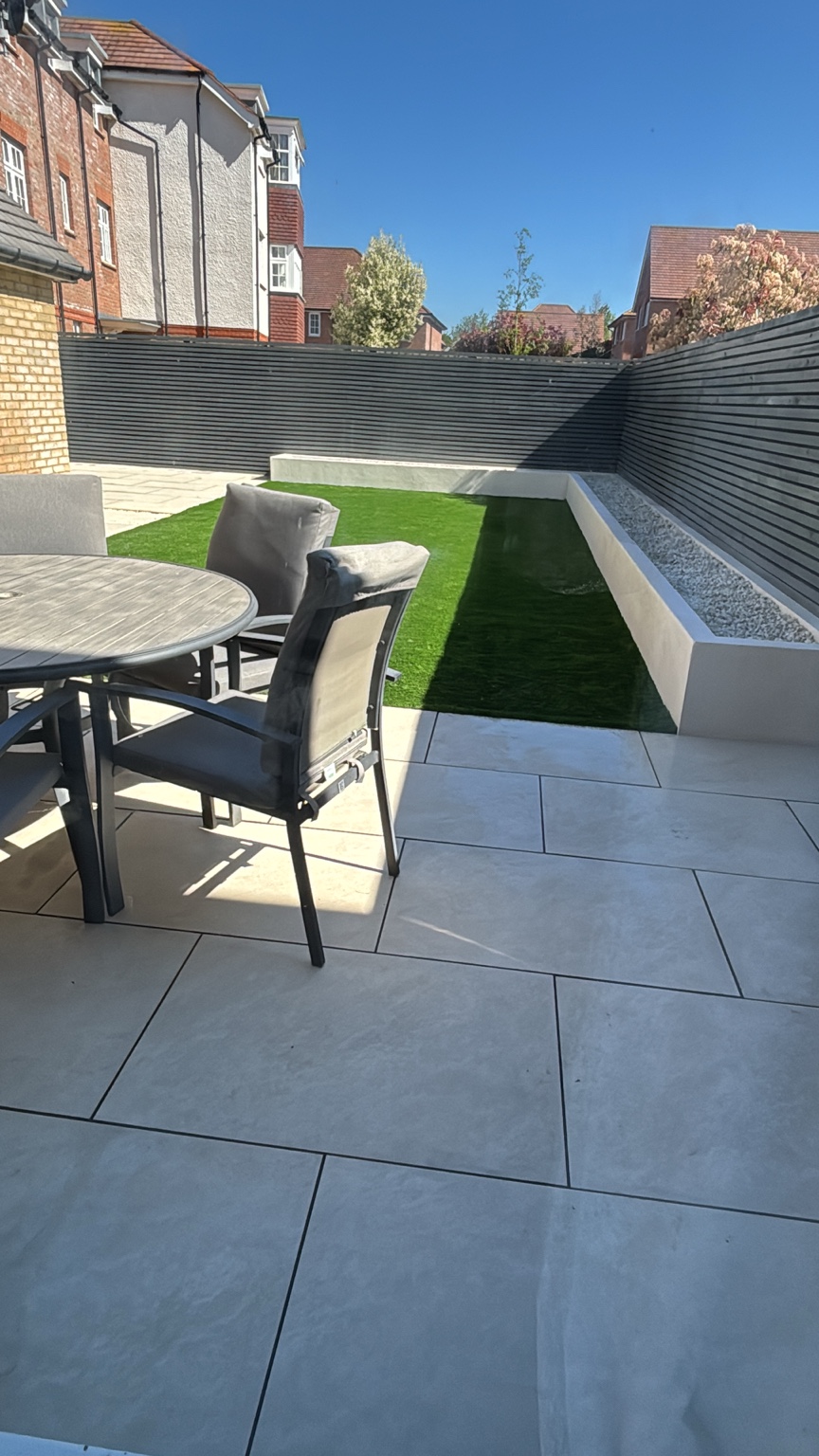
Porcelain patio, raised bed, artificial grass and slatted fencing. See the garden before and after.
View Herne Bay projectSittingbourne
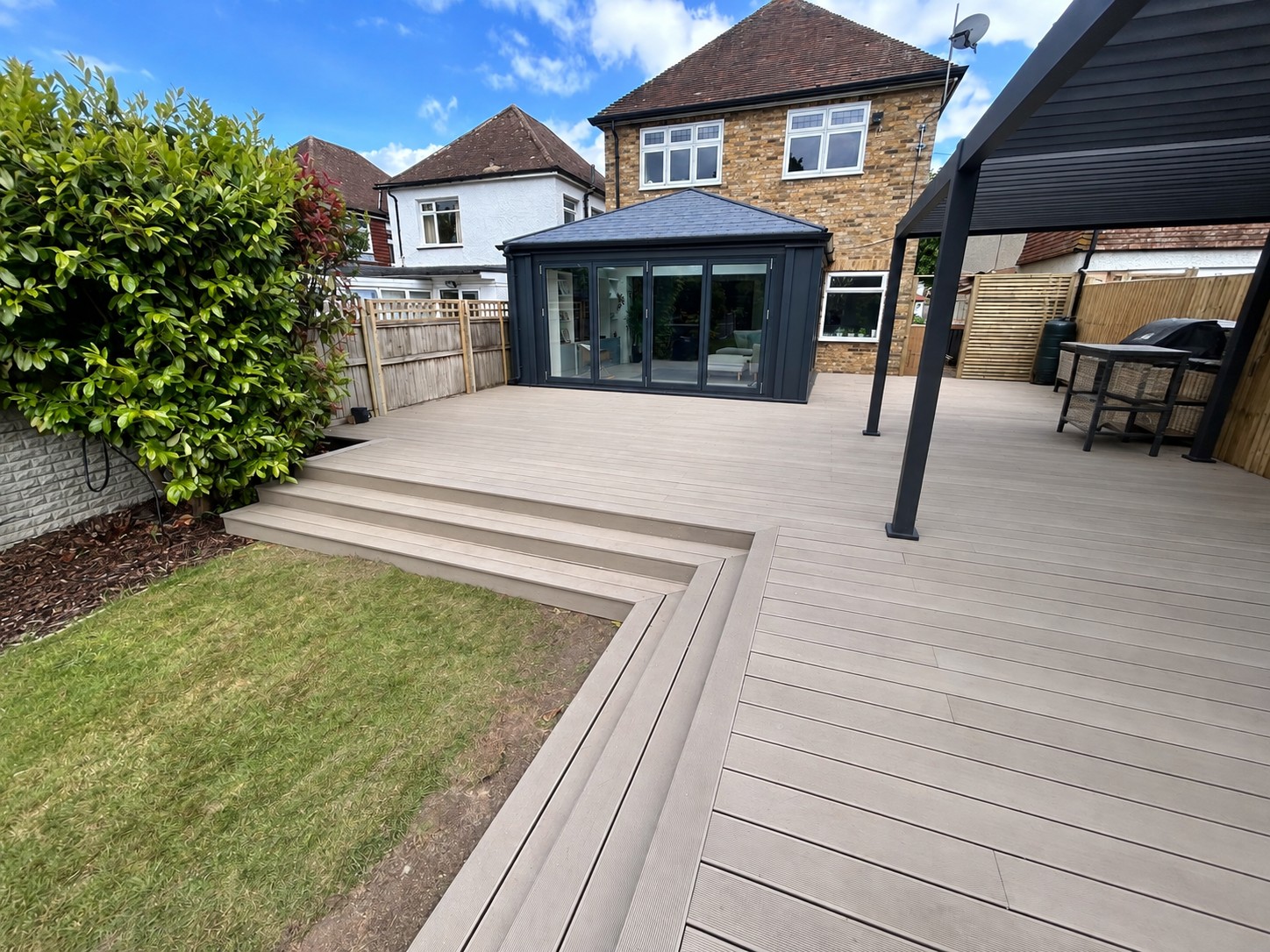
A broad decking terrace with defined board lines and steps connecting the house to the lawn.
View Sittingbourne projectDeal
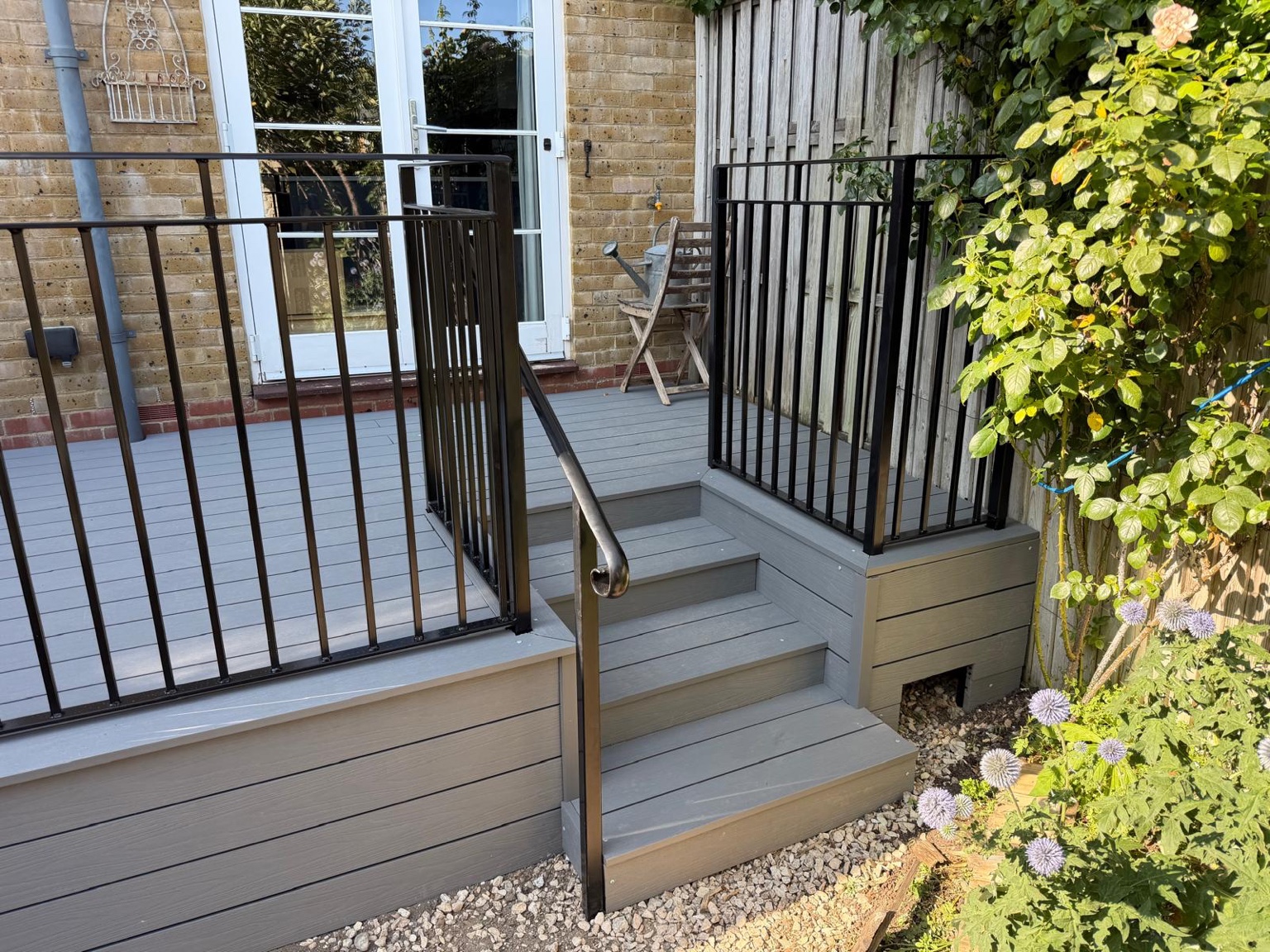
Raised grey decking with black railings, inset steps and a matching handrail.
View Deal projectYOUR TENTERDEN FENCE REPAIR
Include the complete run, affected supports and access route, with your postcode and approximate fence height.