Chislehurst
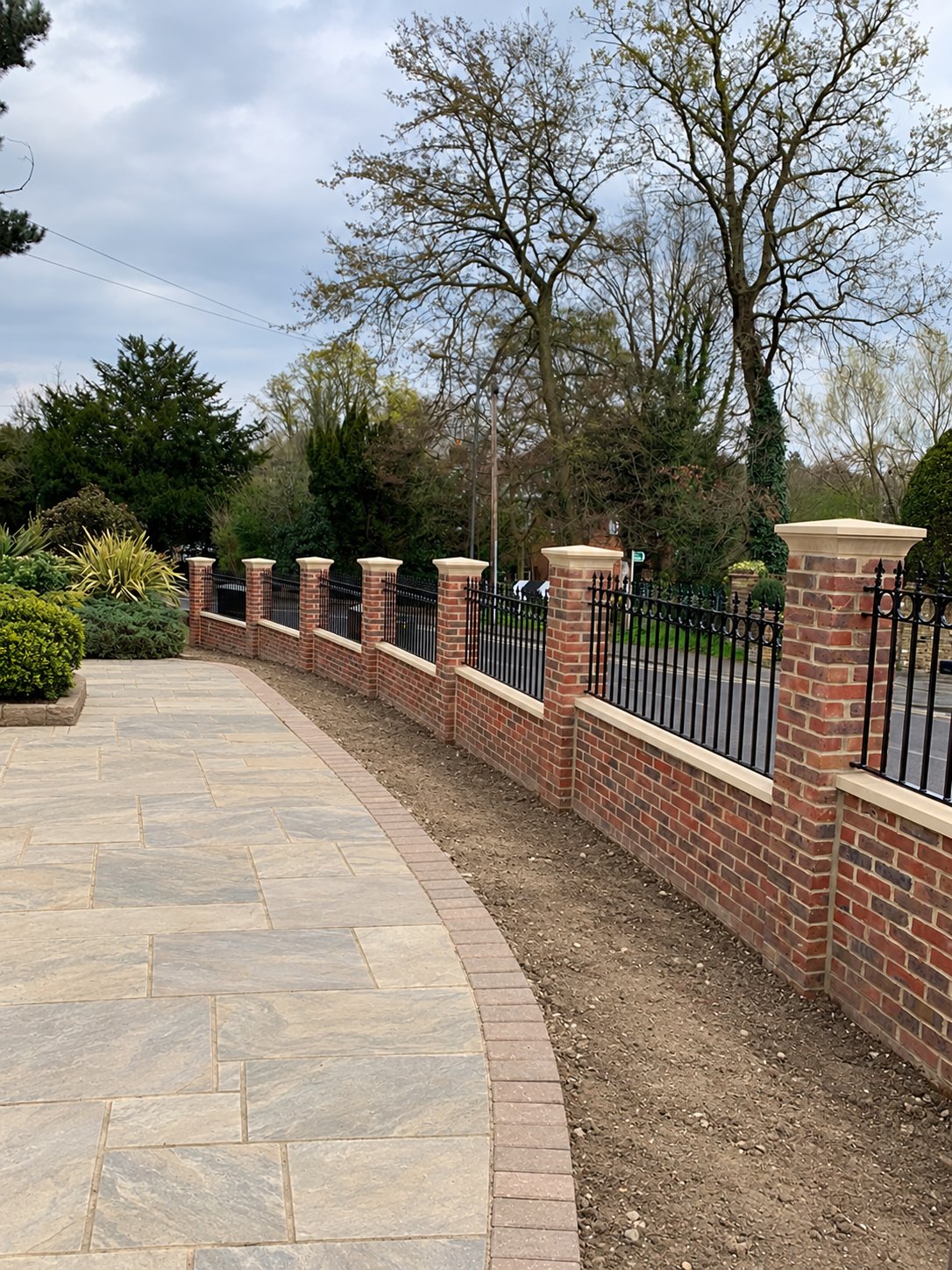
Brick piers, stone coping and railings
A brick boundary with pale stone coping and pier caps, finished with decorative railing panels.
View Chislehurst projectCHATHAM · KENT
Describe damaged panels, moving posts, loose boards or a faulty gate at your Chatham property. We discuss repairs and replacement after assessing the failure and neighbouring support, with retained components, access, foundation work and making good identified clearly.
Send a wide view of the affected run and close-ups taken without disturbing unstable sections. Explain whether timber split, a post moved, rails loosened or a gate drags. The symptoms can need different repair work instead of a standard panel swap.
Show adjoining posts, connections and the ground around foundations. A replacement panel needs sound support. Tell us about repeat faults or previous repairs to help explain why the current damage needs more attention than the visible component alone.
Local work may preserve suitable sections and reduce removal. Several deteriorated supports or incompatible older components can make broader replacement more useful. Compare the affected construction rather than deciding from one material price.
List retained and replaced boards, panels, rails, posts and fixings in the scope. Check dimensions and availability before agreeing a match. Weathered and new material may have a visible difference, with appearance clarified before ordering.
Post work may involve old concrete and nearby planting or paving. Photograph those junctions so protection and reinstatement are included. Reinforcement, replacement and resetting should be identified as distinct proposals where relevant.
For a gate, show its hinges, catches, posts and clearance above the ground. New hardware may not correct movement in the supporting structure. Assess the cause before choosing adjustment or replacement components.
Check who owns the boundary and what the relevant records or agreements say before arranging work. Resolve working access with affected parties. If responsibility is disputed, use official guidance and obtain suitable advice rather than treating a search answer as a decision on your property.
Painting or altering another owner’s fence also needs ownership and agreement clarified first. Compare repair costs including labour, components, support checks, removal, waste and making good. Ask how hidden deterioration found during dismantling will be explained before additional work is agreed.
A repair proposal should name the affected panels, boards, rails, posts and fixings. Distinguish the failed component from the supports that remain. Describe the likely appearance of new material beside weathered sections and check whether compatible sizes can be obtained.
Agree access and how an opening will be managed while work takes place. Show nearby paving or planting that could be affected by removing a post foundation. If further deterioration is discovered after taking the fence apart, ask how any changed scope and cost will be agreed before additional work proceeds.
Use the same agreed scope when comparing proposals. Confirm the materials and work below the visible finish, together with any retained construction. Ask how exclusions or provisional work will be handled and keep the written specification with the quotation.
Photographs, dimensions and access details help define the work. They can start the discussion, with a visit or further assessment where needed. A quoted total is useful when it is clear what the finished result includes.
Agree the programme after the scope and materials are confirmed. Include delivery arrangements, protection of retained features and any periods when the area cannot be used. At handover, confirm how the completed work should be used and cared for, and retain the relevant product details.
COMPLETED PROJECT · BOROUGH GREEN
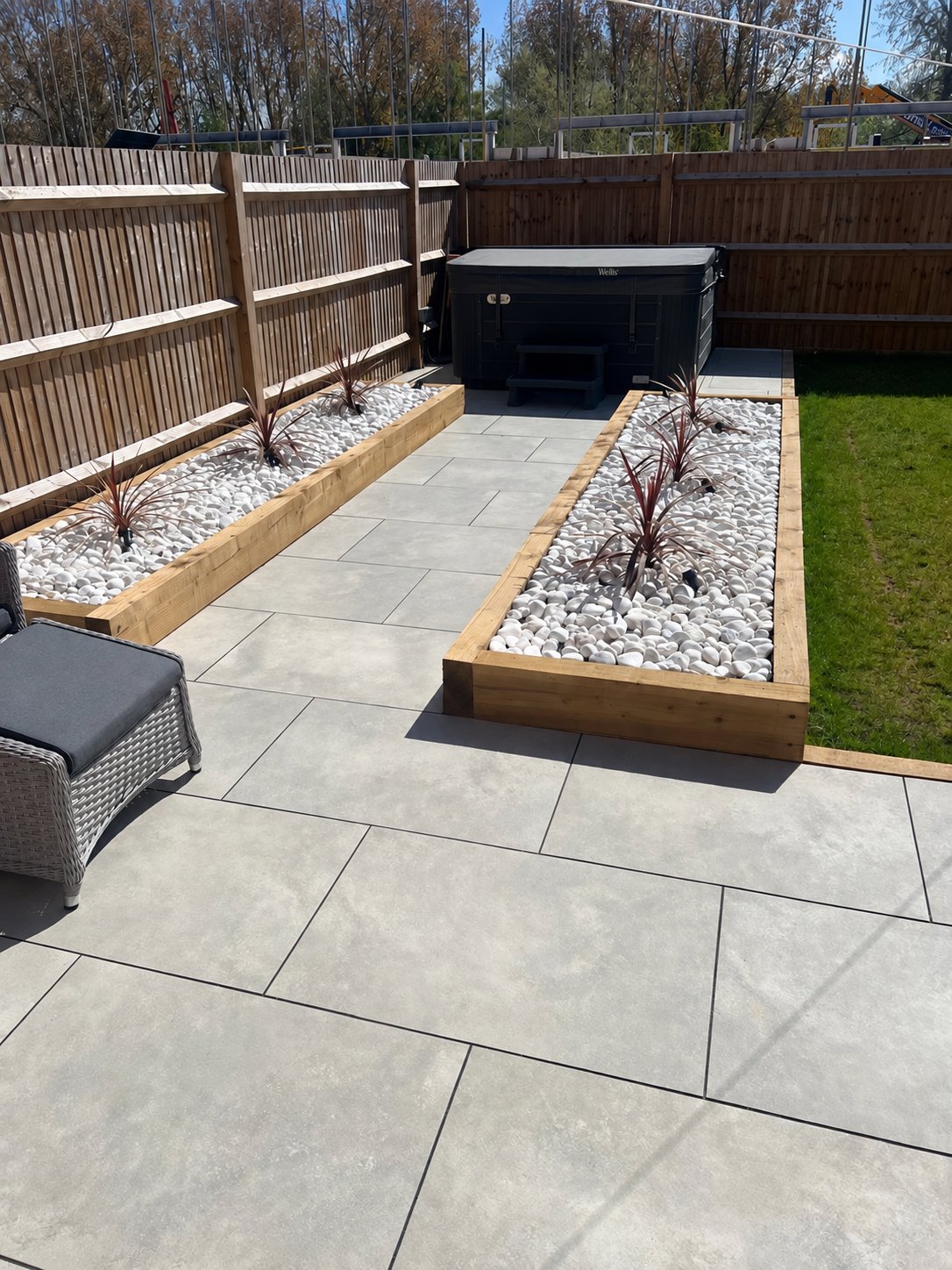
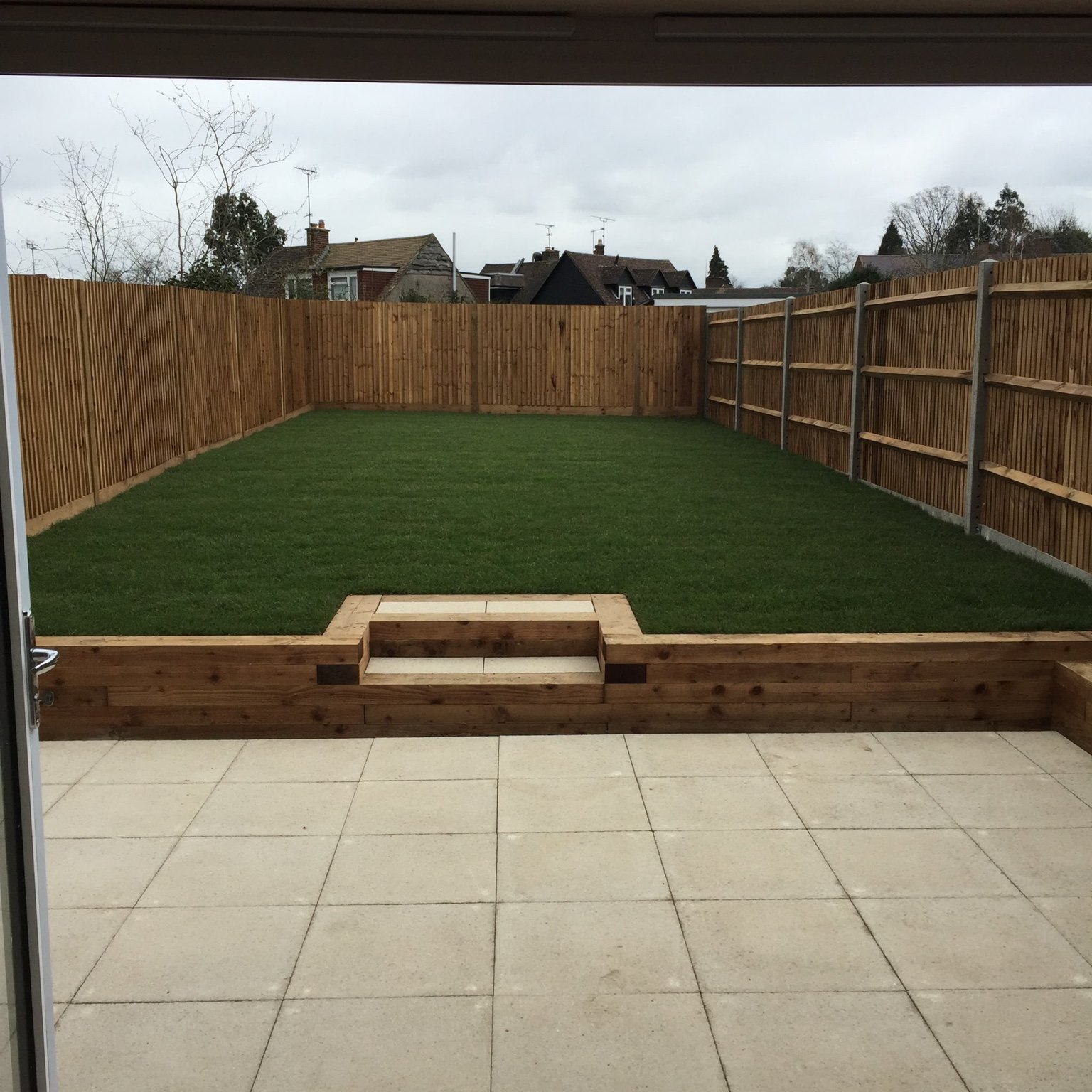
1800mm closeboard fencing, softwood sleeper planters, a 450mm buff slab patio and new turf.
This project is in Borough Green. The photographs show the documented work at that property.
View this project →Borough Green documents new closeboard fencing as part of a garden renovation. It can inform material matching and replacement choices; it is not evidence of a recorded fence repair.
GOV.UK: property boundaries explains the records and agreements relevant to boundary features. Confirm ownership and agreed access before changing a fence.
Confirm ownership and responsibility from the relevant records and agreements before arranging repairs.
Obligations depend on the actual records and circumstances; obtain suitable advice where disputed.
Check the complete linked official guidance and restrictions for any proposed height or position change.
Clarify ownership and obtain the owner’s agreement before painting or changing their fence; seek advice if disputed.
Assess size, compatibility and supporting posts and rails before a panel-only proposal.
Check the post, foundation and adjacent sections before choosing reinforcement, resetting or replacement.
Assess supports, hinges, catches and clearances to identify the cause and work needed.
The portfolio retains genuine work descriptions; new fencing is not presented as an undocumented repair.
OUR WORK · KENT
Chislehurst
A brick boundary with pale stone coping and pier caps, finished with decorative railing panels.
View Chislehurst projectSt Margaret’s Bay
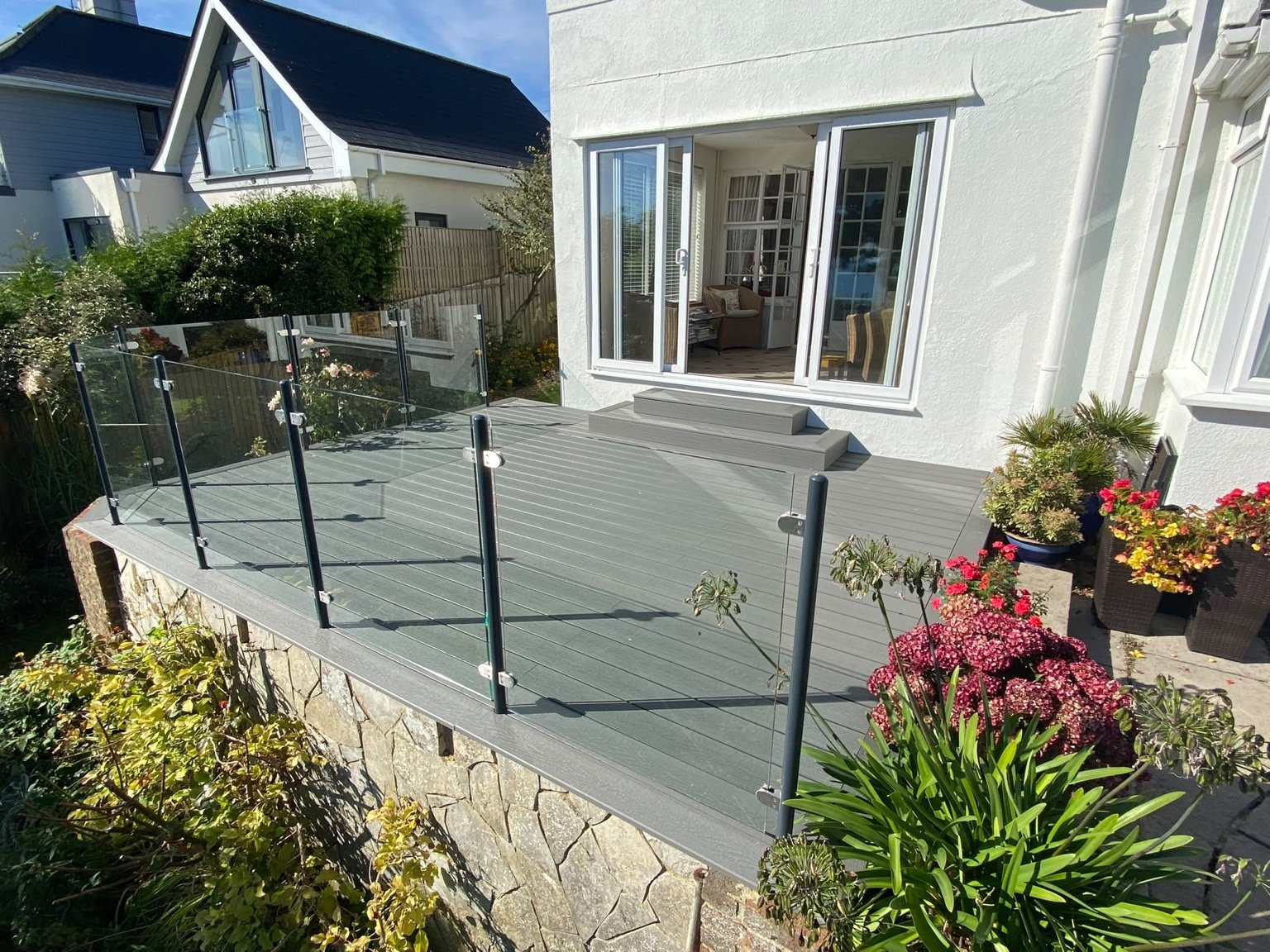
Grey composite decking, glass panels, powder-coated steel posts and matching steps.
View St Margaret’s Bay projectFolkestone
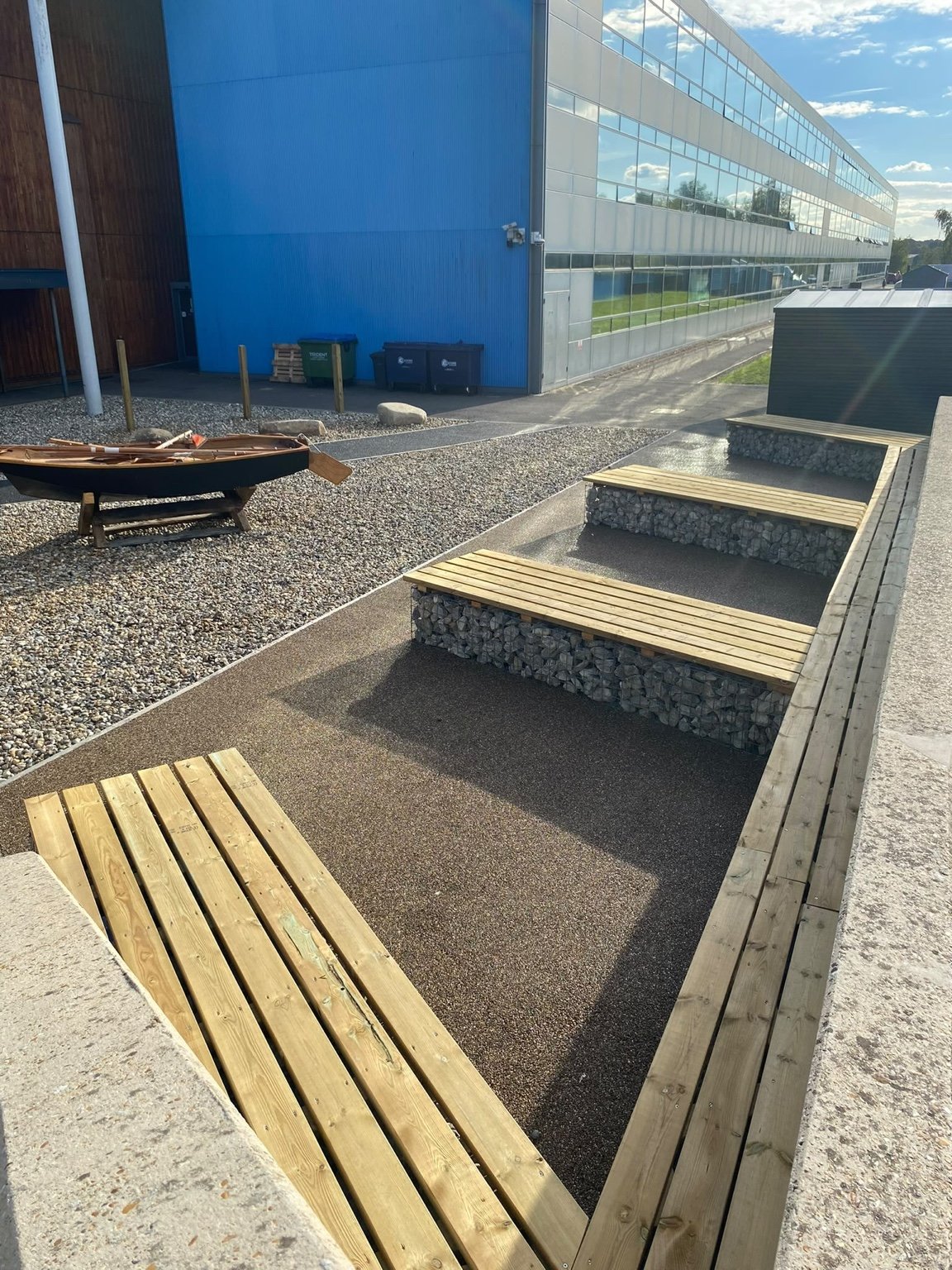
Timber-topped gabion benches, resin-bonded surfacing, shingle and a boat feature at the academy entrance.
View Folkestone projectCanterbury
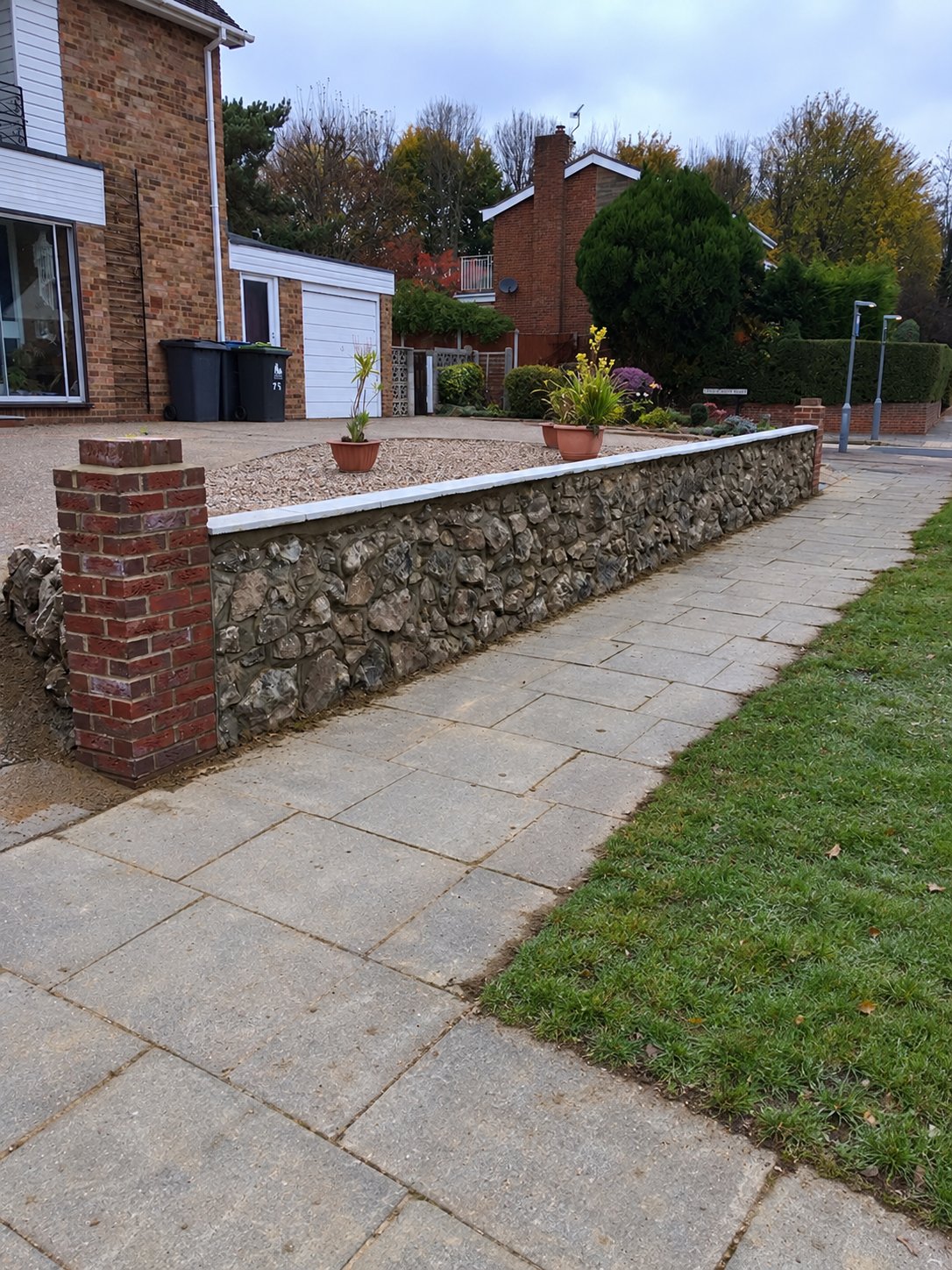
The stones from a customer’s late husband’s rockery kept and reused in a new front wall.
View Canterbury projectCanterbury
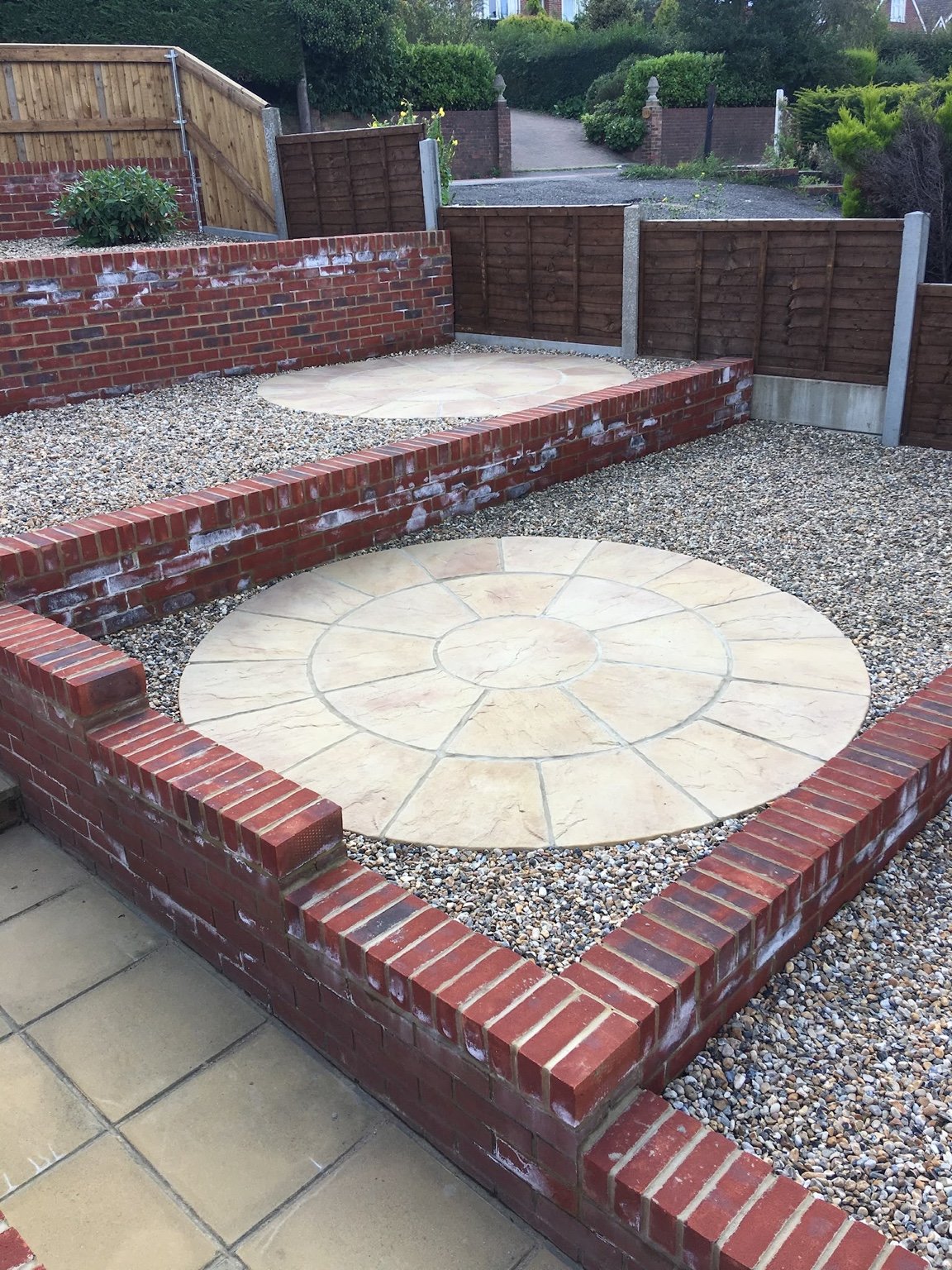
Retaining walls, shingle infill and riven buff slab circles across connected garden levels.
View Canterbury projectAshford
Before, during and after a timber decking replacement, from the old deck to the finished terrace.
View Ashford projectBorough Green
1800mm closeboard fencing, softwood sleeper planters, a 450mm buff slab patio and new turf.
View Borough Green projectCanterbury
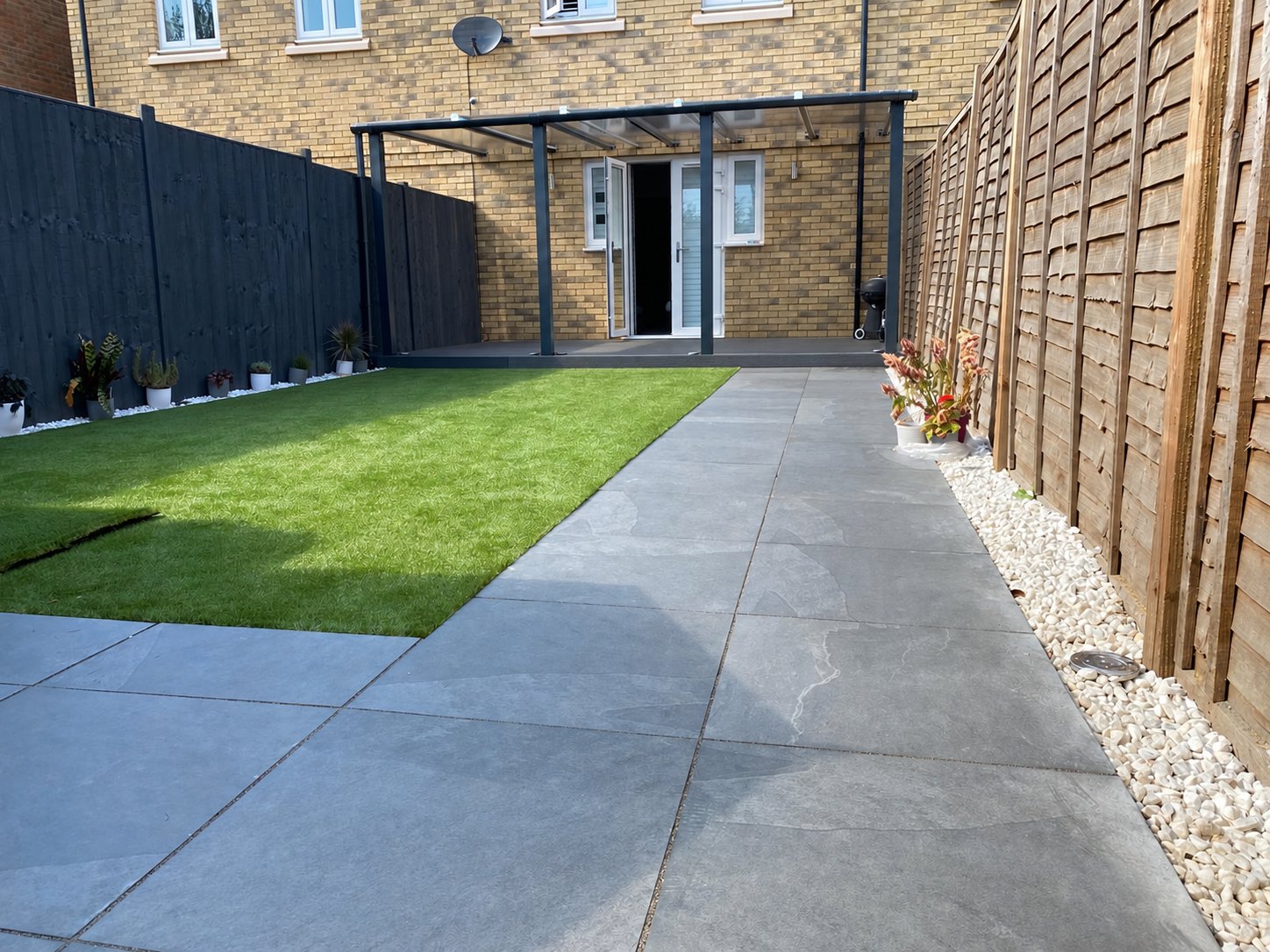
Porcelain paving, artificial grass and a custom steel-frame pergola with polycarbonate roof.
View Canterbury projectStrood
Grey porcelain paving framed by timber sleeper planters, white decorative stones and planting.
View Strood projectWest Malling
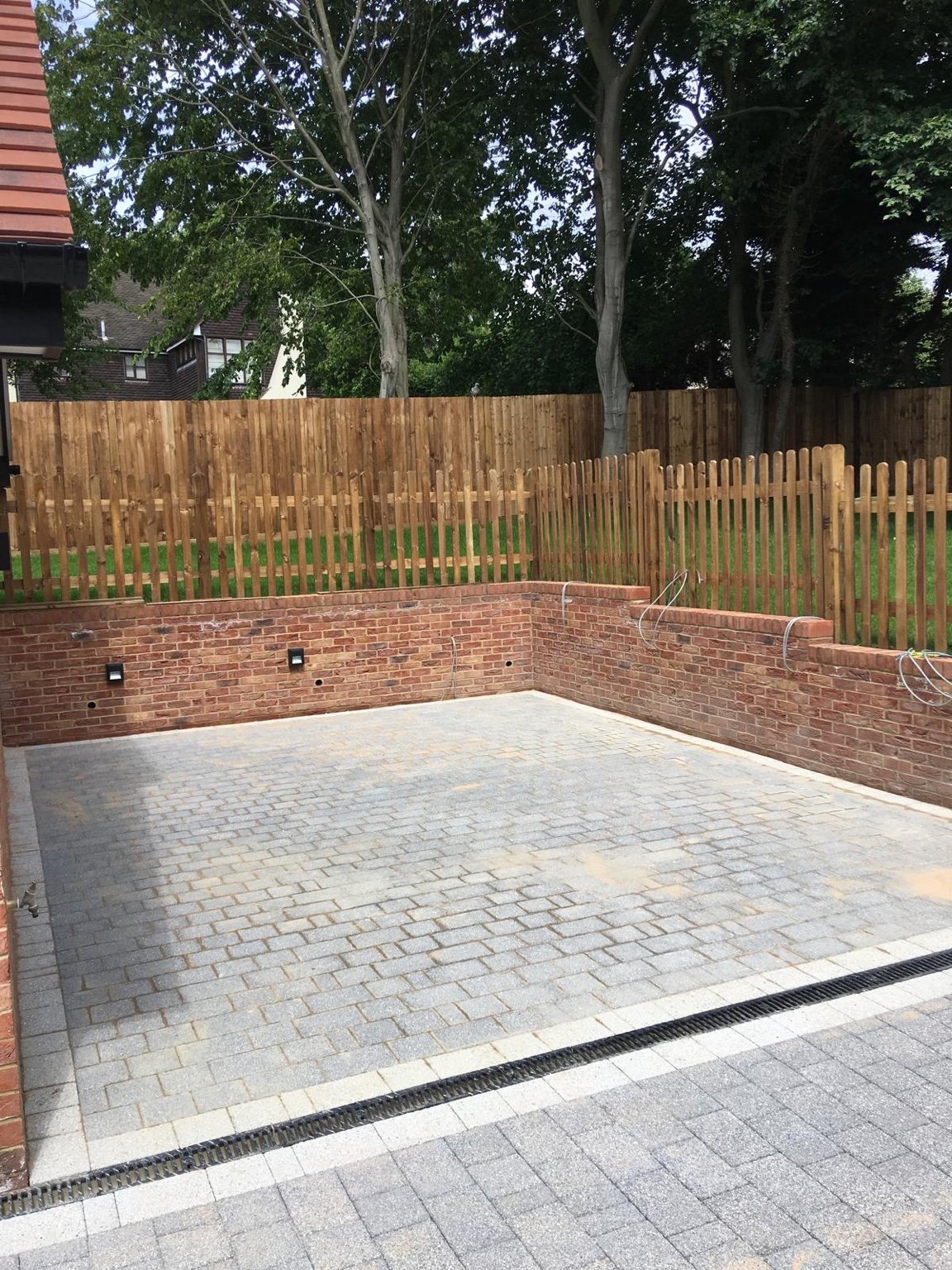
Block paving, porcelain patio, brick retaining walls and two styles of timber fencing.
View West Malling projectAshford
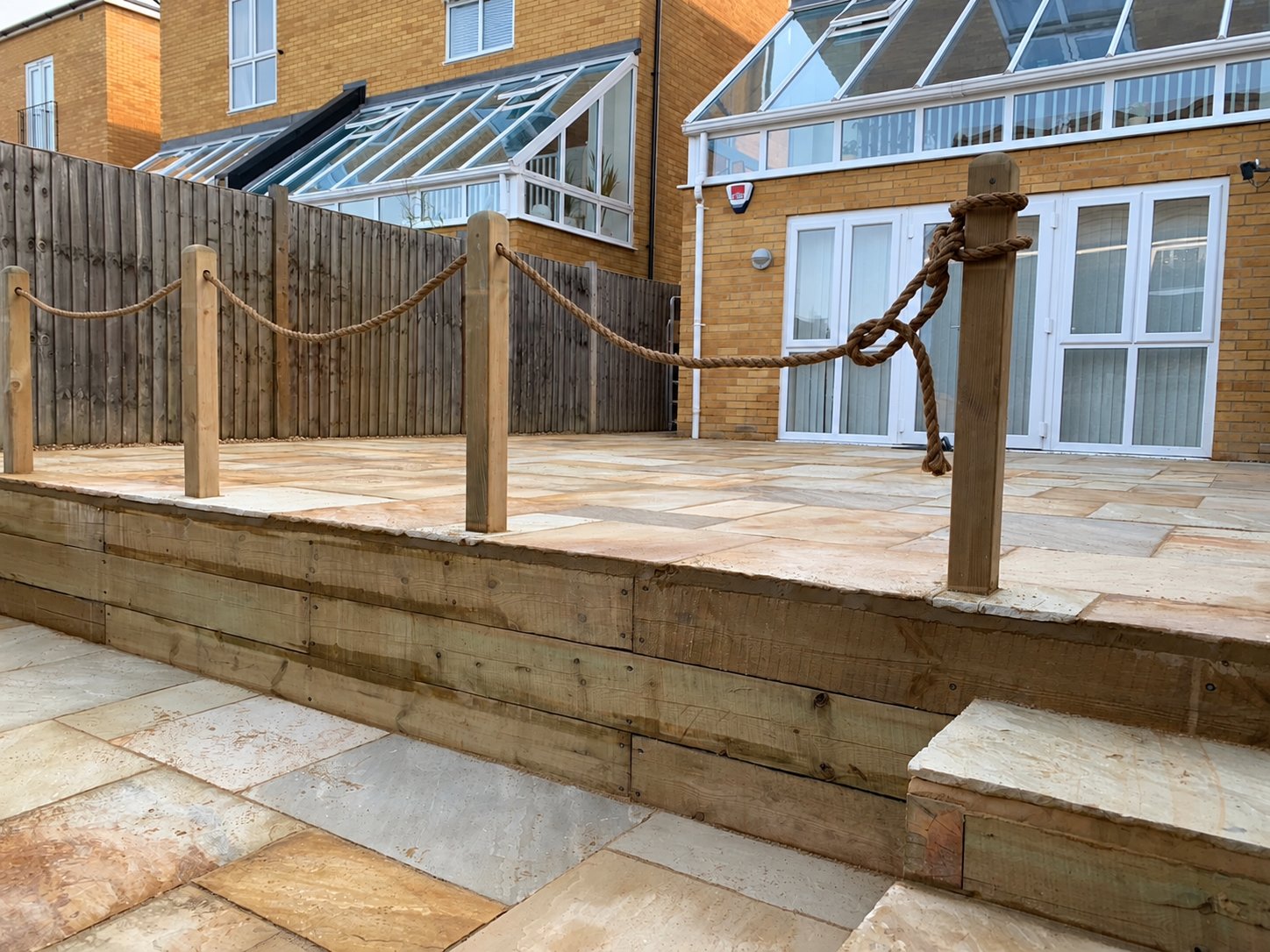
Sandstone paving across two levels, with timber sleeper retaining walls.
View Ashford projectDeal
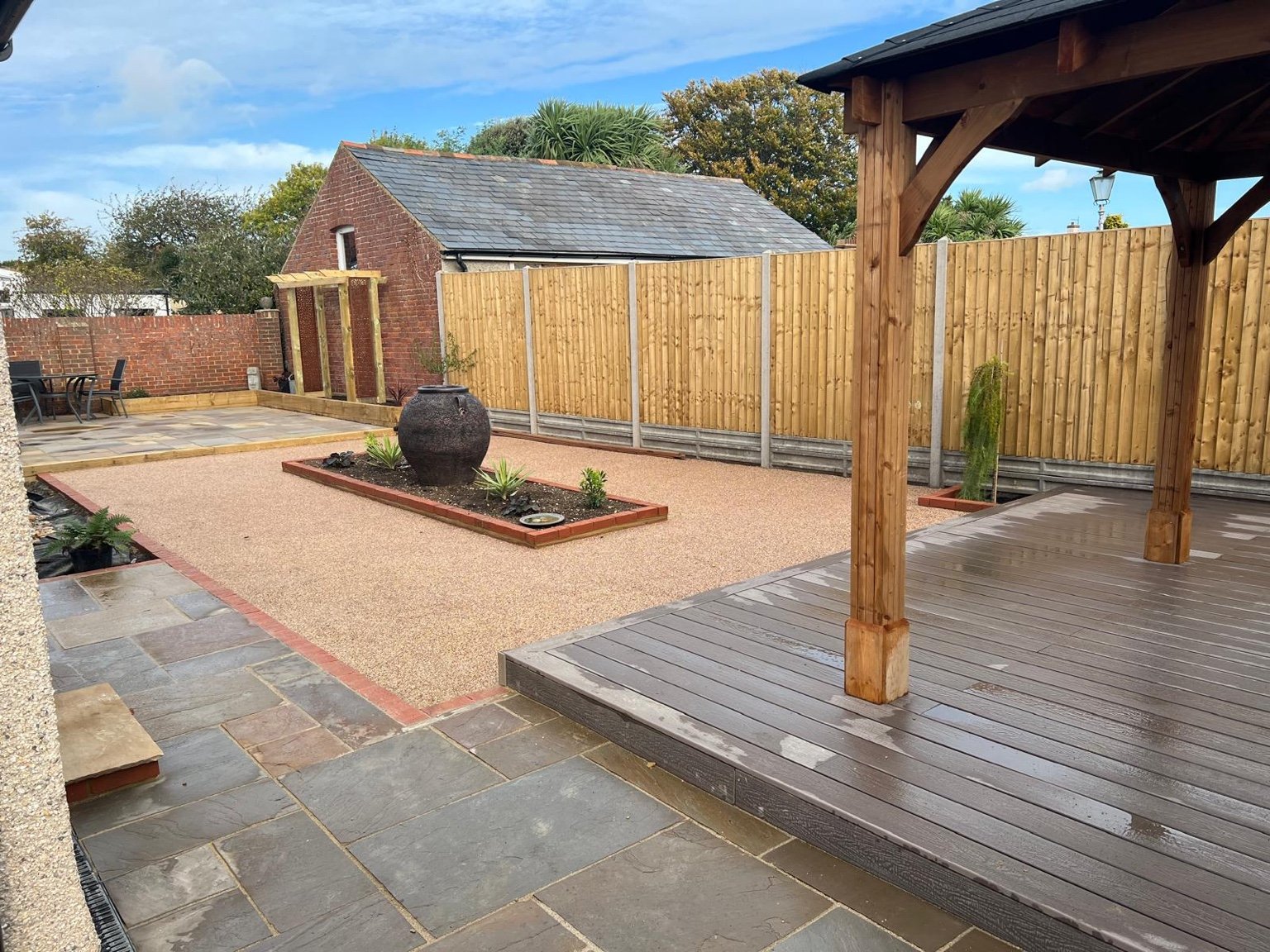
A sandstone patio, ash-coloured composite decking, pitched-roof pergola and sleeper planters.
View Deal projectSevenoaks
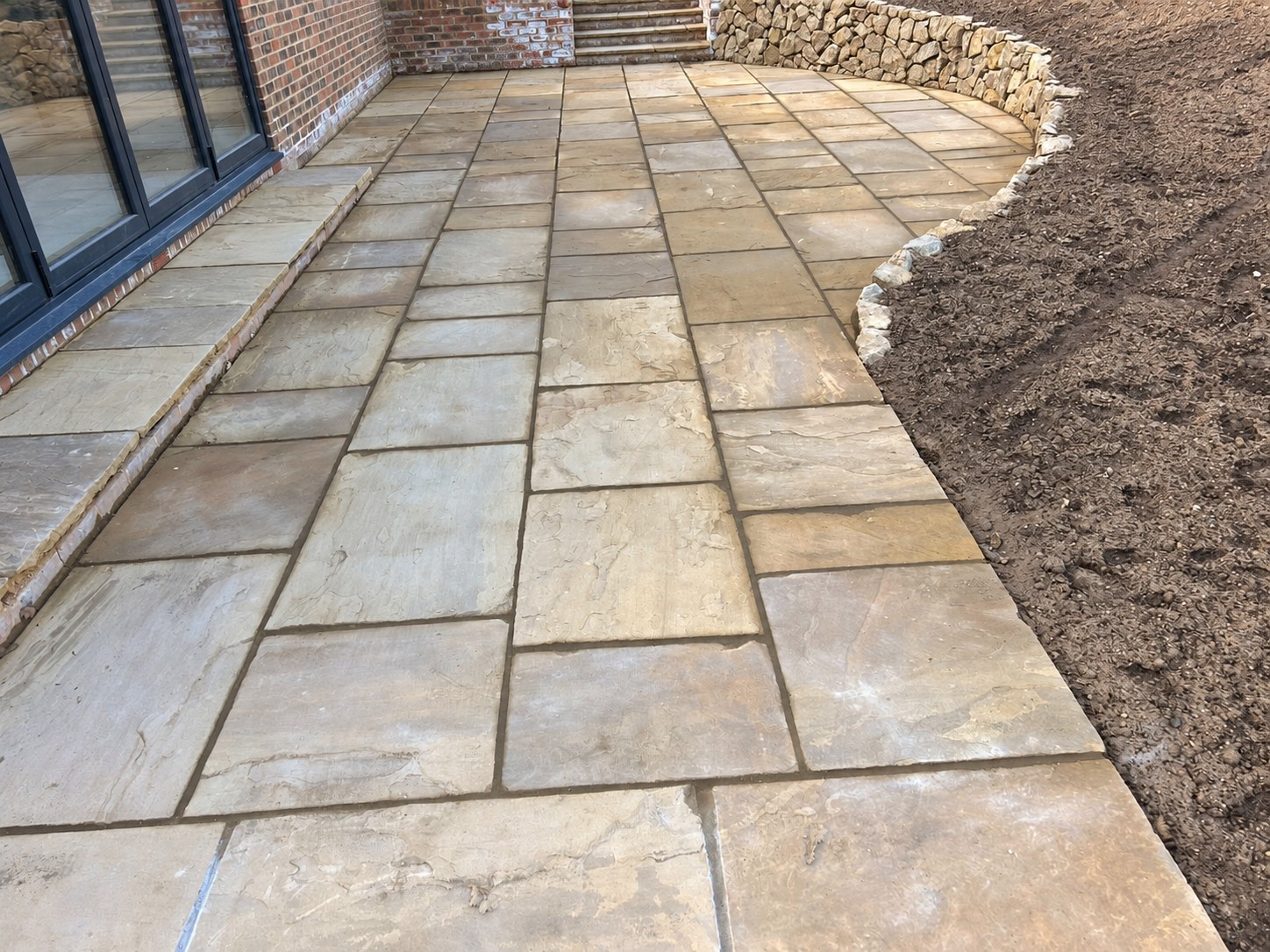
75mm thick York stone paving, curved paths, brick walls and Kentish ragstone walls.
View Sevenoaks projectHerne Bay
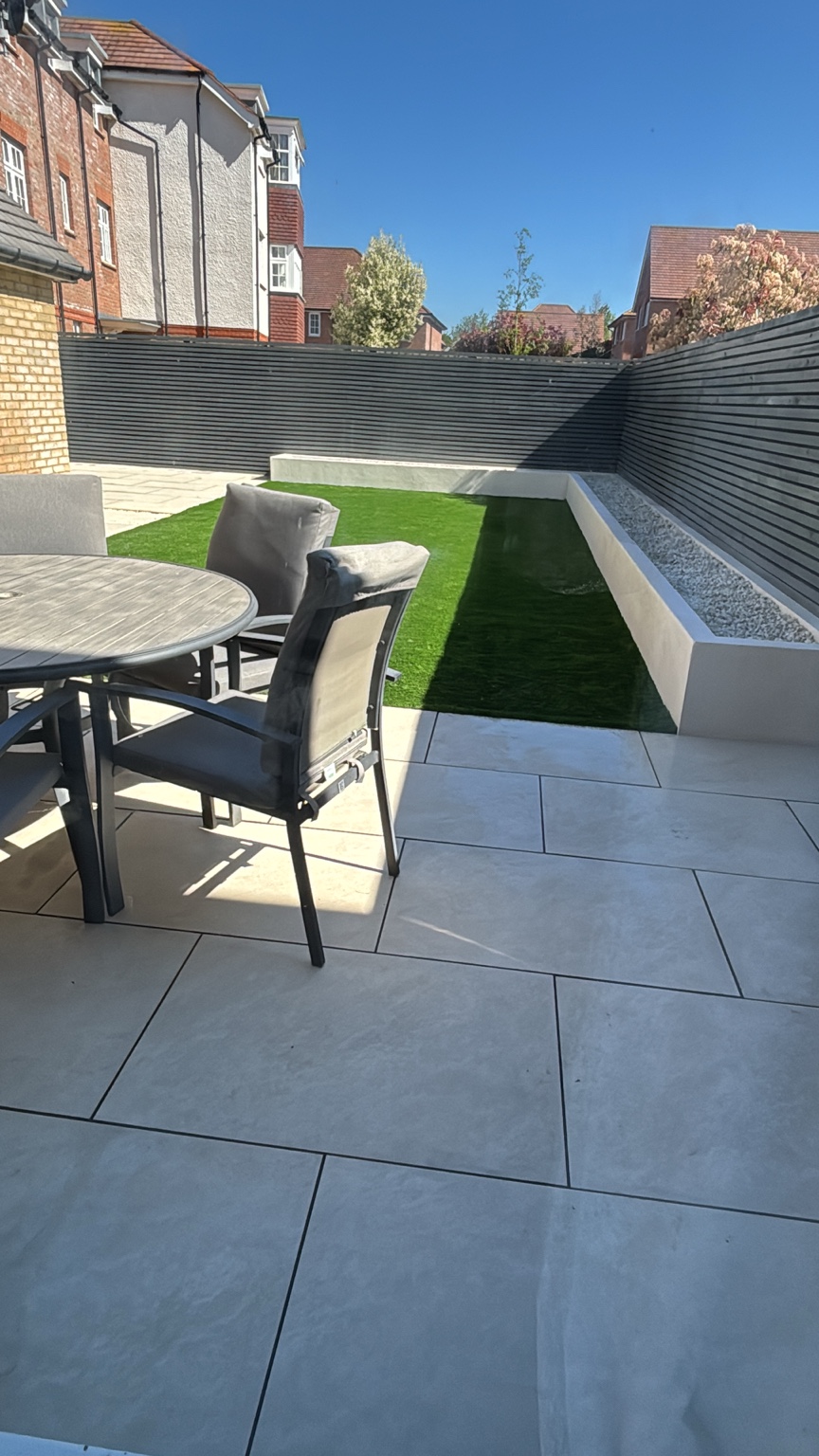
Porcelain patio, raised bed, artificial grass and slatted fencing. See the garden before and after.
View Herne Bay projectSittingbourne
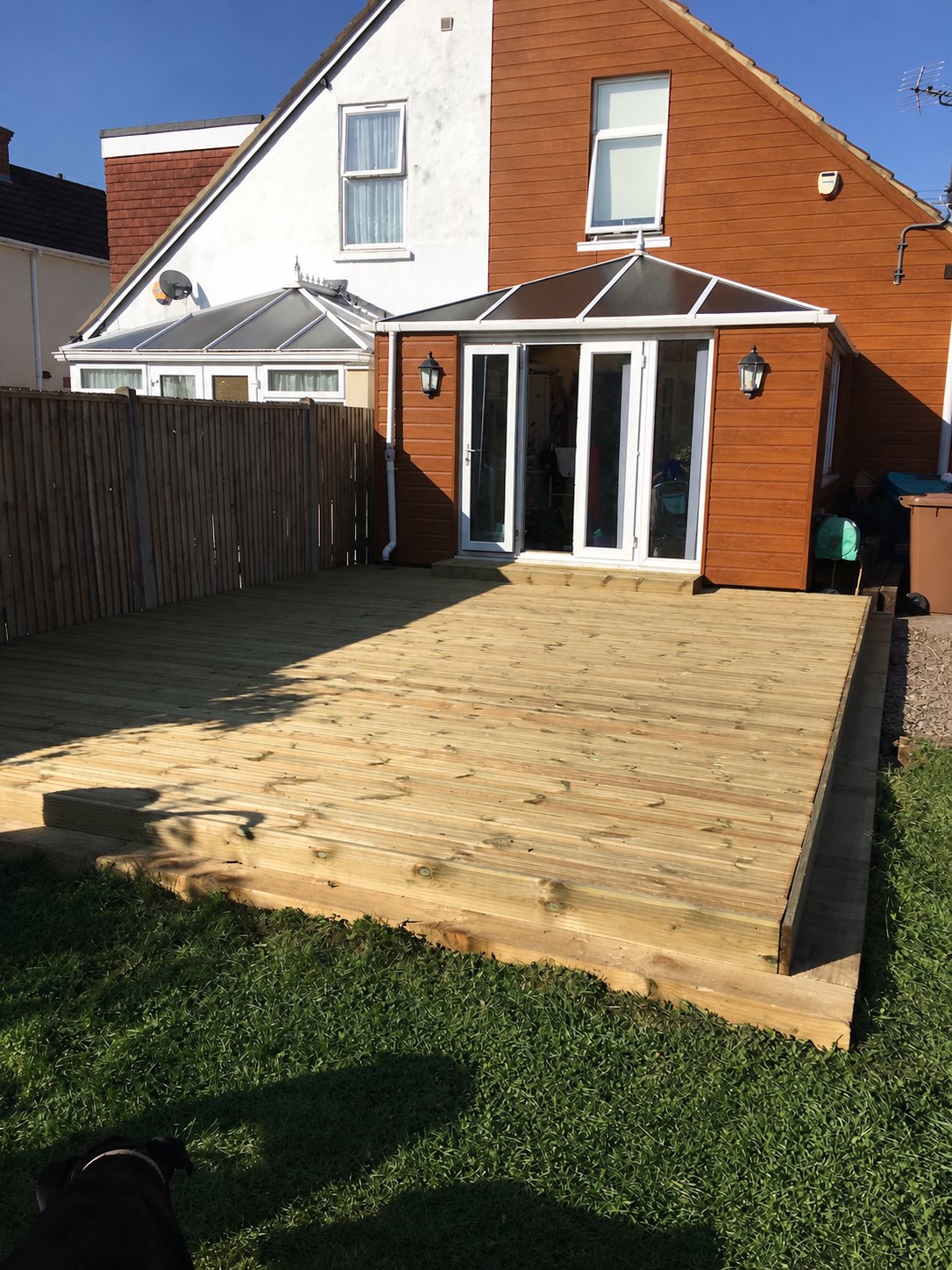
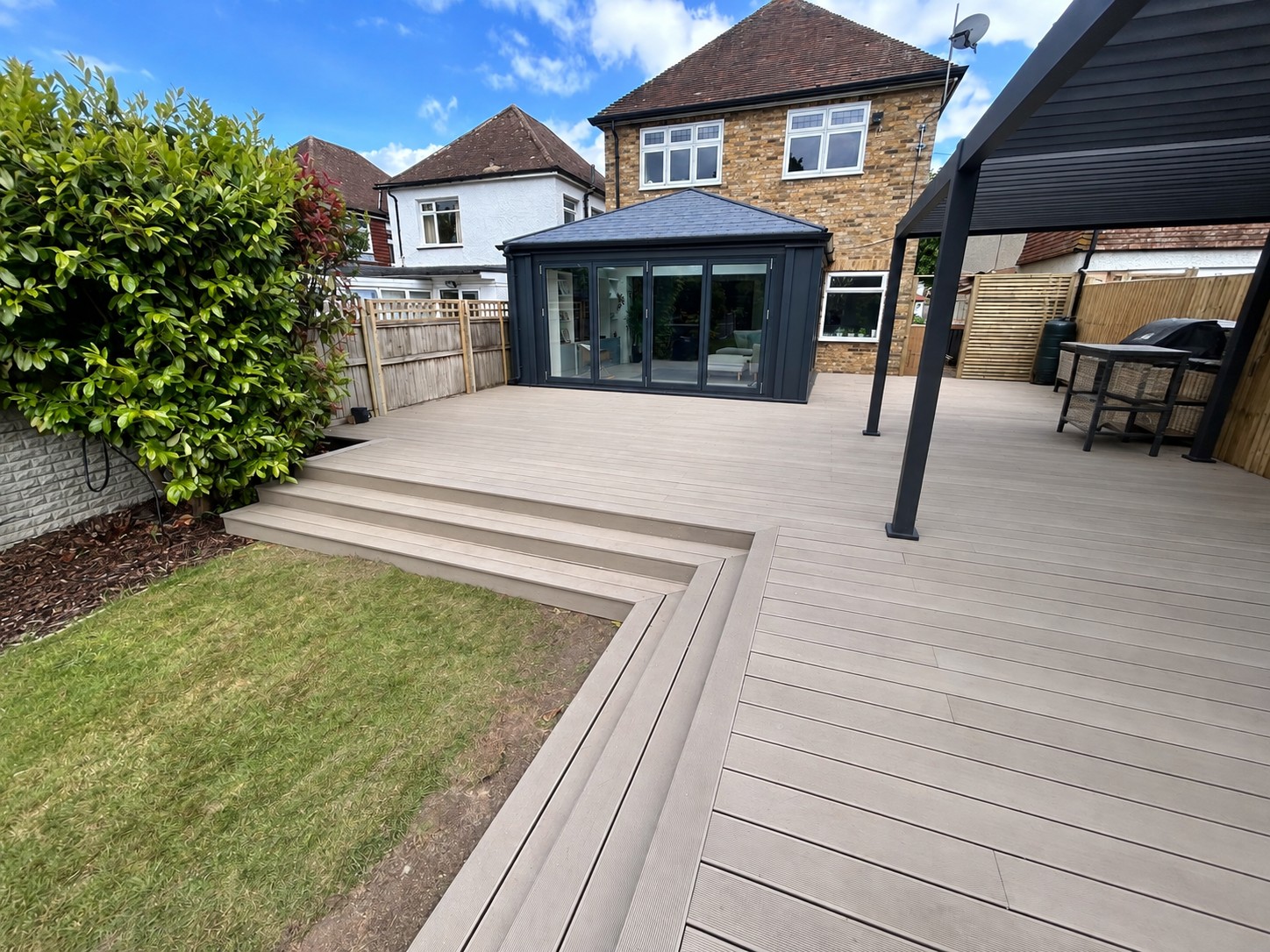
A broad decking terrace with defined board lines and steps connecting the house to the lawn.
View Sittingbourne projectDeal
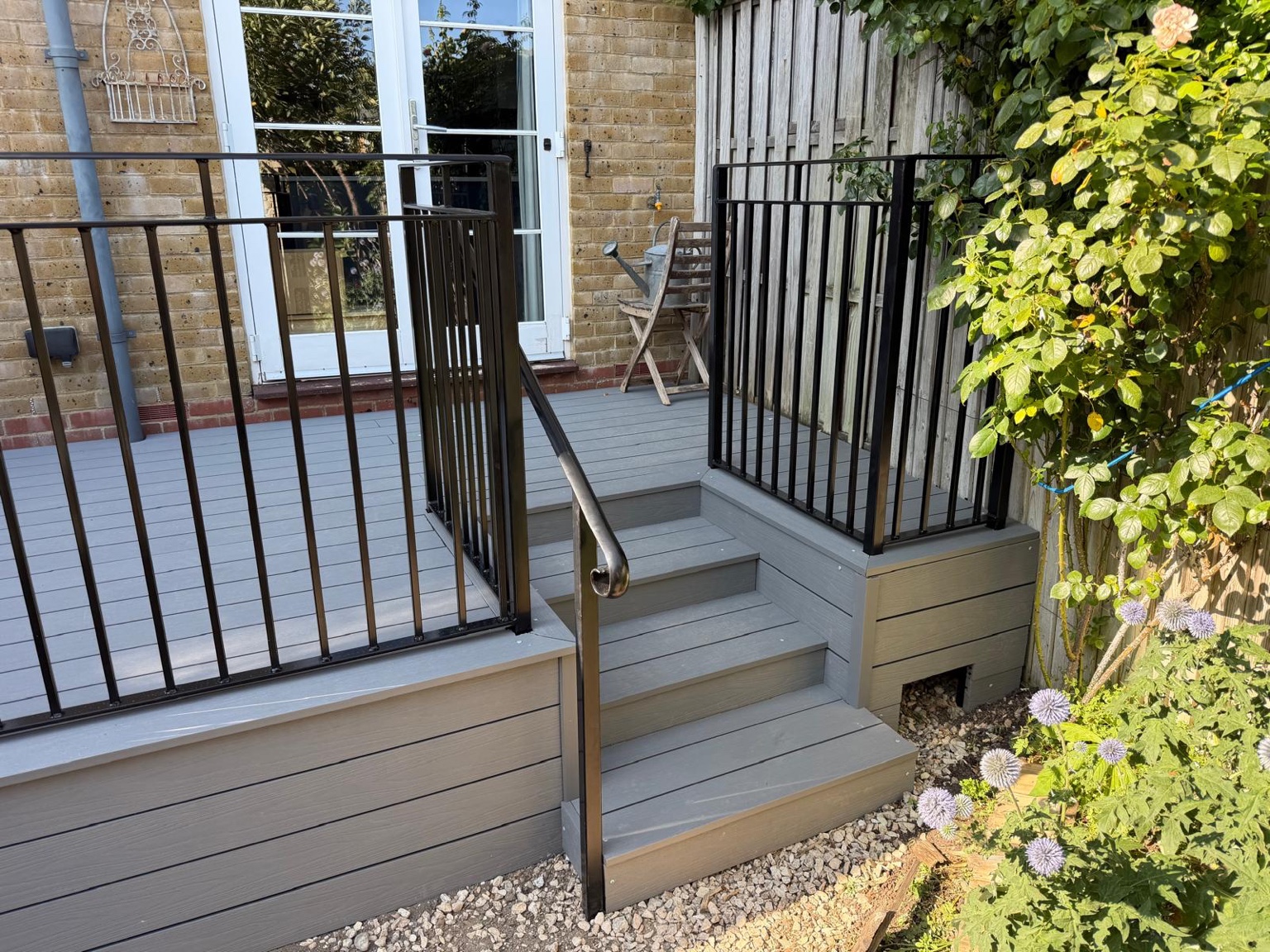
Raised grey decking with black railings, inset steps and a matching handrail.
View Deal projectYOUR CHATHAM PROJECT
Send your postcode, photographs, measurements and access details for a free, no-obligation quotation.