Landscape Gardener of Kent designs the layout and installs garden patios in Faversham, from a replacement seating area to paving within a complete garden makeover. Choose porcelain, sandstone, limestone or block paving with the preparation, finished levels and drainage considered together.
Send photographs, your postcode and approximate dimensions for a free, no-obligation quotation. Include the existing surface and access route so we can assess the complete work.
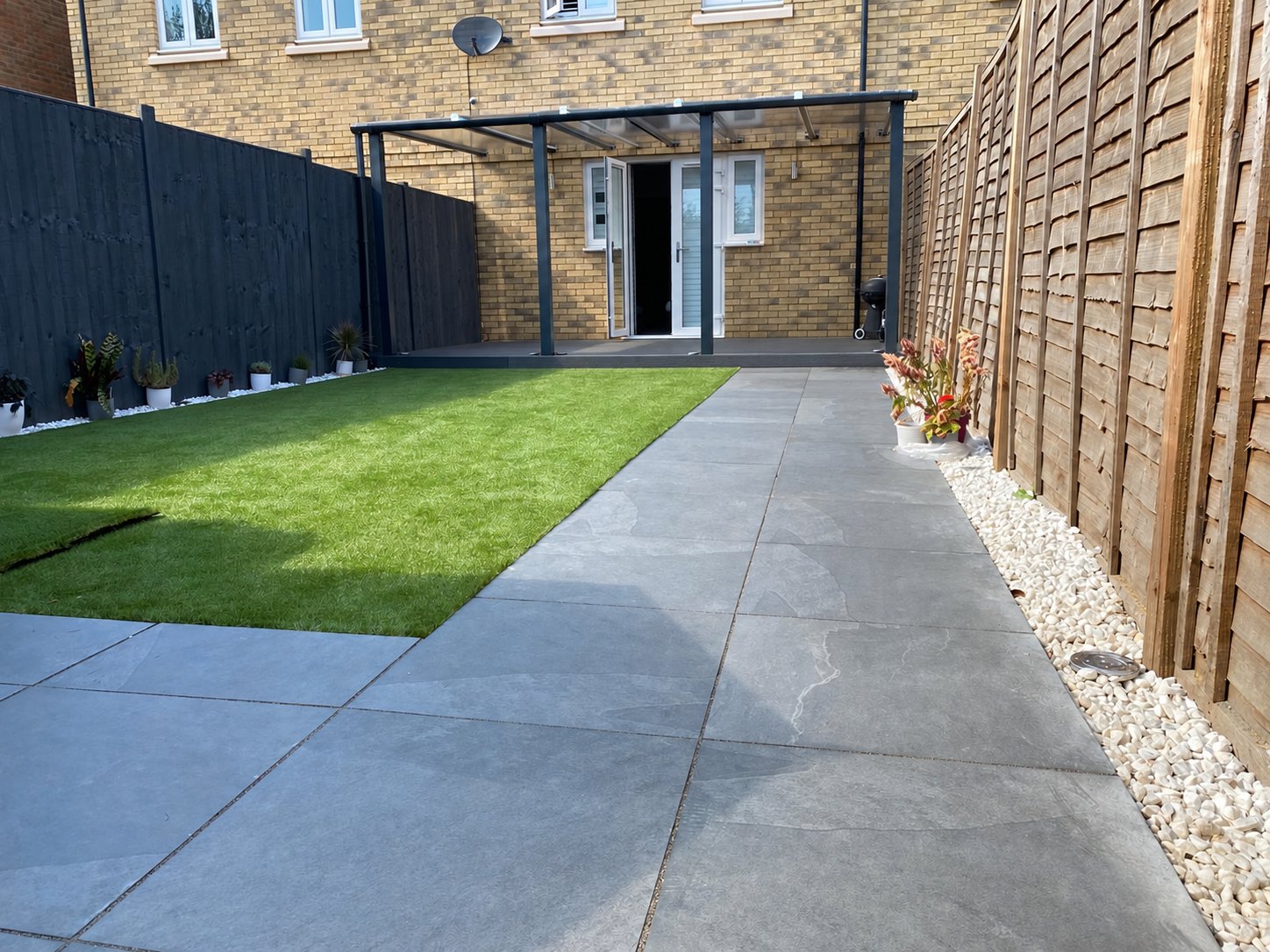
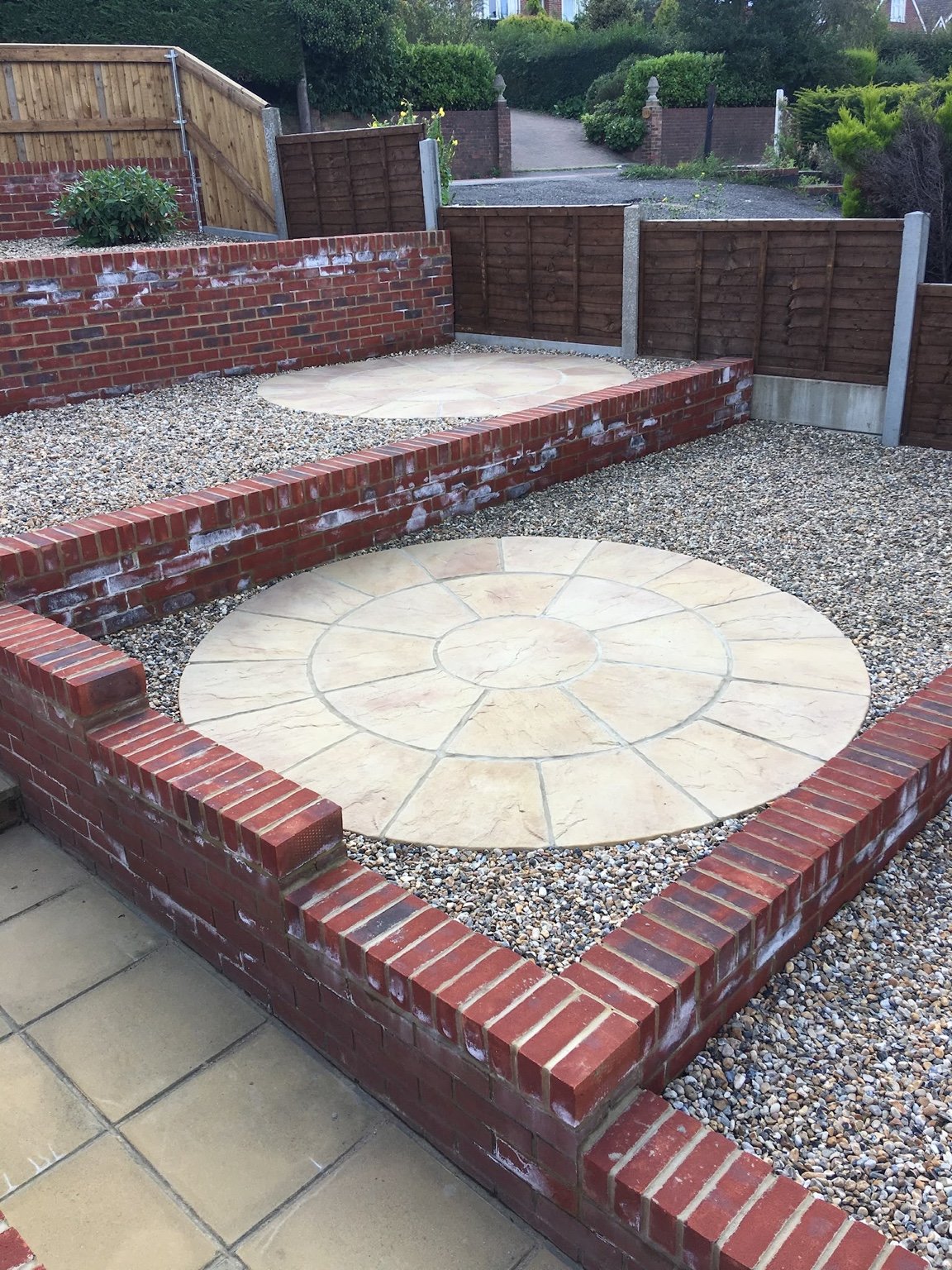
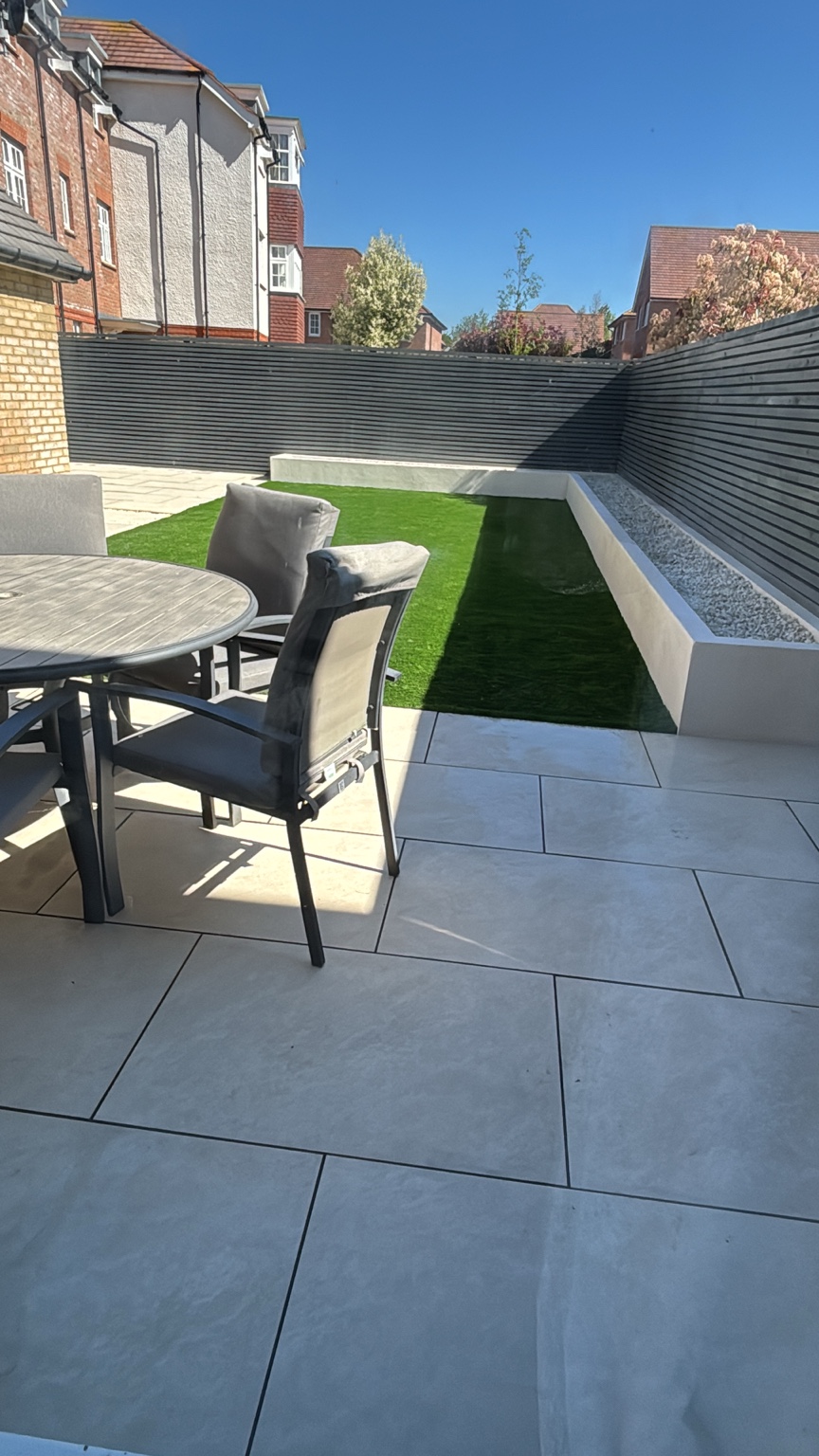
Patio, artificial grass and steel pergola — Canterbury.
PATIO MATERIALS & FINISHES
Types of patios we install in Faversham.
The best fit depends on how you will use the space, the surrounding garden and the maintenance you prefer. Sandstone and limestone are specific types of natural stone.
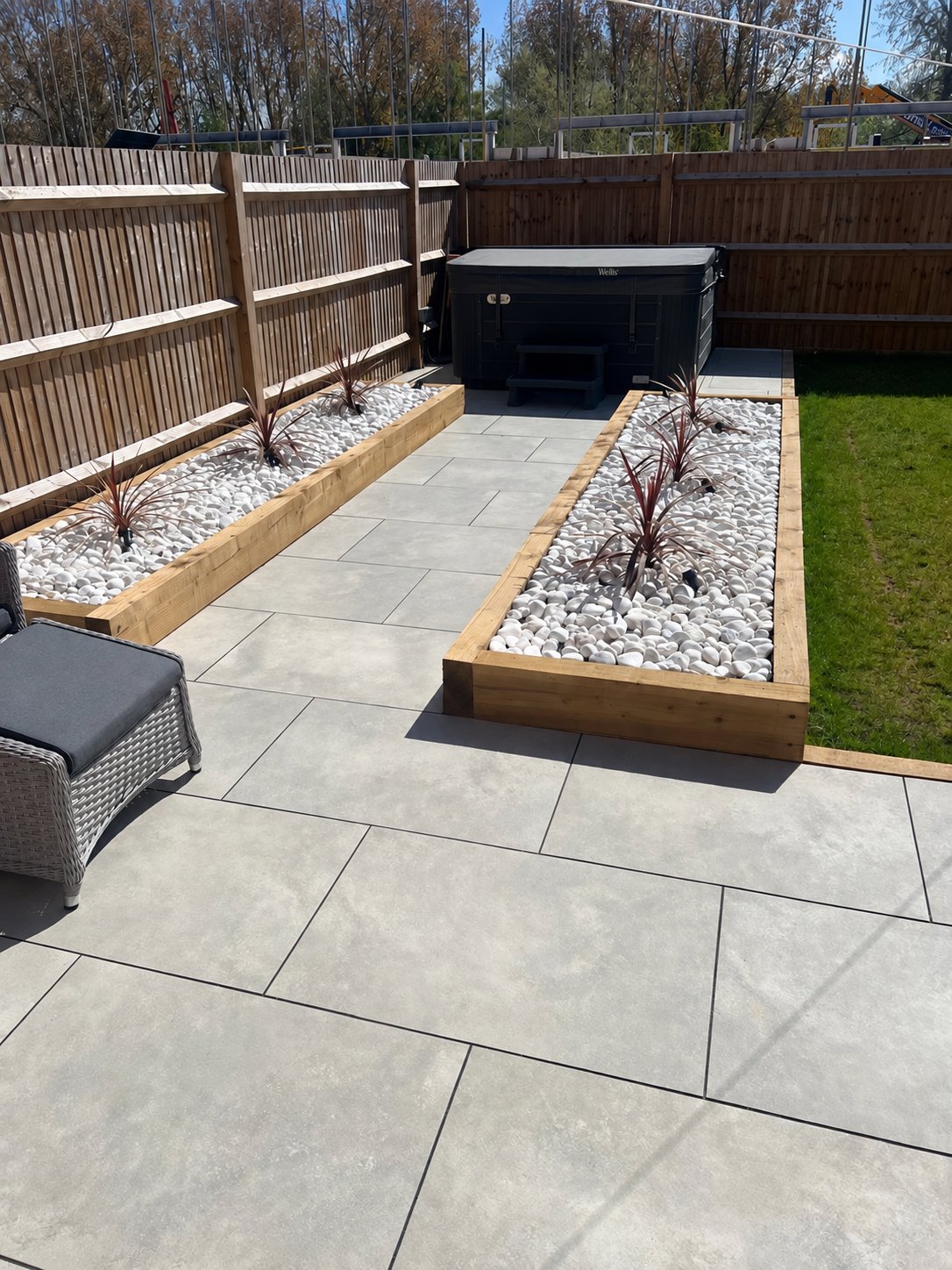
Porcelain patios in Faversham
A neat, contemporary finish with consistent sizing and a wide choice of colours. Porcelain is durable and generally easy to clean, making it a practical choice for modern gardens. Outdoor paving should be selected with an appropriate grip rating.
Contemporary appearance
Low routine maintenance
Consistent size and colour
Natural stone patios in Faversham
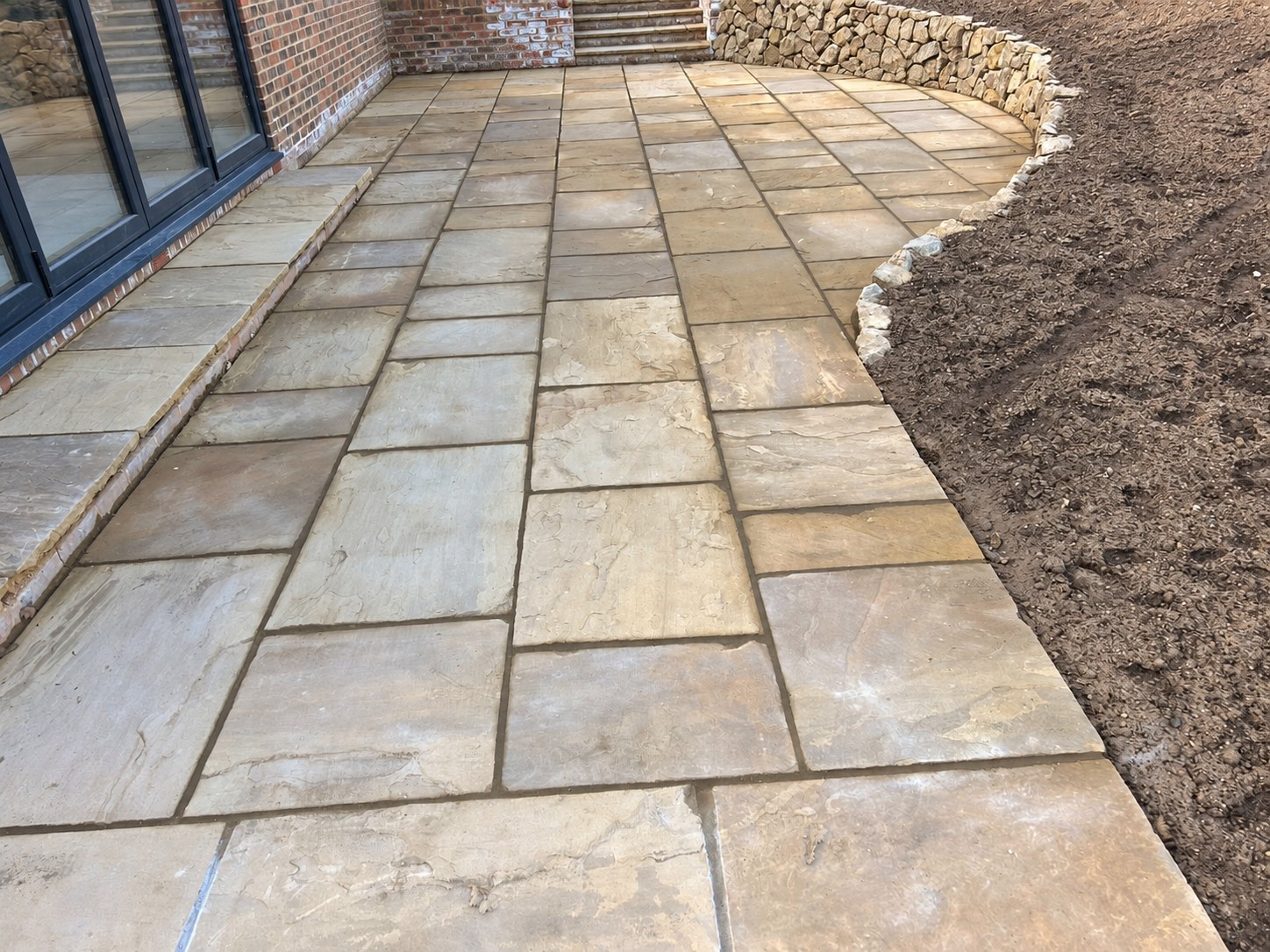
Natural stone brings varied texture and colour to a garden. Sandstone and limestone are two of the options we can discuss, particularly for spaces where planting and traditional materials are part of the design.
Individual character in each piece
Works with planting and softer edges
Several stone and laying options
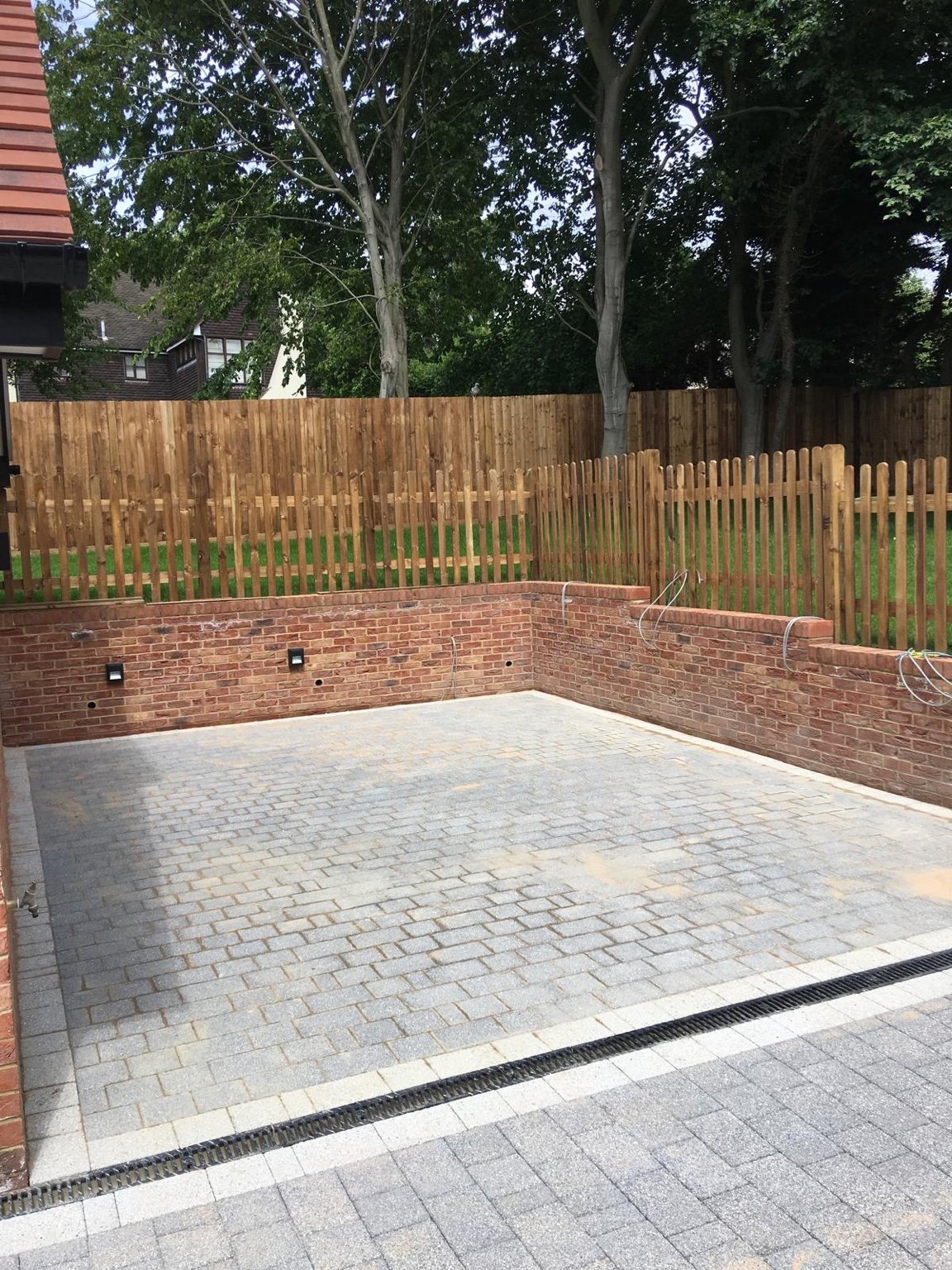
Block paving patios in Faversham
Individual blocks give flexibility for patterns, borders and edges. This can work especially well when the patio needs to connect visually with a path or driveway.
Pattern and border choices
Defined edging
Adaptable layouts
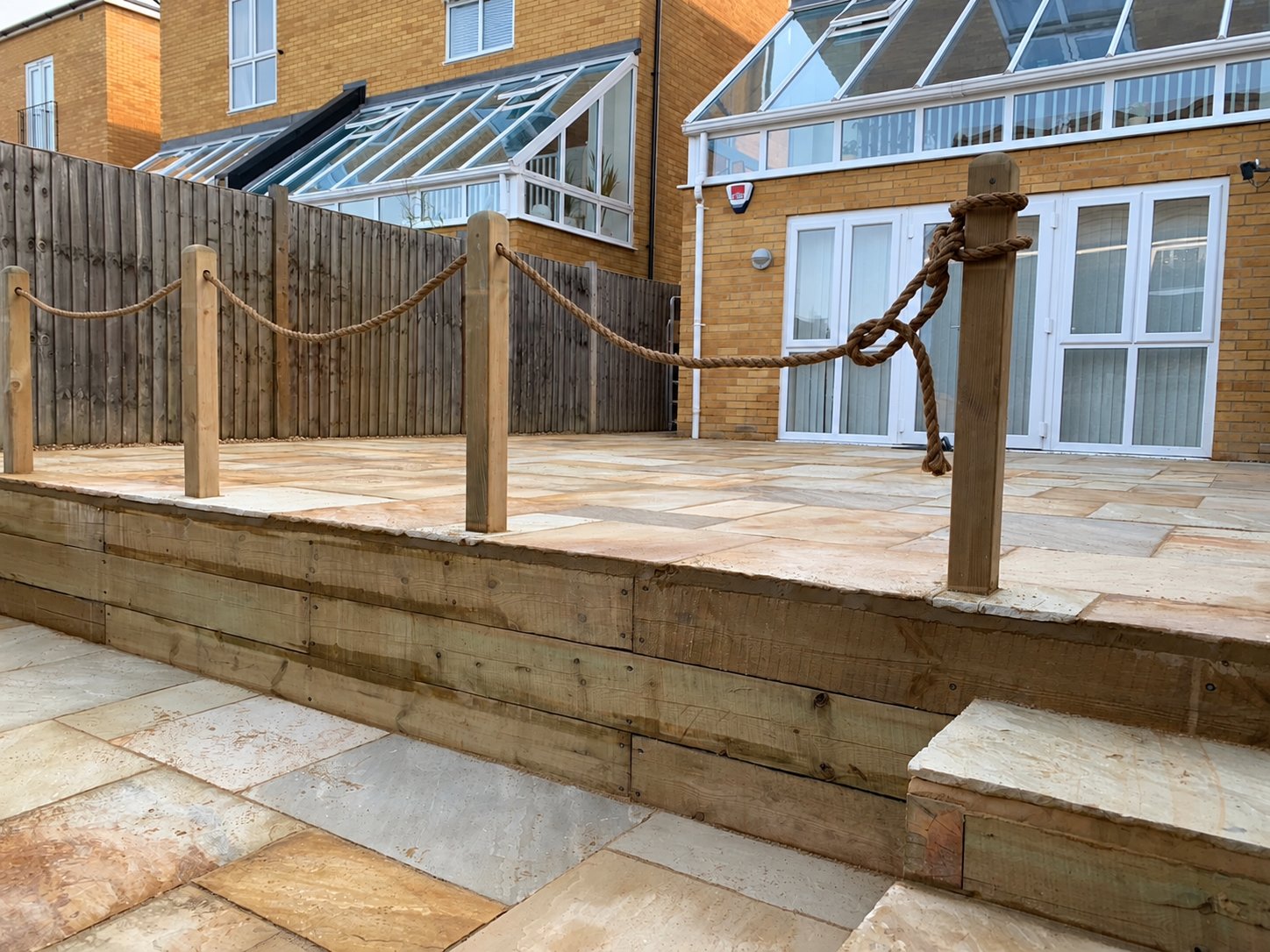
Sandstone patios in Faversham
Sandstone is a natural stone with warm tones and variation between pieces. It can suit both traditional gardens and relaxed contemporary layouts when the colour and joint detail are chosen carefully.
Natural colour variation
Versatile for many garden styles
Durable with suitable installation and care
Limestone patios in Faversham
Limestone offers a more restrained, often smoother appearance. Colour, texture and finish vary by product, so we can review samples and discuss cleaning and sealing before you decide.
Elegant, even-toned look
Choice of finishes
Pairs well with simple planting
Flagging patios in Faversham
Large paving flags can make a structured surface for a seating area or path. The format can be laid in different patterns and individual flags can be lifted for repair if needed.
Flexible sizes and layouts
Strong, defined surface
Practical for paths and seating areas
Porcelain, sandstone, limestone or block paving?
Start with outdoor samples rather than colour alone. Porcelain offers manufactured finishes; sandstone and limestone vary naturally between pieces. Block paving brings smaller units that can work around curves, borders and garden paths.
Compare texture, wet-slip performance, dimensions and care alongside the appearance. A large slab can look simple across an open terrace but needs planning around corners, covers and steps. Choose a product suitable for outdoor paving and agree the installation system it requires.
A patio layout that leaves room to use the garden
Measure your table and chairs, then allow space to pull back a seat and walk past it. Keep the route from the house to the lawn, shed or rear gate clear. Plan the edges around planting you want to retain rather than treating the patio as an isolated rectangle.
Where an older path or terrace stays, photograph the join and any change in level. At a Faversham property with a narrow side passage, include that route in your enquiry too: getting slabs in and waste out affects the work. Coordinate fencing and walls or steps before finishing the paving.
Groundwork and the laying specification
Existing slabs and ground conditions need assessment before preparation is agreed. The scope should identify removal, excavation, supporting layers and edge restraints, as well as the new paving.
Bedding, bonding and jointing must suit the selected system. Mortar-laid porcelain needs suitable priming and a full supporting bed in accordance with the manufacturer’s requirements. Natural stone and block paving also need their own specified construction; one method does not suit every material.
Tell us about narrow passages, steps and shared routes. Access influences equipment, deliveries and disposal, even where the patio area is modest.
Decide finished levels and drainage before laying
Plan how rainfall leaves the paving and where it can go. Falls, the surrounding ground and existing drainage all matter. Adding a channel is only part of a solution if its discharge route is suitable.
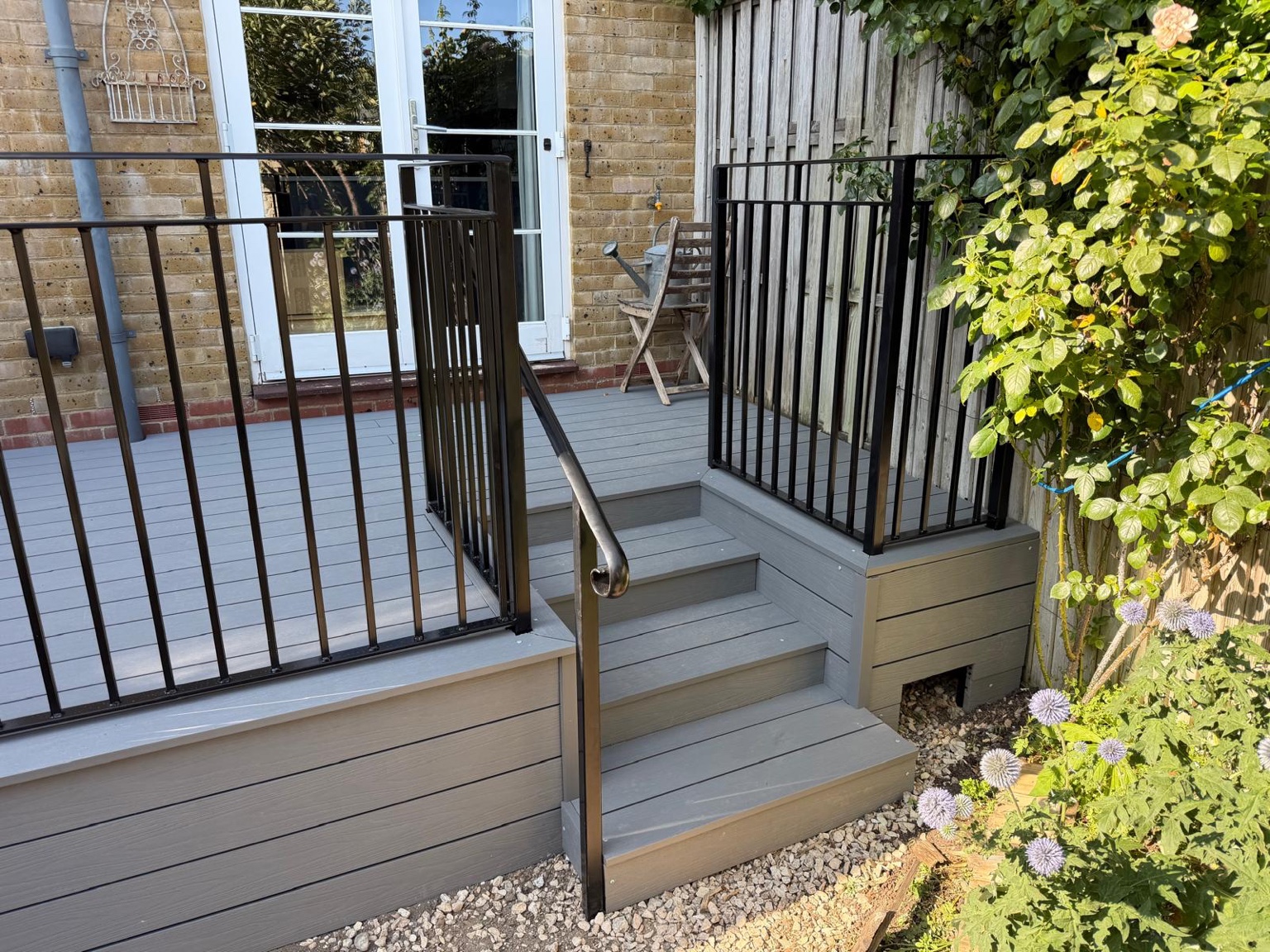
Check door thresholds, damp-proof courses, steps and adjacent surfaces before setting the patio height. Agree the finish at lawns and borders, and keep inspection covers accessible where required.
A raised terrace or substantial change in ground level needs assessment beyond the paving finish. Discuss any retaining construction before building up the area to meet a door.
How much does patio installation cost in Faversham?
The area and chosen paving help define the brief, but a complete installed price also covers the work beneath and around the slabs. Removal, disposal, excavation, supporting layers, drainage, cutting, jointing and edge details can all affect the total.
A small seating area on accessible ground and replacement paving reached through a narrow passage involve different work. For a 20m² or 25m² patio, multiplying the slab price by the area does not estimate the full installation.
Send measurements, photos and your preferred materials for a free patio quotation. Compare written scopes for the same preparation, labour, materials, waste removal, drainage, VAT where applicable and exclusions. If the patio forms part of a Faversham garden makeover, include the other features at the start.
Common patio mistakes to avoid
Choosing dimensions before allowing for furniture and clear routes.
Ordering slabs before checking levels, corners and inspection covers.
Leaving the base and laying system unspecified in the quotation.
Providing drainage without establishing a suitable destination for water.
Ignoring the finish at steps, lawns and borders.
Cleaning paving with products that are unsuitable for the slabs or joints.
Patio repairs, extensions and replacement
Send a wider view as well as close-ups of loose slabs, broken joints or sunken sections. The condition of the supporting ground and the route taken by rainwater can influence whether a repair is suitable. Rejointing alone will not resolve a moving or unsupported surface.
For an extension, check the existing construction and levels before adding paving. Weathered or discontinued slabs may be difficult to match; a defined border or a deliberately different adjoining area can make the connection part of the design.
Installation, handover and looking after the paving
Agree the work sequence, delivery route and protection for retained surfaces before starting. Where several garden features are changing, plan access so later work does not repeatedly cross completed paving.
At handover, discuss when the patio can be used and the cleaning guidance for the slabs and joints. Keep drainage routes clear, remove debris and use suitable cleaning products. Porcelain and natural stone have different care requirements, and neither should be described as maintenance-free.
Planning permission for patio paving
For houses in England, hard surfaces at or near ground level away from the front garden are generally permitted without an area restriction. Significant terracing or embanking can need a planning application; front-garden paving has different rules.
Listed buildings, flats, maisonettes, certain converted properties and restrictions on permitted development require separate checks. Other features such as walls have their own requirements. Read the Planning Portal patio guidance and check an unclear proposal with your local planning authority before work.
Faversham patio questions
What is the best paving for a patio?
Compare the outdoor product’s appearance, texture, wet-slip performance, installation requirements and care. Porcelain, natural stone and block paving can each suit different layouts. Samples and a complete specification help you choose.
How much does it cost to have a patio laid?
The price depends on area, paving, preparation, access, drainage and finishing. Request a quotation for the full installation and check what is included; a material price per square metre covers only part of the job.
Can you extend an existing patio?
We can assess the current construction, levels and matching materials. New slabs may look different from weathered paving, so discuss how the join or border should be handled.
Is porcelain paving maintenance-free?
No. Remove debris, keep drainage routes clear and follow the product guidance for cleaning slabs and joints. Ask about care and use at handover.
Can I lay a patio myself?
A simple project may suit someone with appropriate skills and equipment. Levels, drainage, groundwork, cutting and product requirements still need attention. Compare the complete work with an installation quote before deciding.
How long will patio construction take?
The scope, access, removal, ground conditions, deliveries and weather affect the programme. We discuss the sequence and any waiting time before use once the installation requirements are understood.
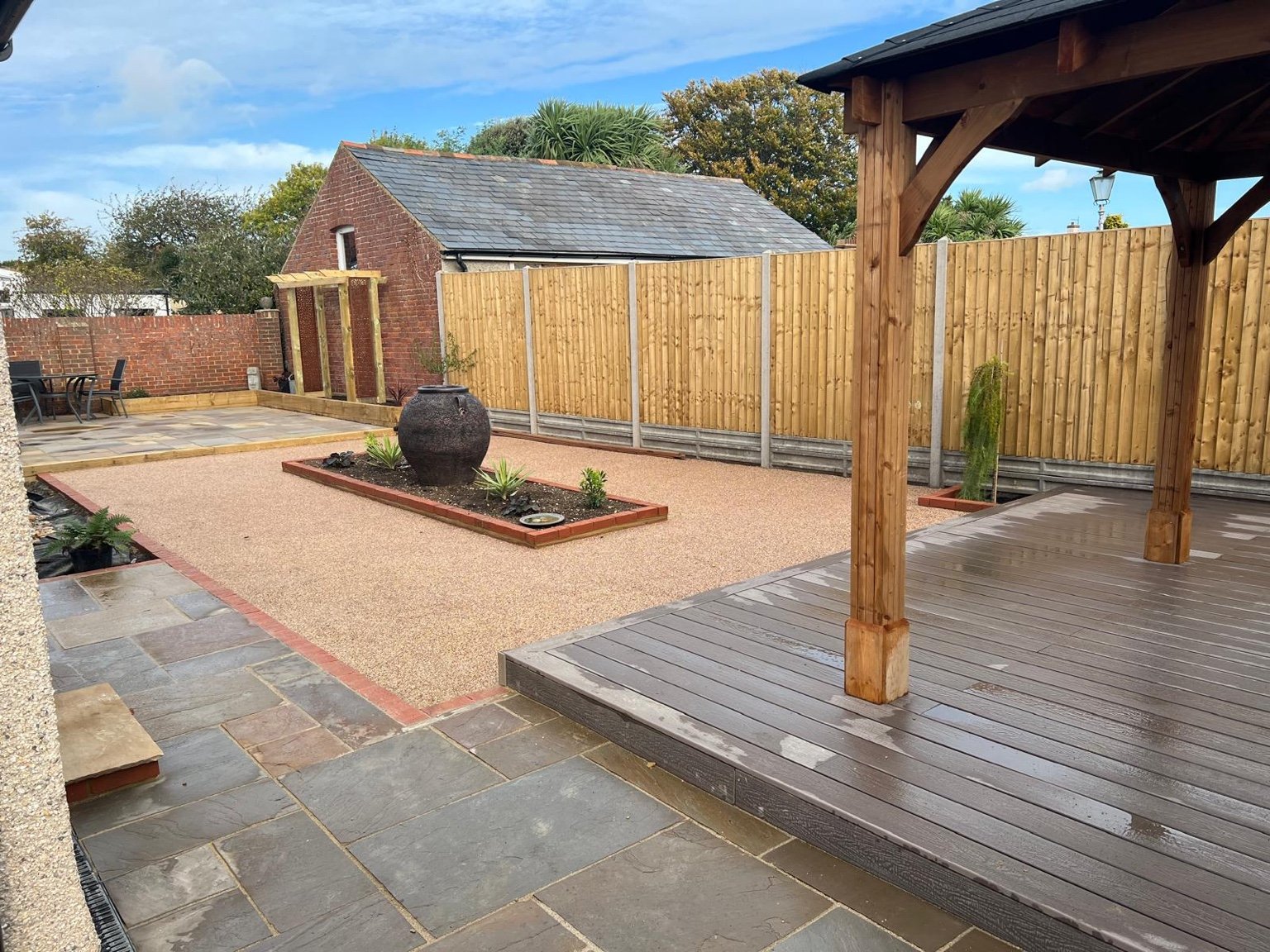
Can you install a patio within a complete garden makeover?
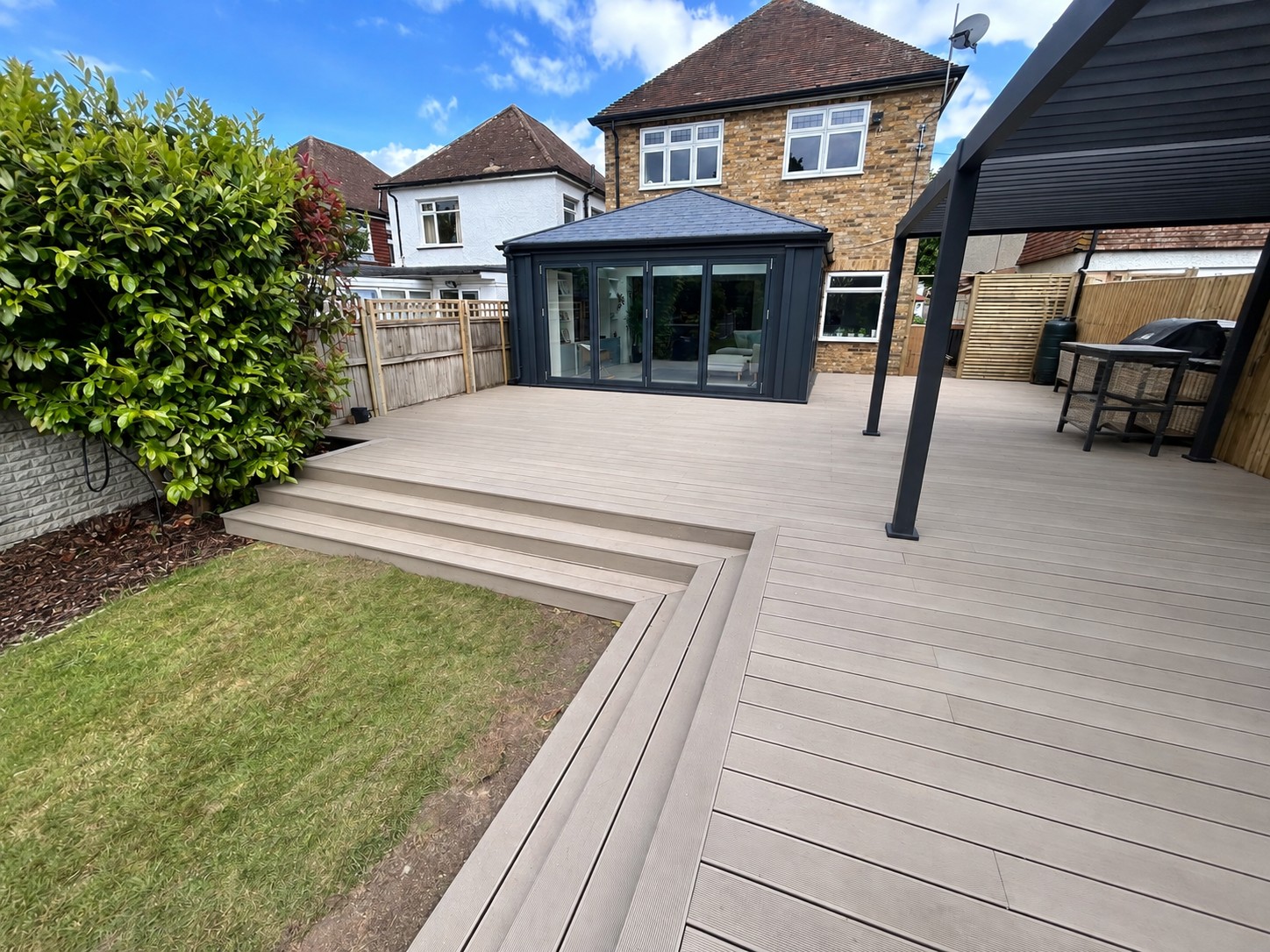
Yes. We can discuss paving with fencing, walls, decking and lawns. Agree the layout and sequence so later work does not disturb completed surfaces.