Closeboard fencing in Maidstone
Overlapping vertical boards create a solid boundary. A good option when privacy, strength and a traditional appearance matter.
Good for: Strength and privacy
GARDEN FENCE INSTALLATION & REPAIRS · SITTINGBOURNE
Landscape Gardener of Kent installs and replaces garden fencing in Maidstone, with damaged sections assessed for repair. Plan privacy, height and appearance alongside the posts, ground conditions and access needed for the complete installation.
Send your postcode, approximate boundary length and photographs for a free, no-obligation quote. Tell us whether you need a new run, replacement panels, post repairs or a garden gate included.
Show the full fence line, corners and gate openings. Decide whether the priority is screening a patio, enclosing the garden, containing pets or replacing a failing boundary. Check the proposed height and sightlines from the house and seating area.
For your Maidstone garden, photograph each boundary run separately and show where it meets the house, patio and gate. Include slopes, trees, retained planting and any narrow side passage. If you want several sections replaced, mark which posts and panels are intended to stay so the quote can distinguish a partial replacement from a new boundary.
Confirm the boundary line and permission for the work before setting out. A replacement should follow an agreed line; the position of an old fence alone should not be used to resolve uncertain ownership.
FENCING OPTIONS
Different boundaries call for different materials, levels of privacy and finishes. Compare the options below and tell us what you need from your fence.
Overlapping vertical boards create a solid boundary. A good option when privacy, strength and a traditional appearance matter.
Good for: Strength and privacy
Ready-made panels fit between compatible supports. Compare the panel, posts and fitting together when assessing installation costs.
Good for: Replacing compatible panel sections
Feather edge describes the tapered boards commonly used in closeboard fencing, fitted individually or supplied as panels.
Good for: Traditional appearance
Horizontal or vertical slats bring a clean, contemporary look. The spacing can be discussed according to the privacy you need.
Good for: Modern garden design
Damaged panels, posts and sections may be repaired or replaced. We can assess whether a targeted repair or a new run of fencing makes better sense.
Good for: Restoring damaged fencing
Closeboard commonly uses overlapping feather edge boards. It may be built along the boundary using boards and rails or supplied as ready-made panels. Closeboard and feather edge therefore overlap as descriptions; compare the actual construction and supports.
Panel fencing uses complete sections between posts. Existing spacing and supports must suit the proposed replacements. Include the panel dimensions, fixing method and condition of the posts when requesting a like-for-like change.
Slatted fencing offers a different balance of privacy and openness. Spacing and viewing angle affect screening, so consider neighbouring sightlines before choosing from a photograph. Discuss the complete support and fixing arrangement for the site’s exposure.
Timber and concrete posts differ in appearance and compatibility with the fencing above and between them. If existing posts are to stay, they need to be stable, sound and suitable for the new sections.
Gravel boards can keep main timber panels or boards away from soil where the construction allows. Include their height with the panel and any trellis when agreeing the total fence height.
A sloping boundary may need stepped sections or construction that follows the ground. Discuss the finish from both sides and any gaps at the base, particularly for pets. Ground conditions and the specified fence determine the support detail; one post-hole recipe does not suit every boundary.
Include gate openings in the initial measurements. Agree the clear opening, swing direction, hinges, latch and any access needs for bins or garden equipment.
A gate needs suitable supports and enough clearance to open across the adjoining ground. Photograph existing paths and changes in level so the gate and paving can be considered together. Matching boards or slats can connect the gate visually with the fence without overlooking its hardware and support requirements.
Broken boards or a damaged panel may be replaced while sound sections remain. A leaning, loose or decayed support needs assessment as well as the visible fence. Replacing boards alone will not correct an unstable post.
Send a view along the whole run and close-ups of posts, rails and fixings. Where several supports or sections have failed, replacing a larger part of the boundary may be more appropriate. Keep clear of unstable fencing while an assessment is arranged.
The installed price depends on length, finished height, construction and working conditions. A timber supply price, panel price or hourly rate does not include every part of a fitted boundary.
For a 20 metre fence, measure the whole run and identify corners, gates and changes in level. Twenty metres describes length, but two projects of that length can need different posts, removal work and fitting arrangements.
Compare written quotes covering:
Send photographs with your measurements so the quote can reflect the actual boundary. Compare the complete scope rather than multiplying the number of panels by a retail price.
Planning Portal guidance for England gives usual height limits of 1 metre next to a highway used by vehicles, including its footpath, and 2 metres elsewhere, measured from ground level. It also describes certain work to an existing fence above those limits where its height is not increased.
Listed buildings and their boundaries, Article 4 directions and planning conditions can affect permission. Taking down fencing in a conservation area may also require permission.
Check the proposed total height, including gravel boards and trellis. A 7ft fence is about 2.13 metres, above the usual 2 metre limit. Read the Planning Portal fencing guidance and confirm property-specific requirements with Maidstone Borough Council before work begins.
Establish ownership and obtain the owner’s agreement before painting, staining or attaching anything to their fence. Having a face of the fence towards your garden does not, by itself, establish that you own it. Discuss the proposed finish and access before arranging work.
If ownership or the boundary position is uncertain, check the register, deeds and documents from your solicitor. A title plan generally shows general boundaries rather than exact legal lines. Read the HM Land Registry boundary guidance and resolve uncertainty before altering the fence.
Ask how ground and weather conditions could affect the programme and how access will be maintained during fitting. Follow the guidance for the actual timber and treatment; keep accumulated soil and debris away from vulnerable sections and check supports and fixings periodically.
Confirm ownership and obtain the owner’s agreement before painting or staining their fence, even where it faces your garden. Check your property documents if ownership is uncertain and resolve that question before arranging treatment or attachments.
Seven feet is approximately 2.13 metres, above the usual 2 metre permitted development limit away from a highway. Planning permission will normally be needed for a new fence of that height; existing-height provisions and property restrictions need checking. Neighbour agreement does not replace planning permission.
General averages cannot identify the work needed at your property. Length, height, materials, supports, disposal and fitting conditions determine the scope. Compare complete written installation quotes.
The usual planning height limit in England is 2 metres away from a highway, or 1 metre next to a highway used by vehicles including its footpath. Exceptions and property-specific restrictions apply. Check the total height and relevant permissions before work begins.
Possibly, if the posts are sound, stable and compatible with the new sections. Spacing, dimensions and fixings need assessment. New panels will not correct unstable supports.
Feather edge refers to the tapered boards commonly used in overlapping closeboard construction. The boards may be fitted individually or supplied in panels. Compare boards, rails, posts and fixings rather than treating the names as wholly separate systems.
Yes. Include the opening and intended use in your enquiry. The gate needs suitable supports, hardware, clearance and swing direction, with adjoining paths and levels considered.
MORE IN MAIDSTONE
Explore the other work available in Maidstone.
Explore our Maidstone landscaping services and Maidstone patio installation if the project includes new paths or seating areas. Share the whole brief so boundaries, paving and access can be planned together.
See our fencing services across Kent for the wider service. Send details of any commercial or security boundary requirement so we can confirm whether the proposed work is suitable.
OUR WORK · KENT
Chislehurst
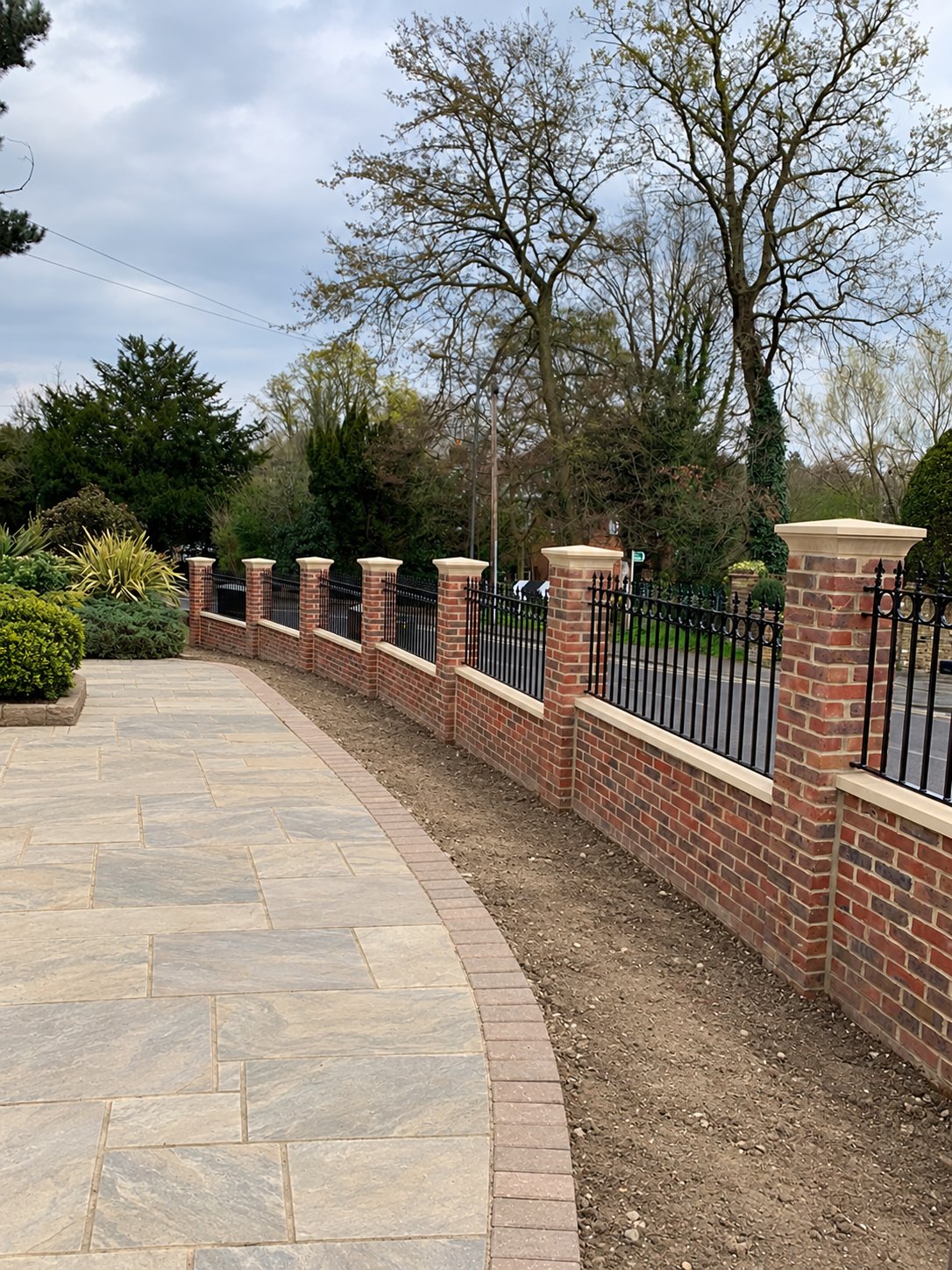
A brick boundary with pale stone coping and pier caps, finished with decorative railing panels.
View Chislehurst projectSt Margaret’s Bay
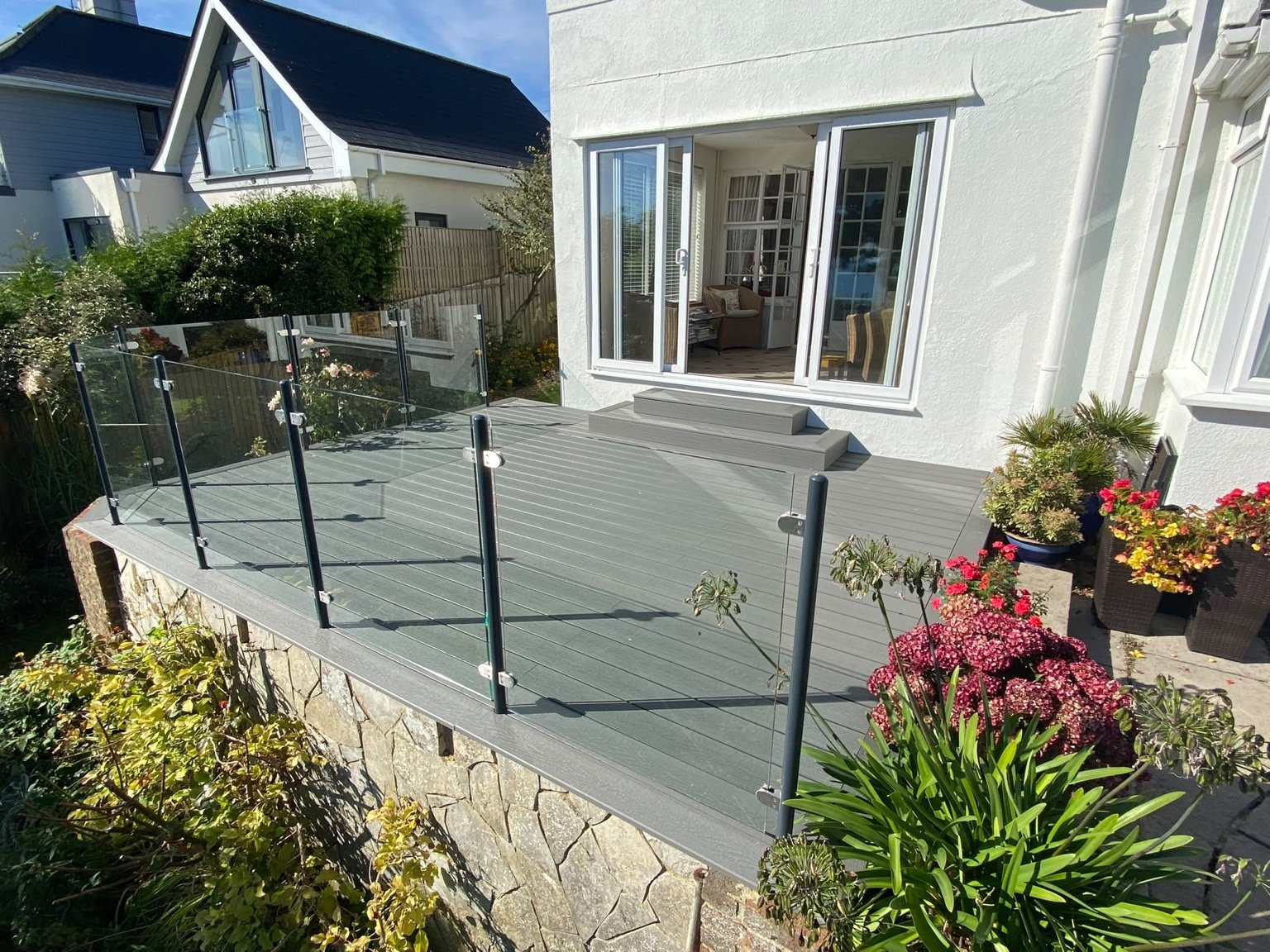
Grey composite decking, glass panels, powder-coated steel posts and matching steps.
View St Margaret’s Bay projectFolkestone
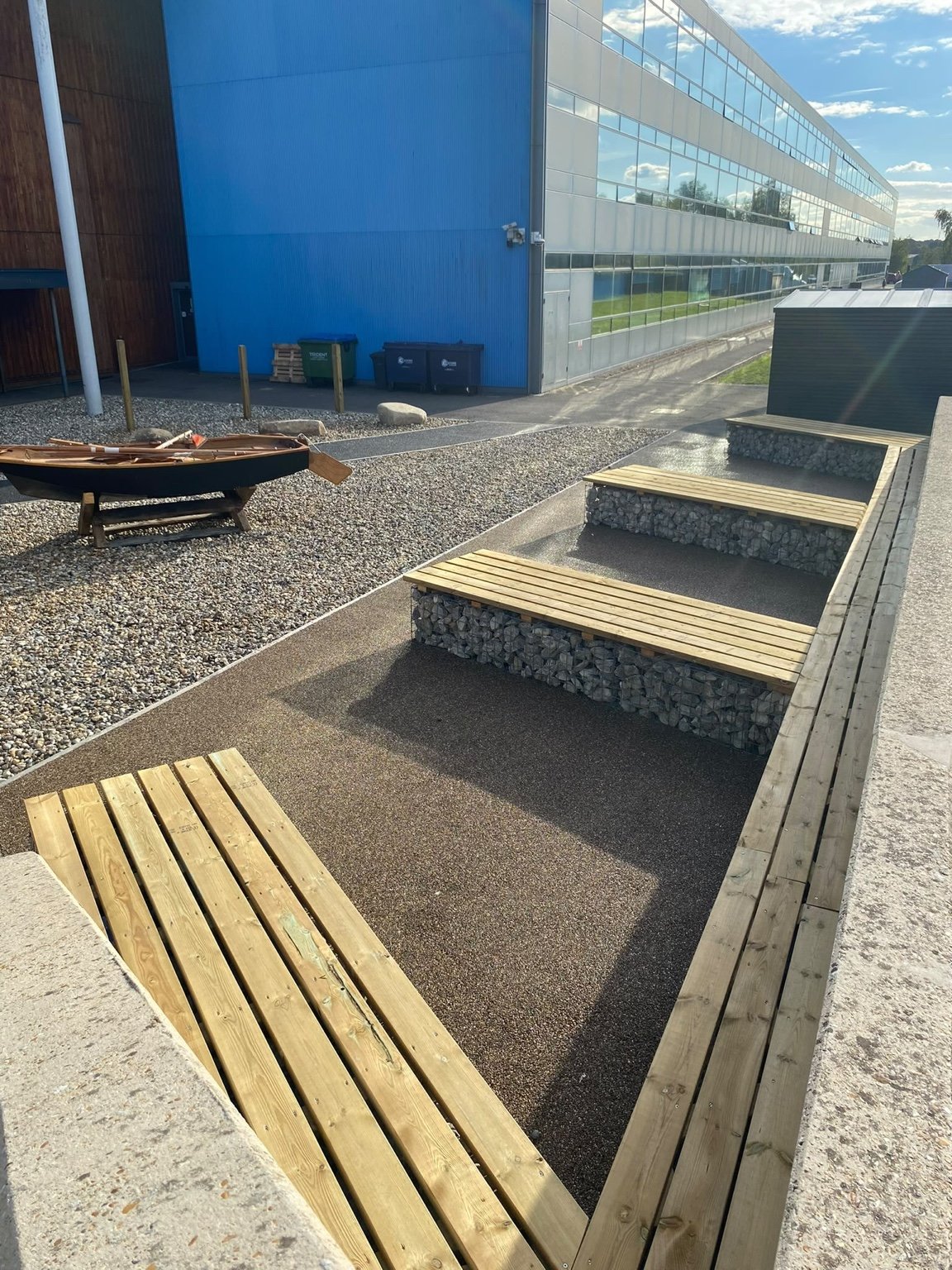
Timber-topped gabion benches, resin-bonded surfacing, shingle and a boat feature at the academy entrance.
View Folkestone projectCanterbury
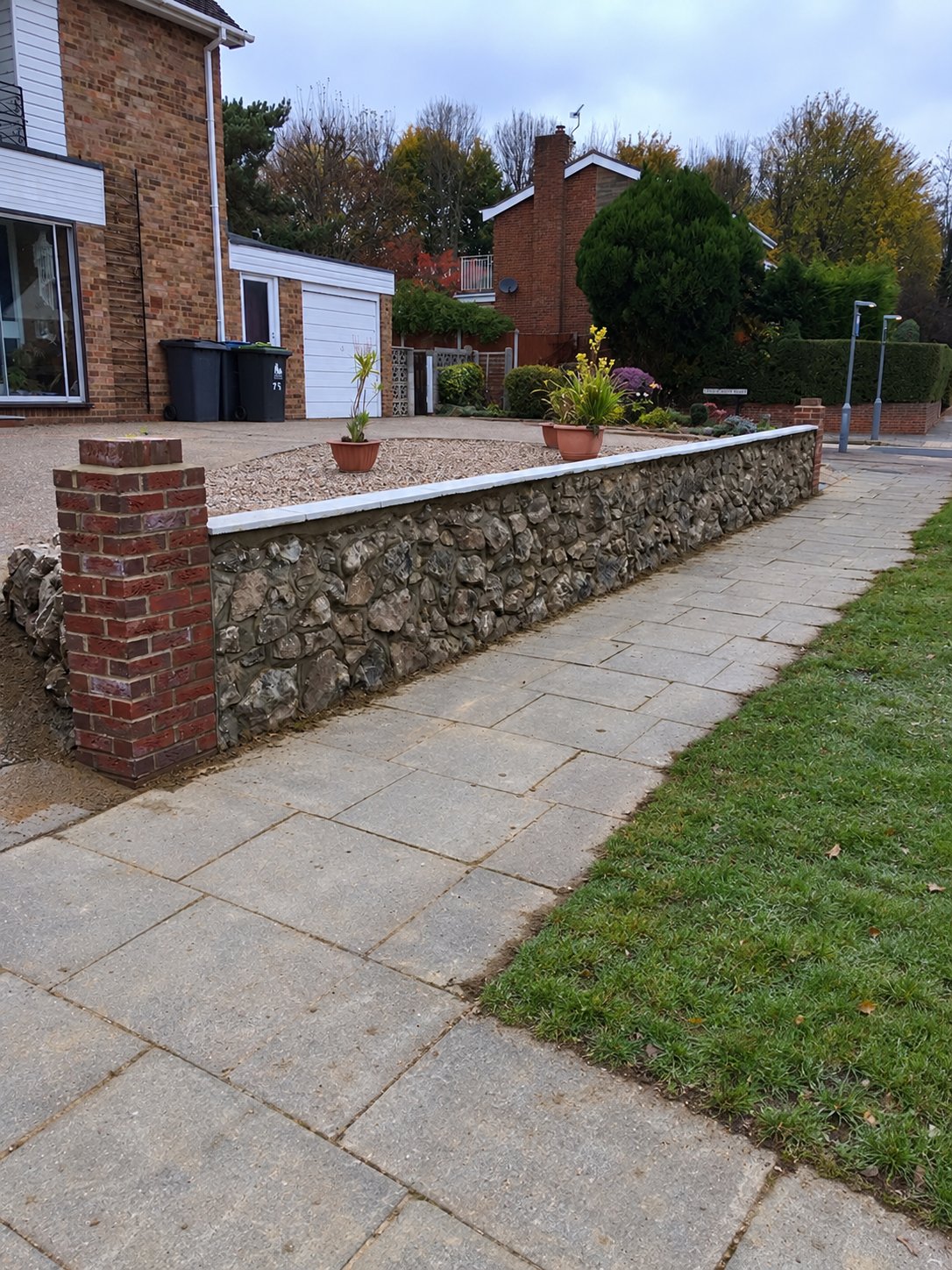
The stones from a customer’s late husband’s rockery kept and reused in a new front wall.
View Canterbury projectCanterbury
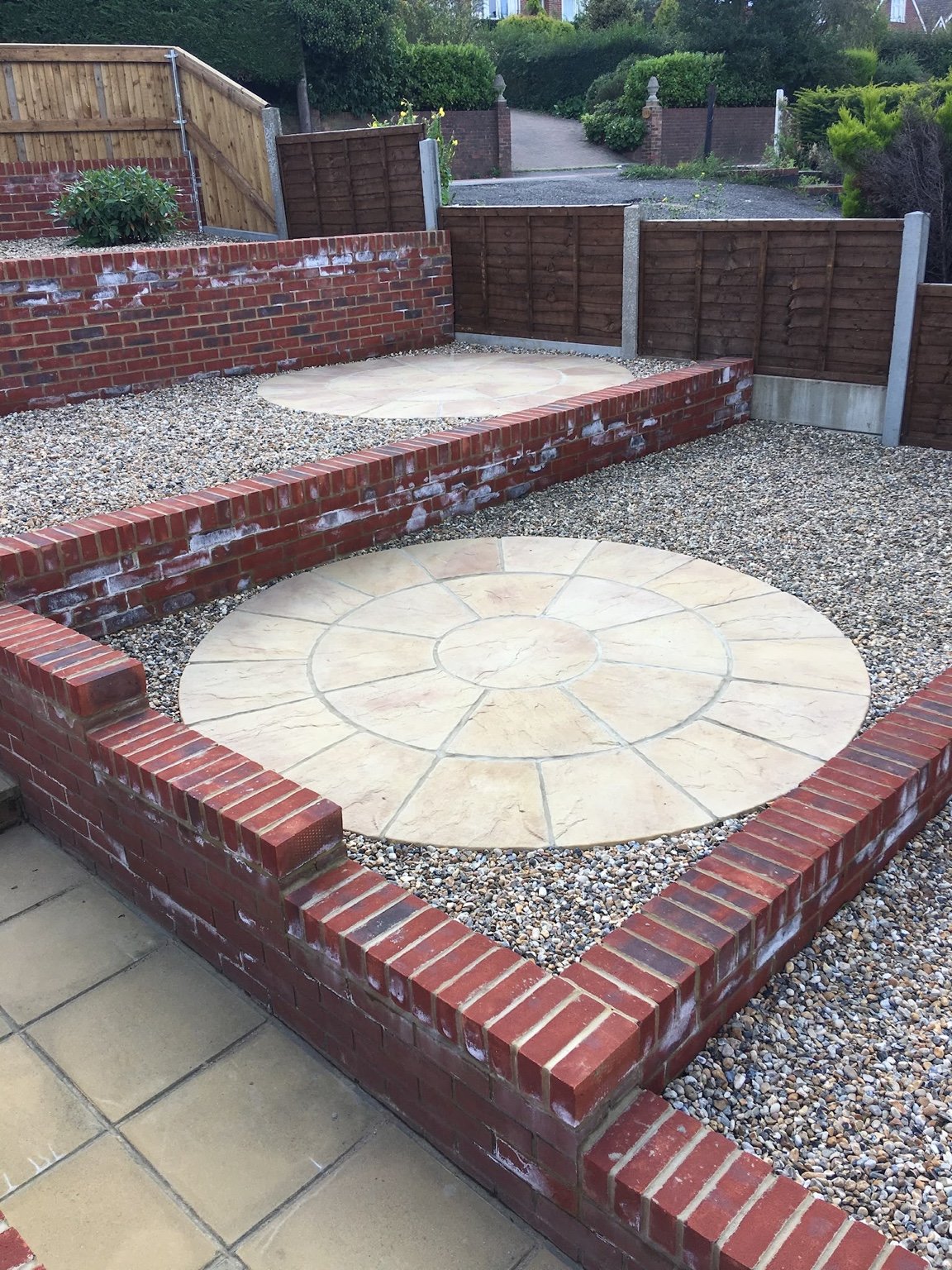
Retaining walls, shingle infill and riven buff slab circles across connected garden levels.
View Canterbury projectAshford
Before, during and after a timber decking replacement, from the old deck to the finished terrace.
View Ashford projectBorough Green
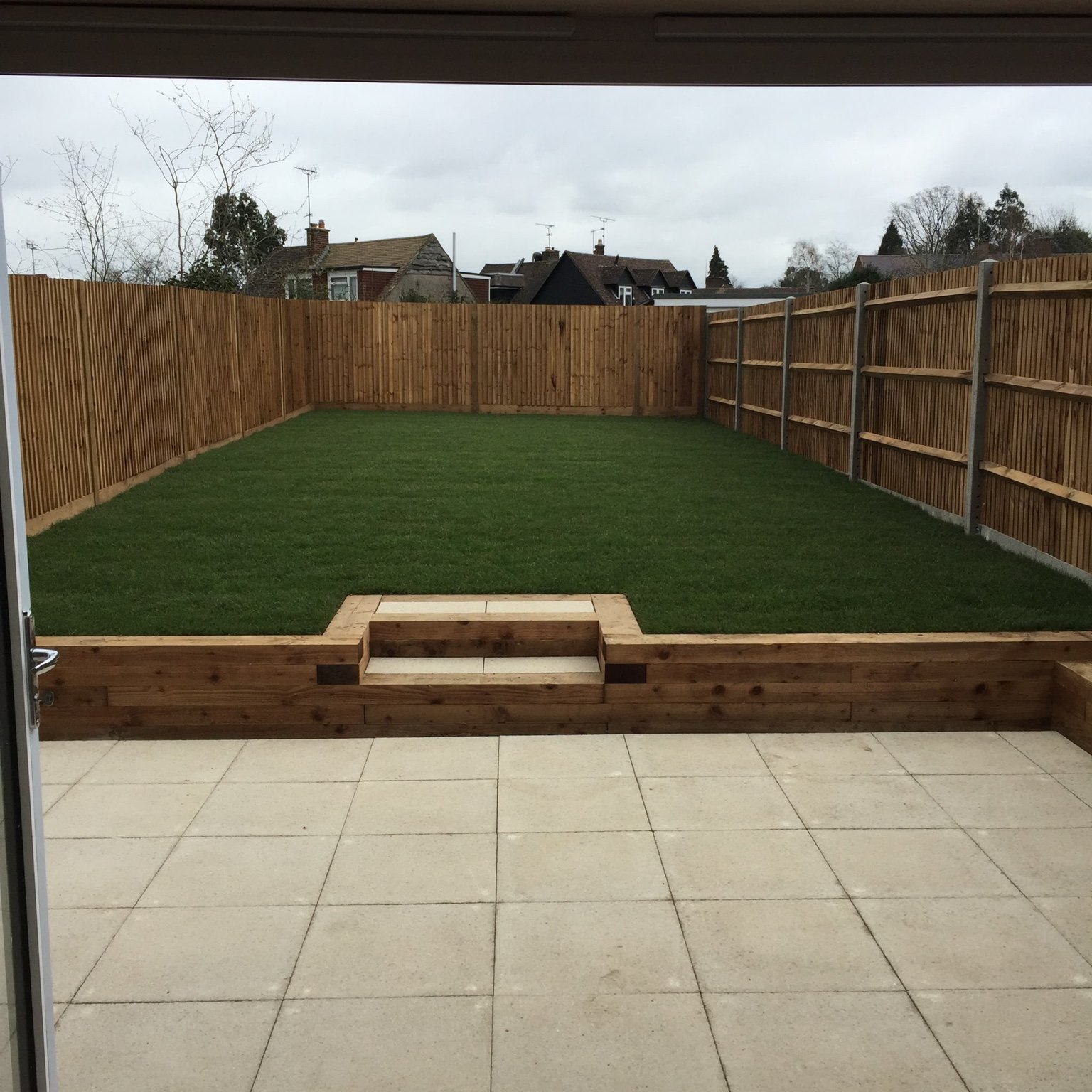
1800mm closeboard fencing, softwood sleeper planters, a 450mm buff slab patio and new turf.
View Borough Green projectCanterbury
Porcelain paving, artificial grass and a custom steel-frame pergola with polycarbonate roof.
View Canterbury projectStrood
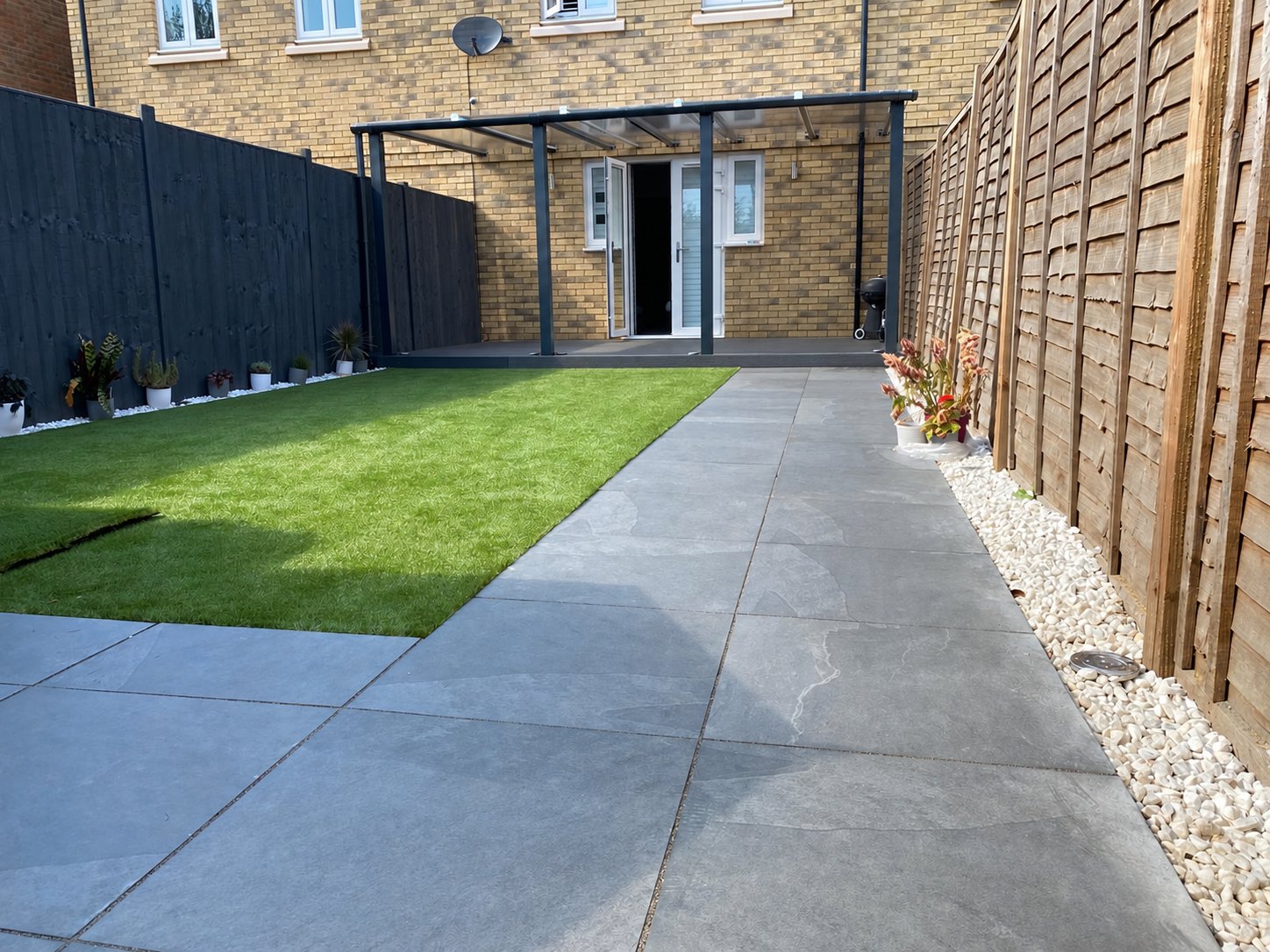
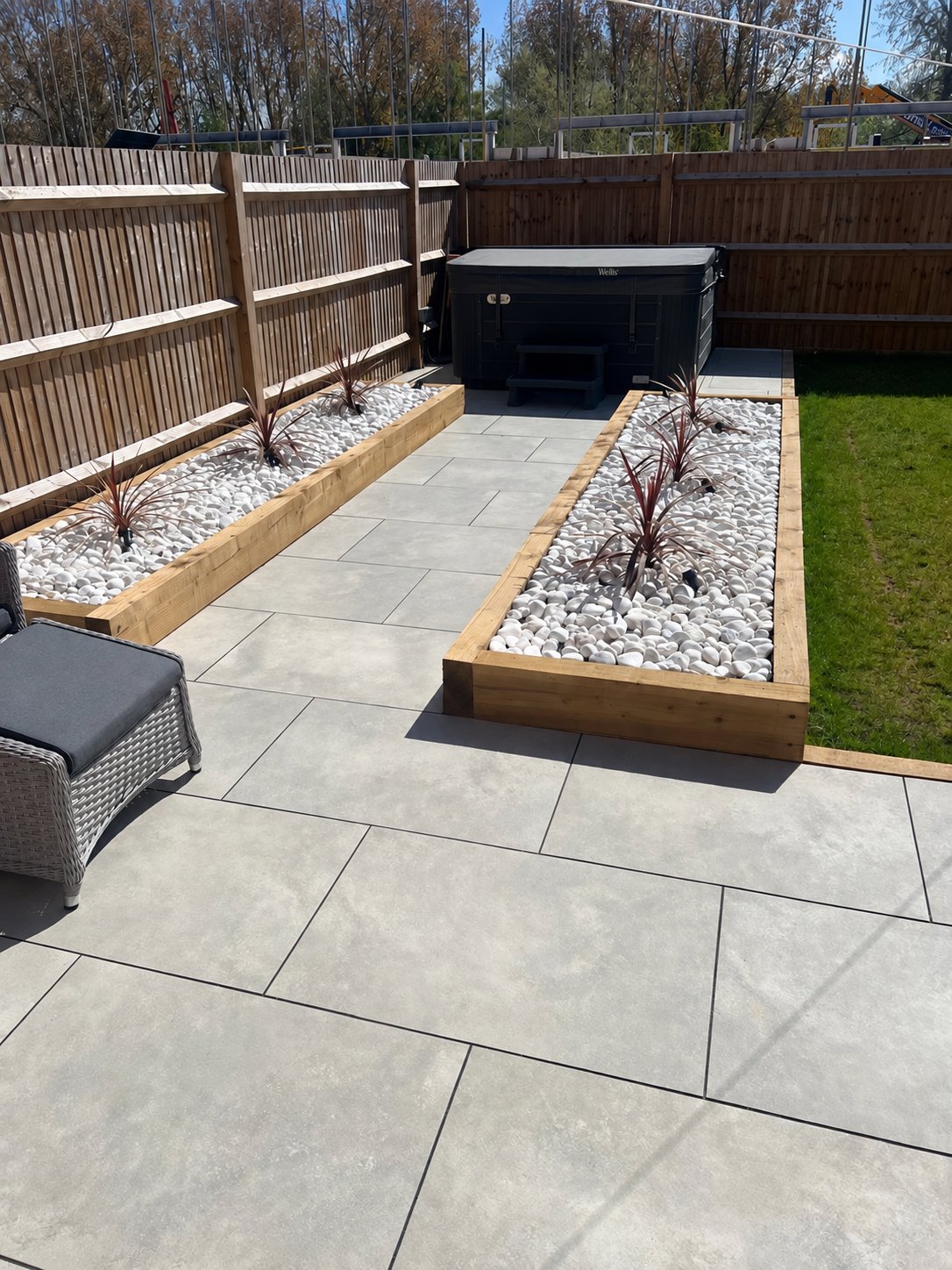
Grey porcelain paving framed by timber sleeper planters, white decorative stones and planting.
View Strood projectWest Malling
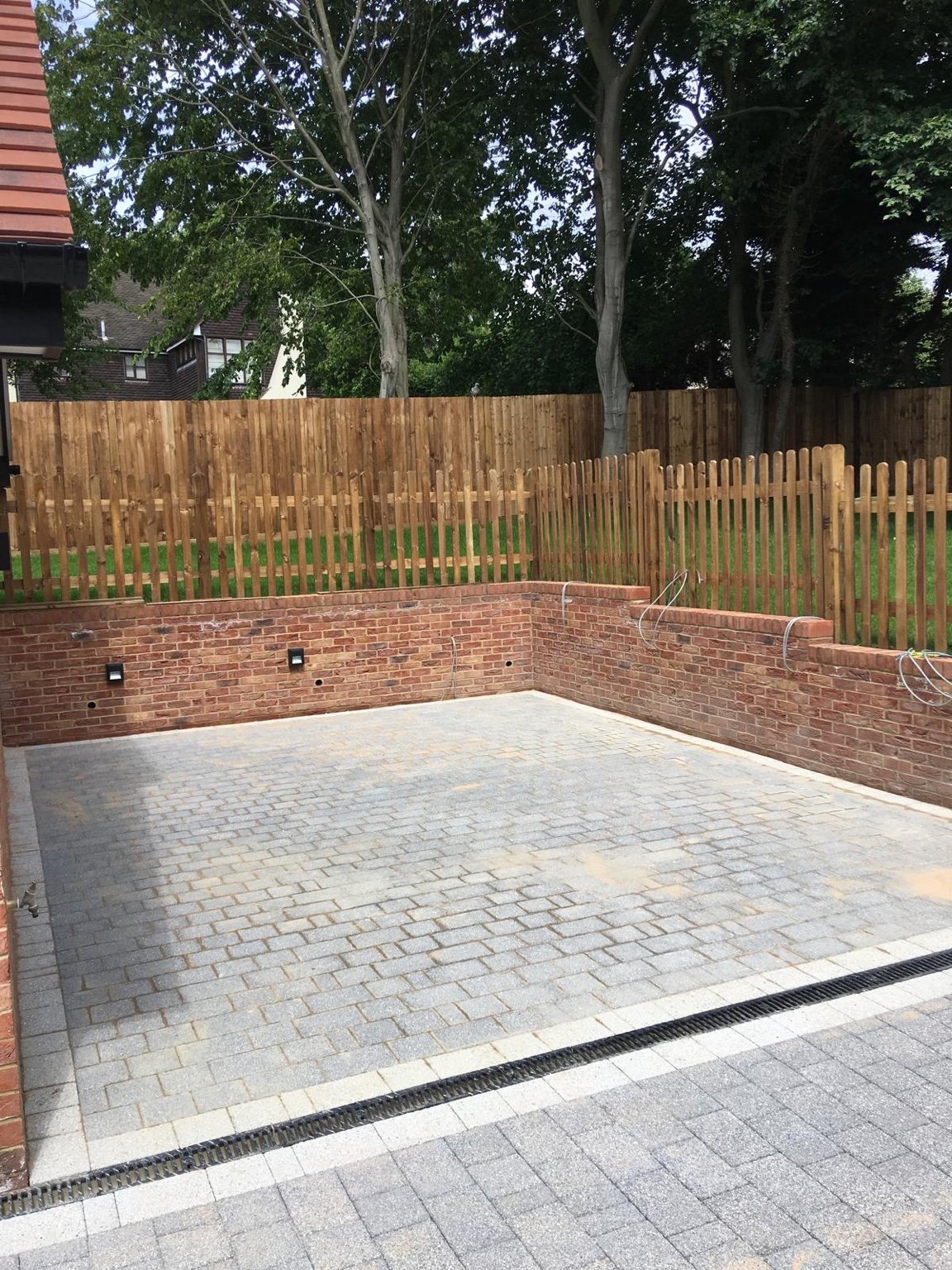
Block paving, porcelain patio, brick retaining walls and two styles of timber fencing.
View West Malling projectAshford
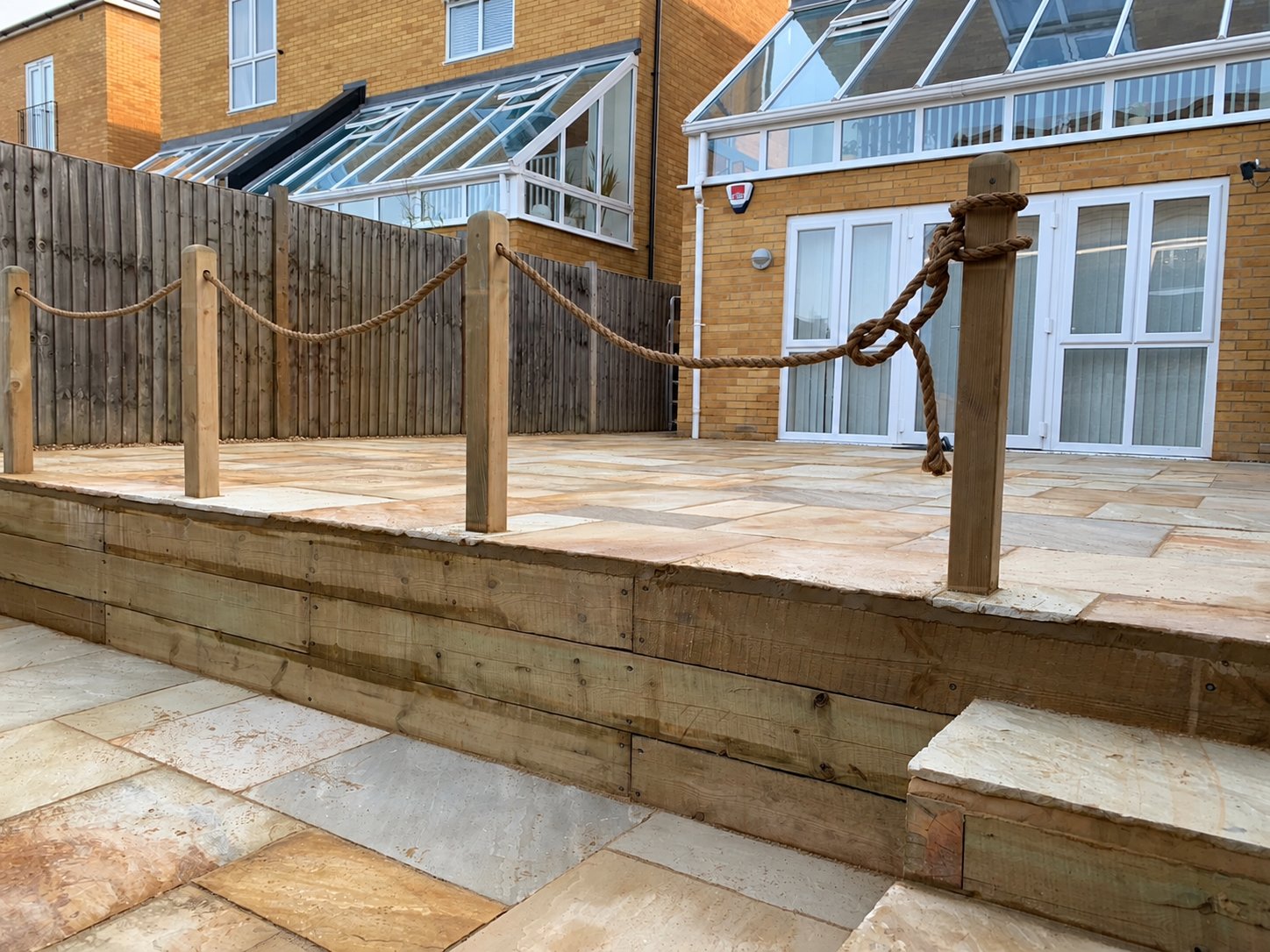
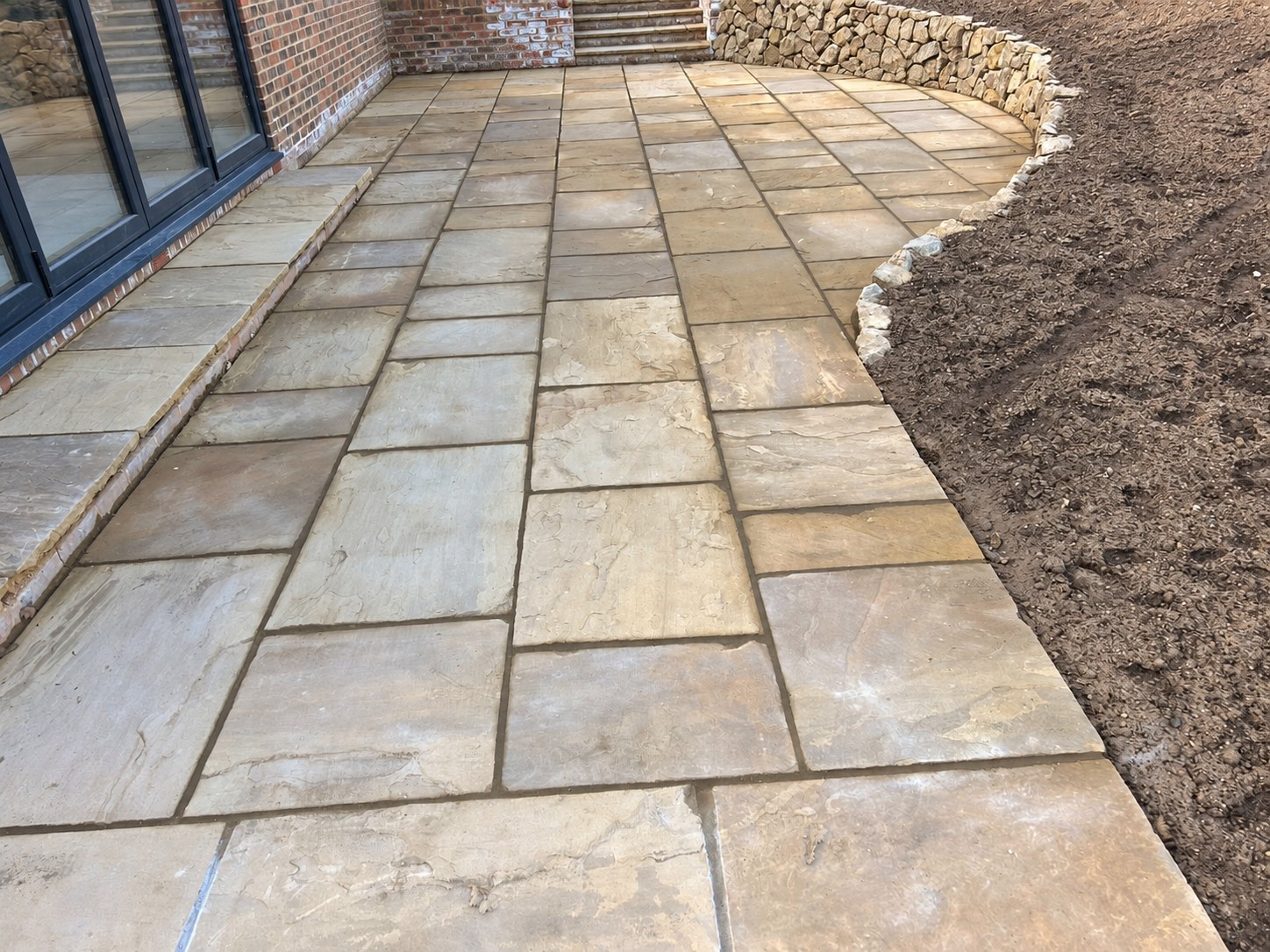
Sandstone paving across two levels, with timber sleeper retaining walls.
View Ashford projectDeal
A sandstone patio, ash-coloured composite decking, pitched-roof pergola and sleeper planters.
View Deal projectSevenoaks
75mm thick York stone paving, curved paths, brick walls and Kentish ragstone walls.
View Sevenoaks projectHerne Bay
Porcelain patio, raised bed, artificial grass and slatted fencing. See the garden before and after.
View Herne Bay projectSittingbourne
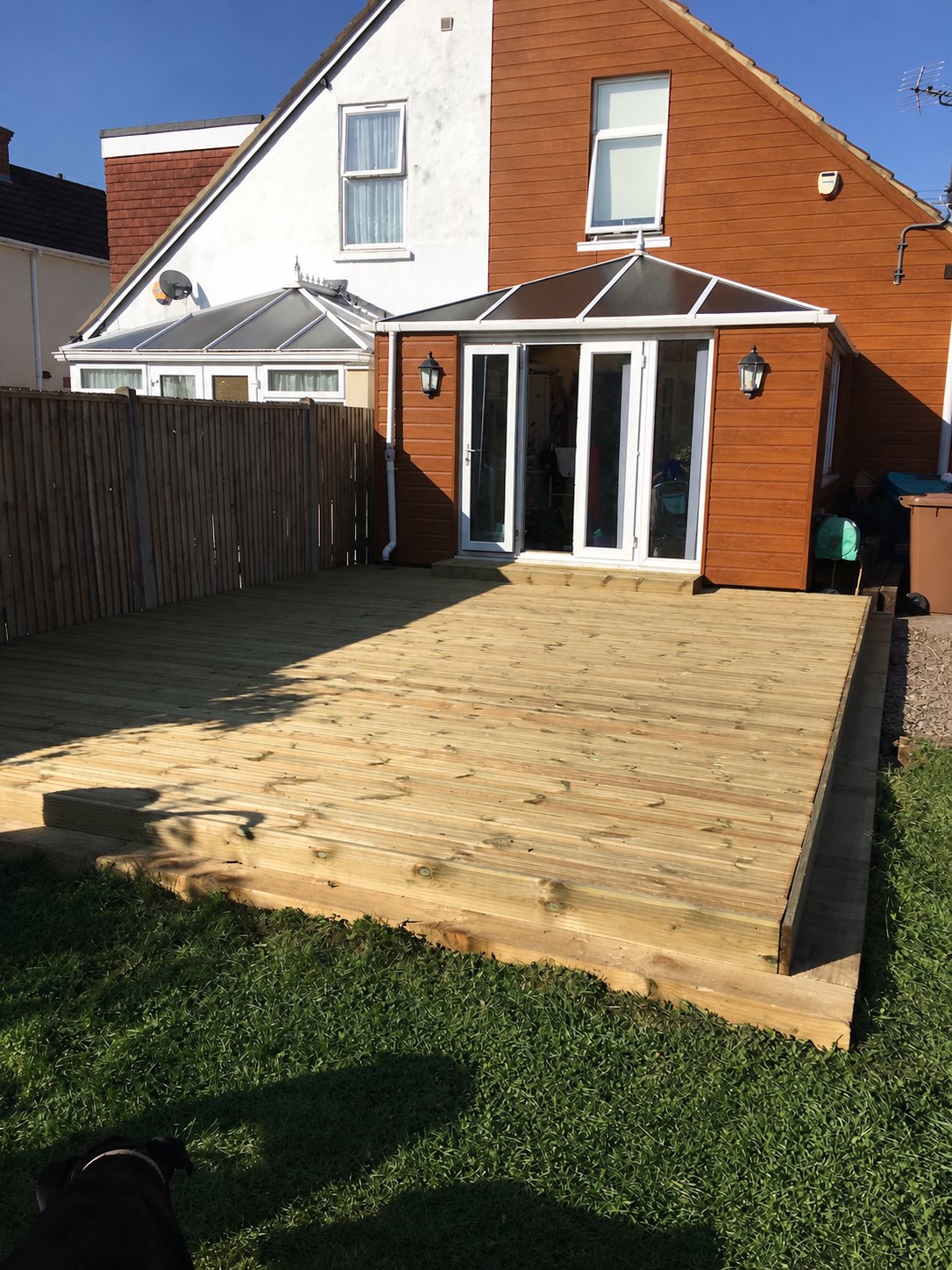
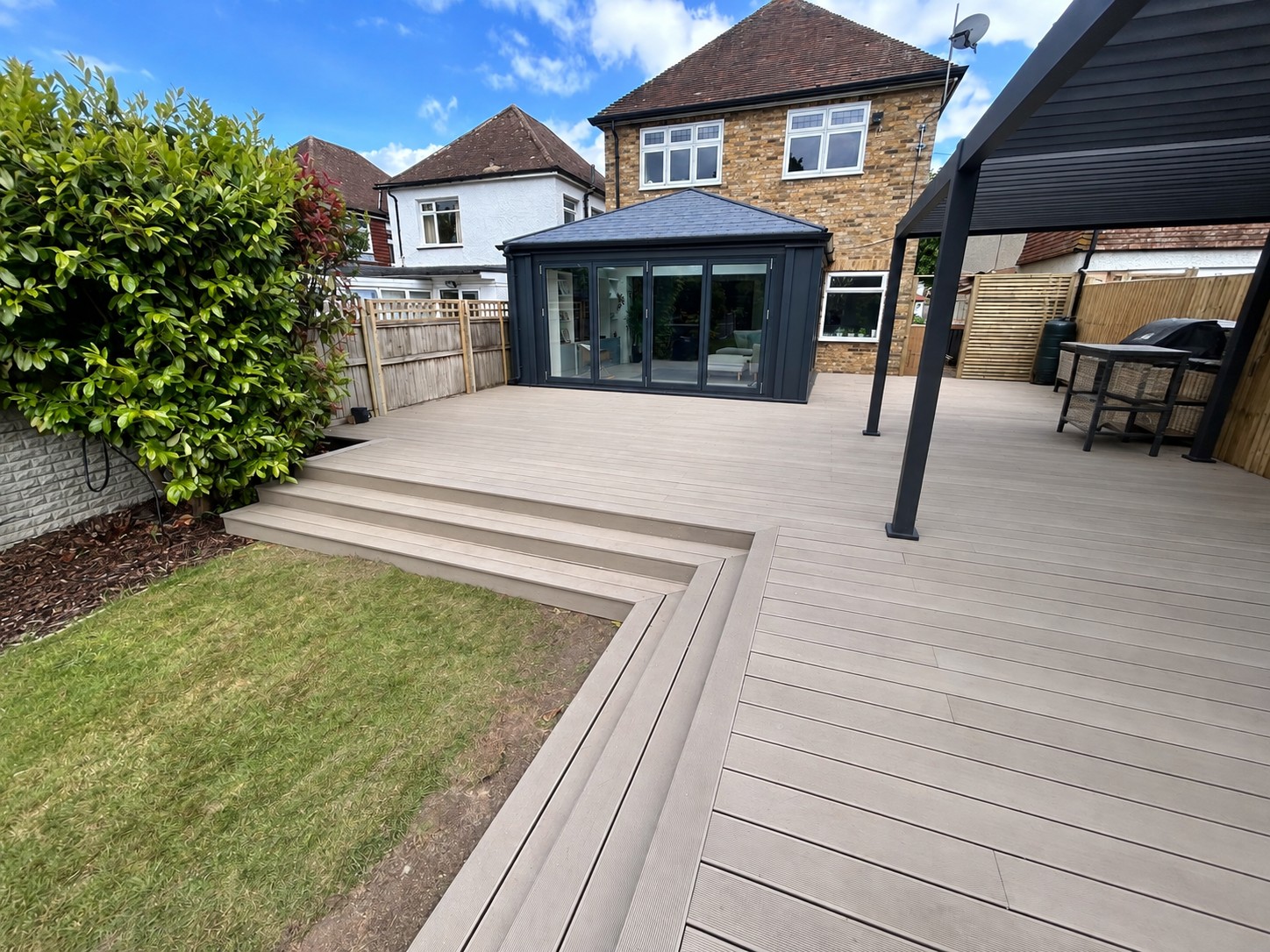
A broad decking terrace with defined board lines and steps connecting the house to the lawn.
View Sittingbourne projectDeal
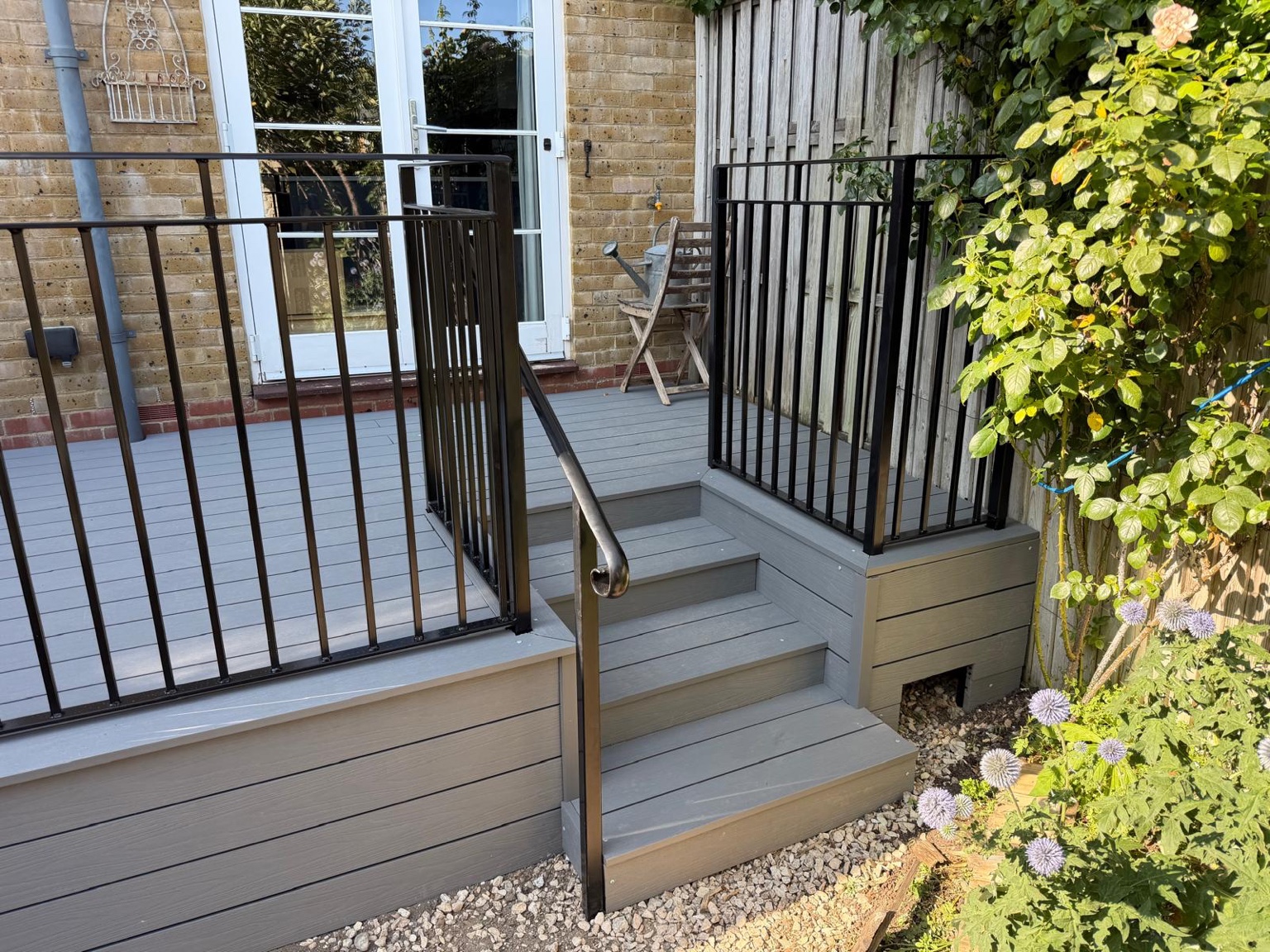
Raised grey decking with black railings, inset steps and a matching handrail.
View Deal project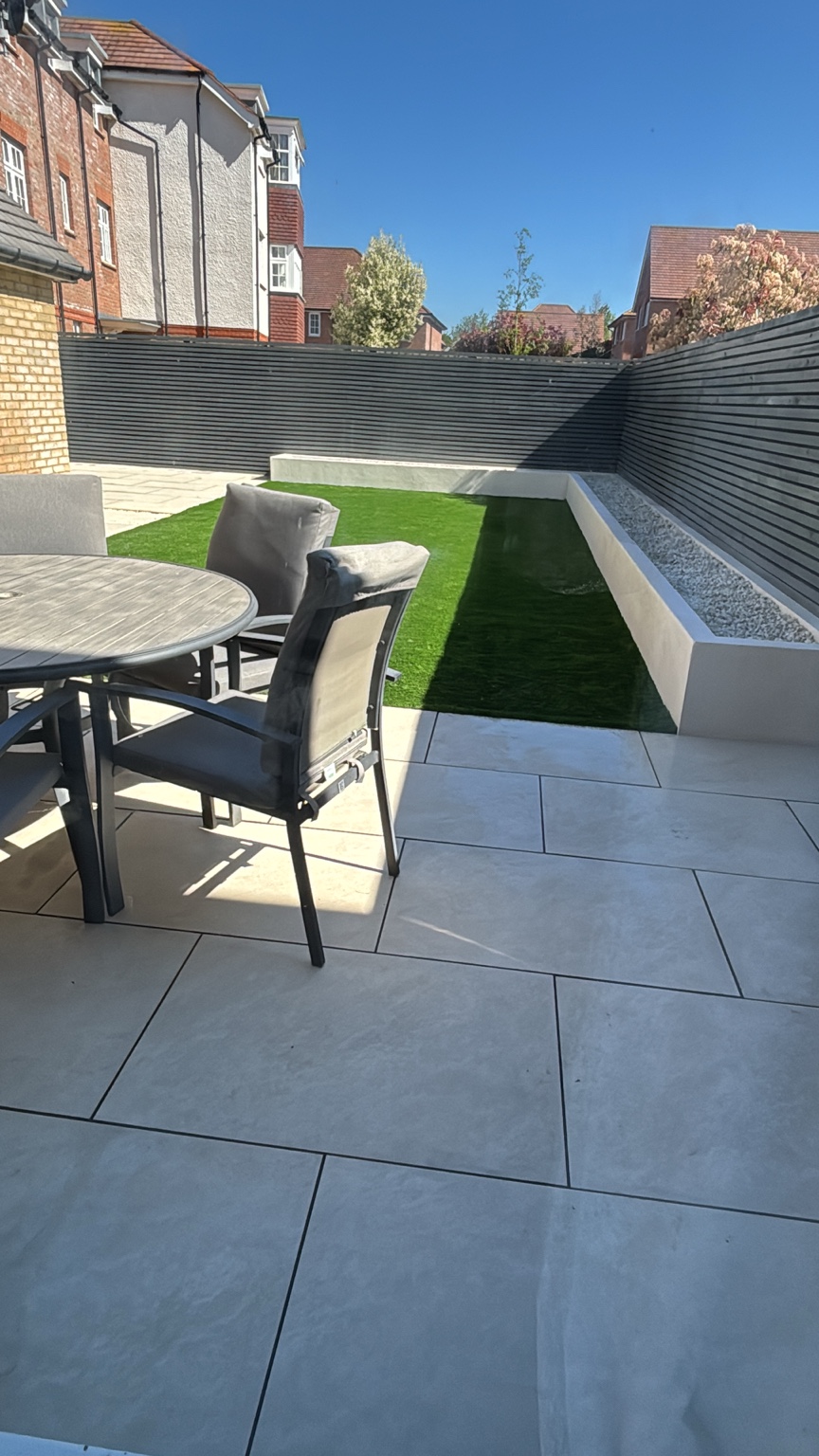
COMPLETED PROJECT · HERNE BAY
Porcelain patio, raised bed, artificial grass and slatted fencing. See the garden before and after.
This completed Herne Bay project illustrates the work shown in the photographs. We can discuss the requirements of your own Maidstone property.
View this project →YOUR SITTINGBOURNE FENCING PROJECT
Send your postcode, approximate length and photographs of the fence and access route. Include damaged supports, gate openings and changes in level.