Panels and boards
Check the opening, fixings and retained rails before selecting replacement components.
BROKEN PANELS · LEANING POSTS · GARDEN GATES
A damaged section does not always mean replacing the entire fence. Landscape Gardener of Kent assesses fence repairs in Birchington-on-Sea, including broken panels, failed rails, leaning posts and gates that drag or no longer latch.
Show us the damage and the surrounding supports. We can discuss a targeted repair where suitable, or replacement of the affected length when several components have deteriorated. Send your postcode and photographs for a free, no-obligation quotation.
Has a panel split, a post moved, or the gate dropped? The visible failure can be a symptom of another problem. A replacement panel needs suitable supports, and new hinges cannot stabilise a failing gate post.
Photograph the entire run and the neighbouring bays, then take close-ups from a safe position. Explain whether damage followed strong winds, appeared gradually or began after another change in the garden.
Check the opening, fixings and retained rails before selecting replacement components.
Assess timber condition, movement and foundations. Decay and a loose sound post require different remedies.
Check the frame, hinges, latch, post and ground clearance together.
Replacing one panel can be practical where its posts and connecting components remain sound. Measure the opening between posts, the panel height and the arrangement of brackets or slots. Include the gravel board in the photographs.
For closeboard fencing, individual boards or rails may be replaceable after assessment. Check whether surrounding timber still holds fixings rather than assume the missing board is the only work needed.
New timber usually looks different beside weathered sections. Agree dimensions, construction and the expected appearance before ordering; nominal panel sizes do not establish every existing opening.
A post that is sound but loose in its foundation needs a different approach from timber weakened at ground level. A suitable repair support may be considered where enough sound material remains; replacement may be preferable where deterioration is extensive.
Photograph the post base and the sections attached to it. Show paving, walls, planting and changes in level nearby, because removing old concrete and reinstating the area can affect the scope.
Fresh concrete alone does not restore rotten timber. Agree which components will stay and how the adjoining bays will be supported during the work.
For a boundary exposed towards Minnis Bay, consider whether the failure involves wind exposure, weakened supports or loose connections. A more sheltered Birchington garden still needs its own assessment; the town name cannot determine the correct repair.
Repeated failure is a reason to review the height, panel construction, post condition and fixing arrangement before fitting another identical section. Share a wide view of the boundary and any exposed corners.
Keep people and pets away from unstable sections and photograph from a safe position. Tell us if access is blocked or the garden is open. Availability is confirmed for each enquiry; we do not promise a same-day response from a search-result suggestion.
A gate catching on the ground may have a dropped frame, loose hinges or a moving post. Photograph it closed, the hinge side, latch and supporting post. Explain when the problem began and whether the gate still opens.
Hardware replacement or adjustment can be sufficient when the frame and supports are suitable. Include timber or post replacement where those have failed, and agree the clearance above the finished path.
Let us know if the gate is the only access to the garden or is needed to contain pets. The repair sequence should account for that use.
The useful price is for the specific repair, including materials, fitting and any removal. A panel between sound posts, replacement of a post foundation and renewal of several bays are different jobs.
Ask whether a minimum charge applies to a small job and which materials are included. Identify items that depend on findings after dismantling so the repair price remains clear.
A national average combines repairs of different sizes and complexity. It cannot establish whether your Birchington fence needs a panel, post, foundation or a longer replacement run.
For a simple calculation, if an agreed repair had £120 of materials and £180 of labour and disposal, its subtotal would be £300 before any separately stated VAT or extras. These are hypothetical figures, not our prices or a UK average.
Send photographs, the approximate height and affected bay count for a site-specific repair quotation. Compare a complete repair scope with any replacement option, rather than a supply-only panel price.
If several posts and rails are failing, a sequence of small repairs may be less useful than renewing the affected length. Ask for both scopes where appropriate: what can remain, what changes and how the result is expected to look.
Retaining sound sections can reduce unnecessary replacement, but compatibility and support still matter. If you want a different style or height, see fencing installation in Birchington-on-Sea and include that change in the brief.
Arrange permission for access before scheduling the repair. Owning the fence does not by itself settle a right to enter adjoining land. Agree dates, the working area and protection of paths and planting.
If access cannot be agreed, seek advice about any applicable rights or formal process before entering. The Access to Neighbouring Land Act provides for access orders with defined conditions; it is not a general permission to enter at will.
Confirm the boundary and ownership separately. GOV.UK explains property boundaries and why title plans do not usually show an exact boundary or identify ownership of every fence.
In England, the usual planning height limits are 2 metres away from a vehicle highway, or 1 metre beside it or its footpath. Property restrictions can change the requirements. Check the complete proposed height, including gravel boards or trellis.
If a repair changes the height or design, check Planning Portal’s fencing conditions and clarify the proposal with Thanet District Council. Listed-building connections, restricted rights and conservation-area removal may require separate consideration.
Send your postcode, approximate fence height and number of damaged bays. Include a wide view, damaged components, post bases and the route from the entrance to the fence.
Show narrow passages, steps and any patio around post foundations. Confirm whether both sides can be accessed and which plants or surfaces need protection. If you intend to claim through insurance, check the evidence and authorisation your insurer requires before commissioning work.
Our Herne Bay garden transformation and West Malling garden project show completed boundary details. The photographs are genuine finished-installation examples, labelled with their actual locations.
They illustrate styles and adjoining garden features rather than repair work. Your damaged fence needs assessment of its own supports and retained components.
Price the affected components, fitting, access, removal and disposal. A single panel change and a failed post foundation involve different work.
Arrange access permission first. If agreement cannot be reached, seek advice about applicable rights or a formal process rather than assuming fence ownership authorises entry.
General averages cannot establish your repair scope. Ask for a complete quotation identifying retained and replacement components, labour, disposal, VAT and provisional work.
England’s usual limits are 2m away from a vehicle highway and 1m beside it or its footpath. Restrictions can apply. Check the linked planning guidance before changing the boundary height or design.
Often, where the posts and connecting components are suitable. Measure the opening and check compatibility before selecting the replacement.
No: concrete does not restore weakened timber. Assessment can establish whether replacement or a suitable repair support is appropriate.
We can discuss hinges, latches, dragging frames and supporting posts. The cause should be assessed before replacing hardware alone.
Tell us about unstable sections, blocked access or an open garden. Availability and the proposed work are confirmed for the enquiry; a same-day visit is not guaranteed.
Fresh timber usually looks different from weathered components. Agree the dimensions, style and expected appearance before ordering.
Show the whole run, affected bays, supports, post bases and access route. Include your postcode, height and number of damaged sections.
OUR WORK · KENT
Chislehurst
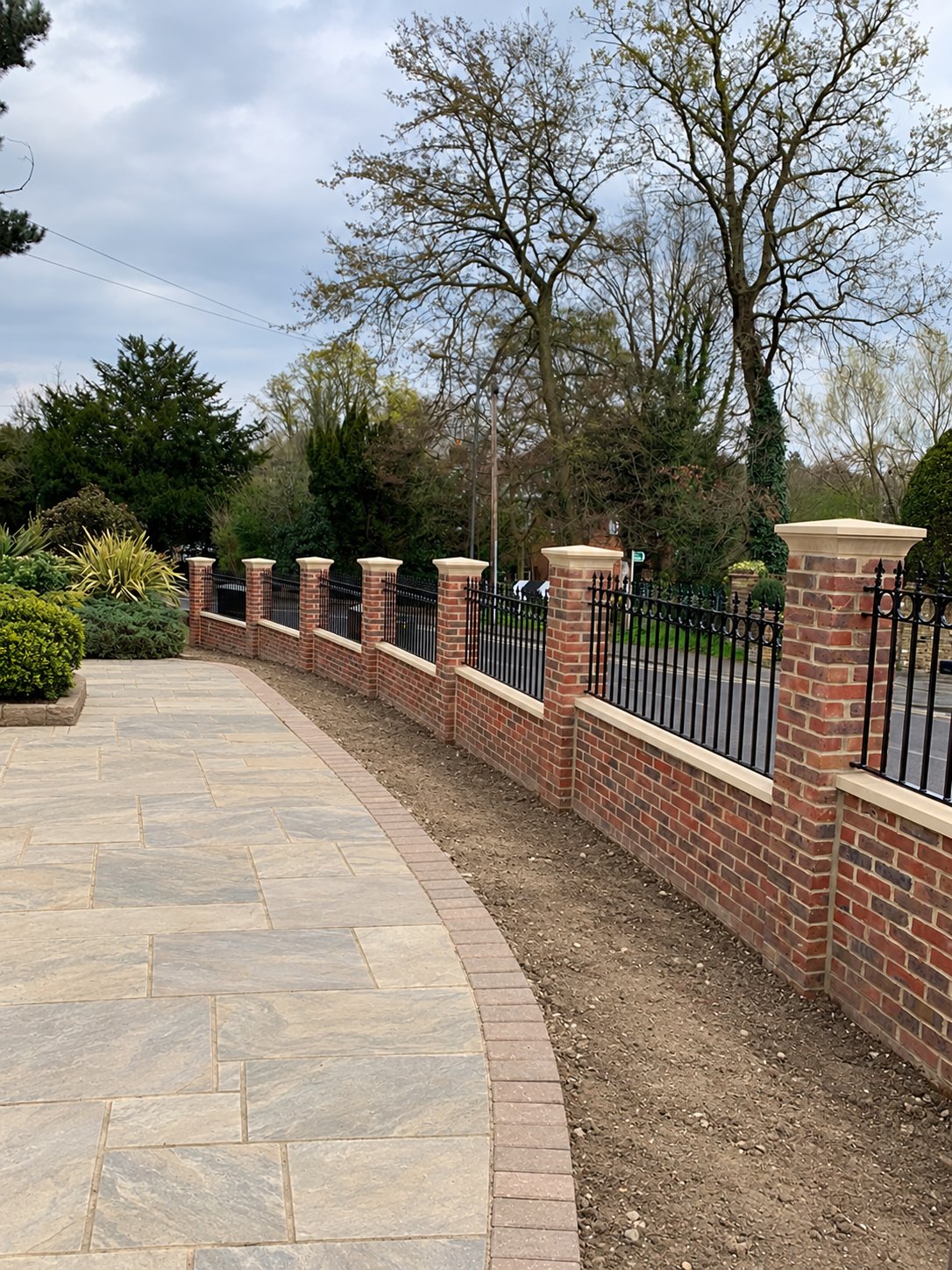
A brick boundary with pale stone coping and pier caps, finished with decorative railing panels.
View Chislehurst projectSt Margaret’s Bay
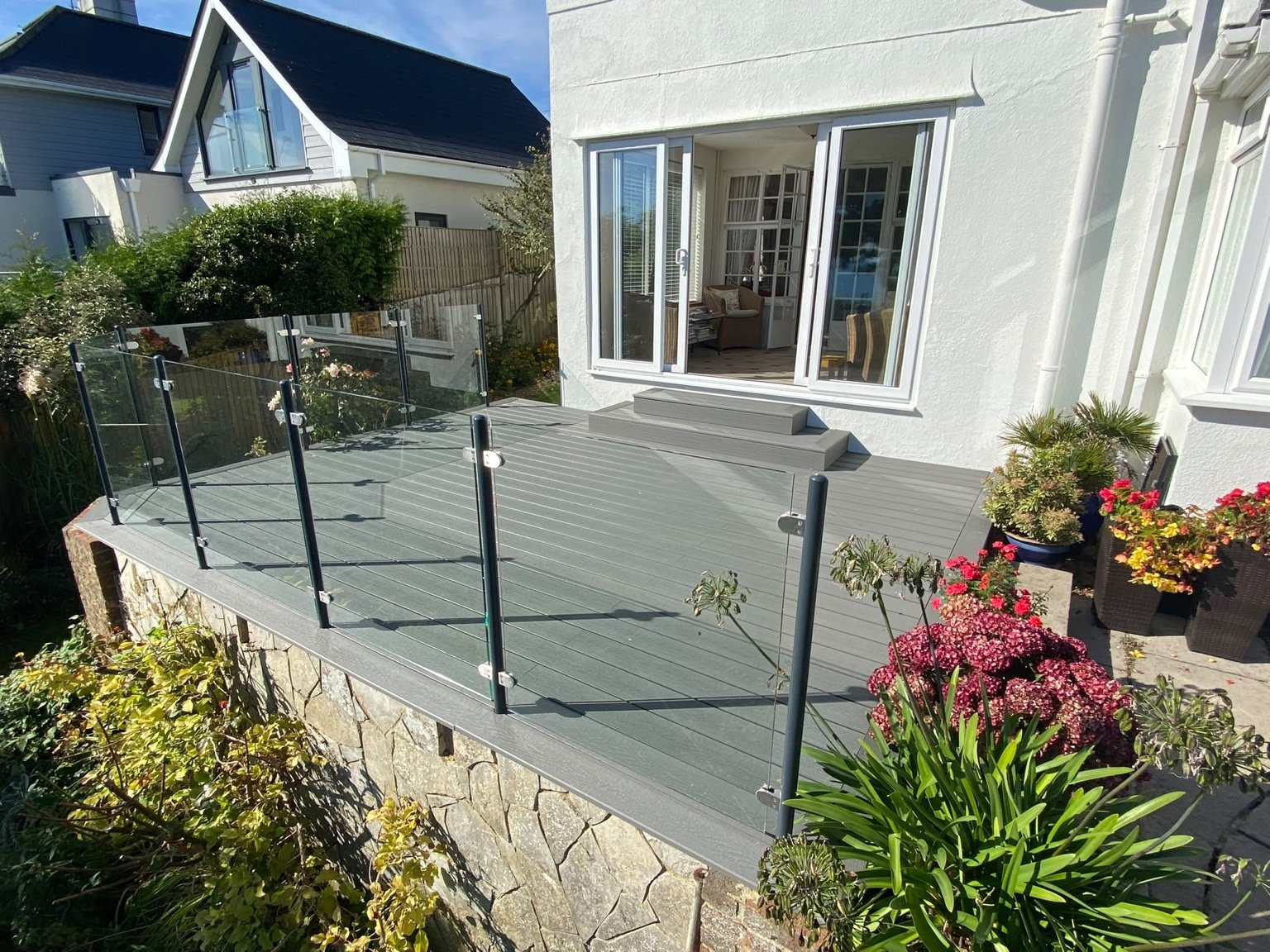
Grey composite decking, glass panels, powder-coated steel posts and matching steps.
View St Margaret’s Bay projectFolkestone
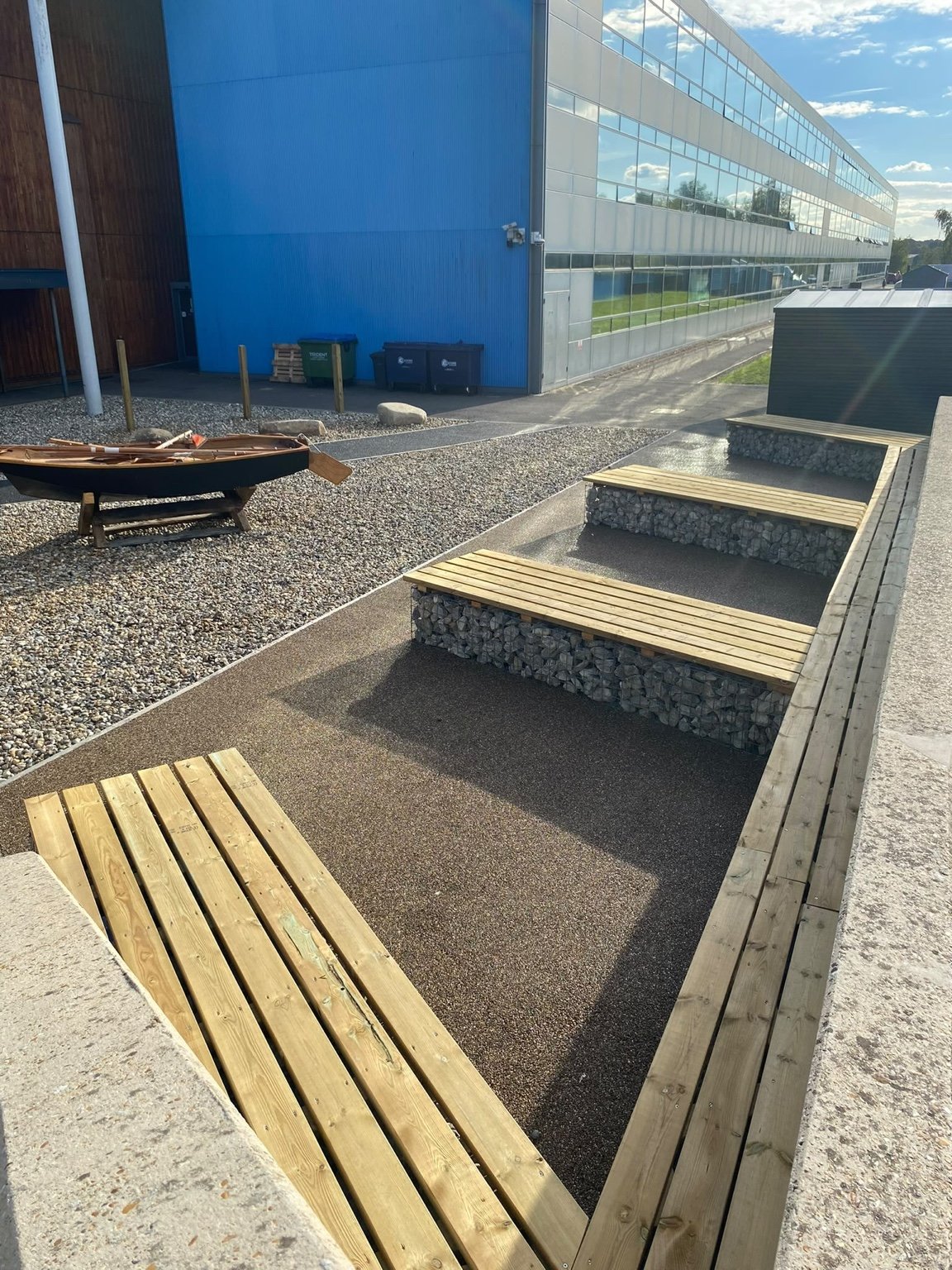
Timber-topped gabion benches, resin-bonded surfacing, shingle and a boat feature at the academy entrance.
View Folkestone projectCanterbury
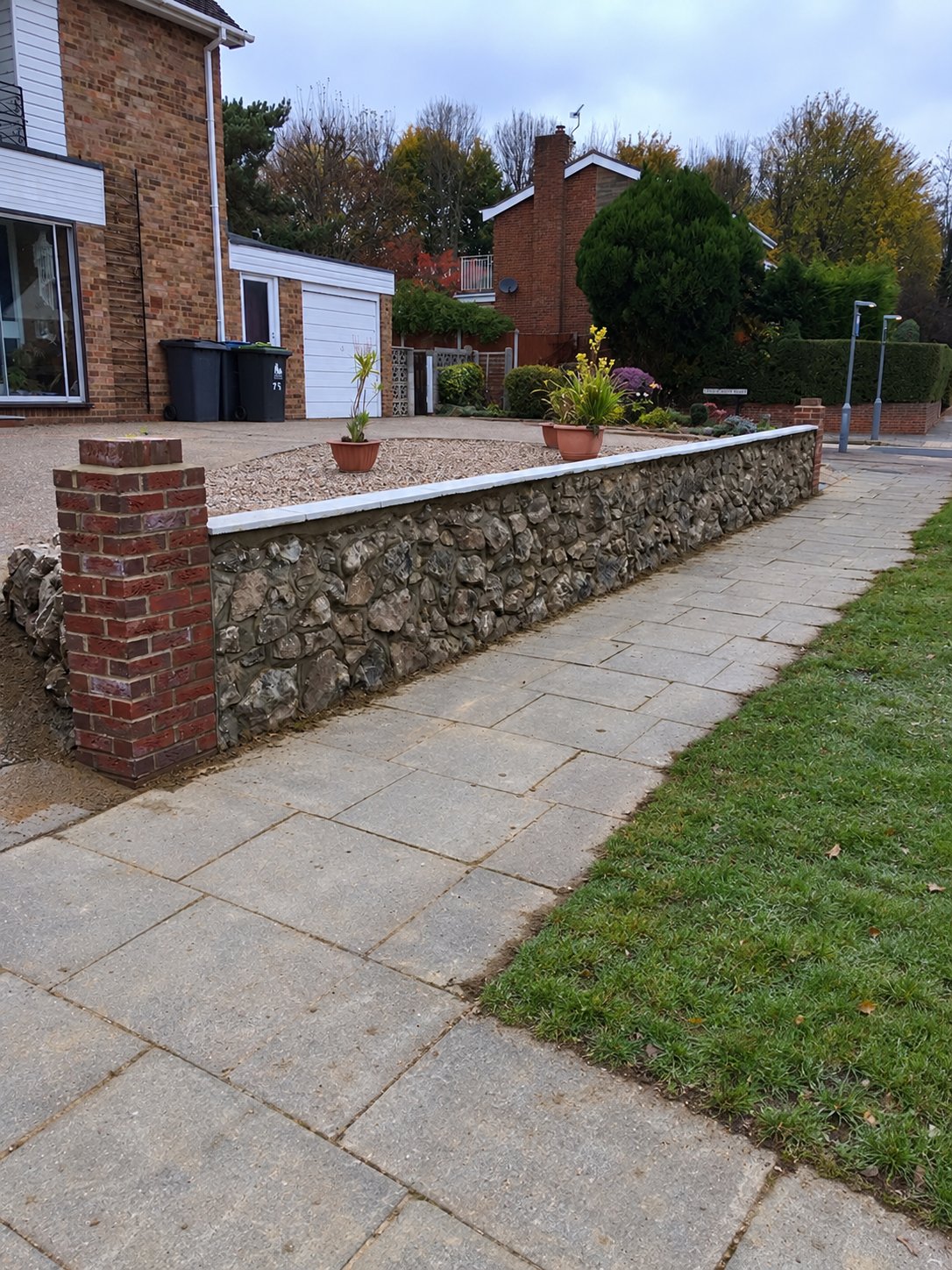
The stones from a customer’s late husband’s rockery kept and reused in a new front wall.
View Canterbury projectCanterbury
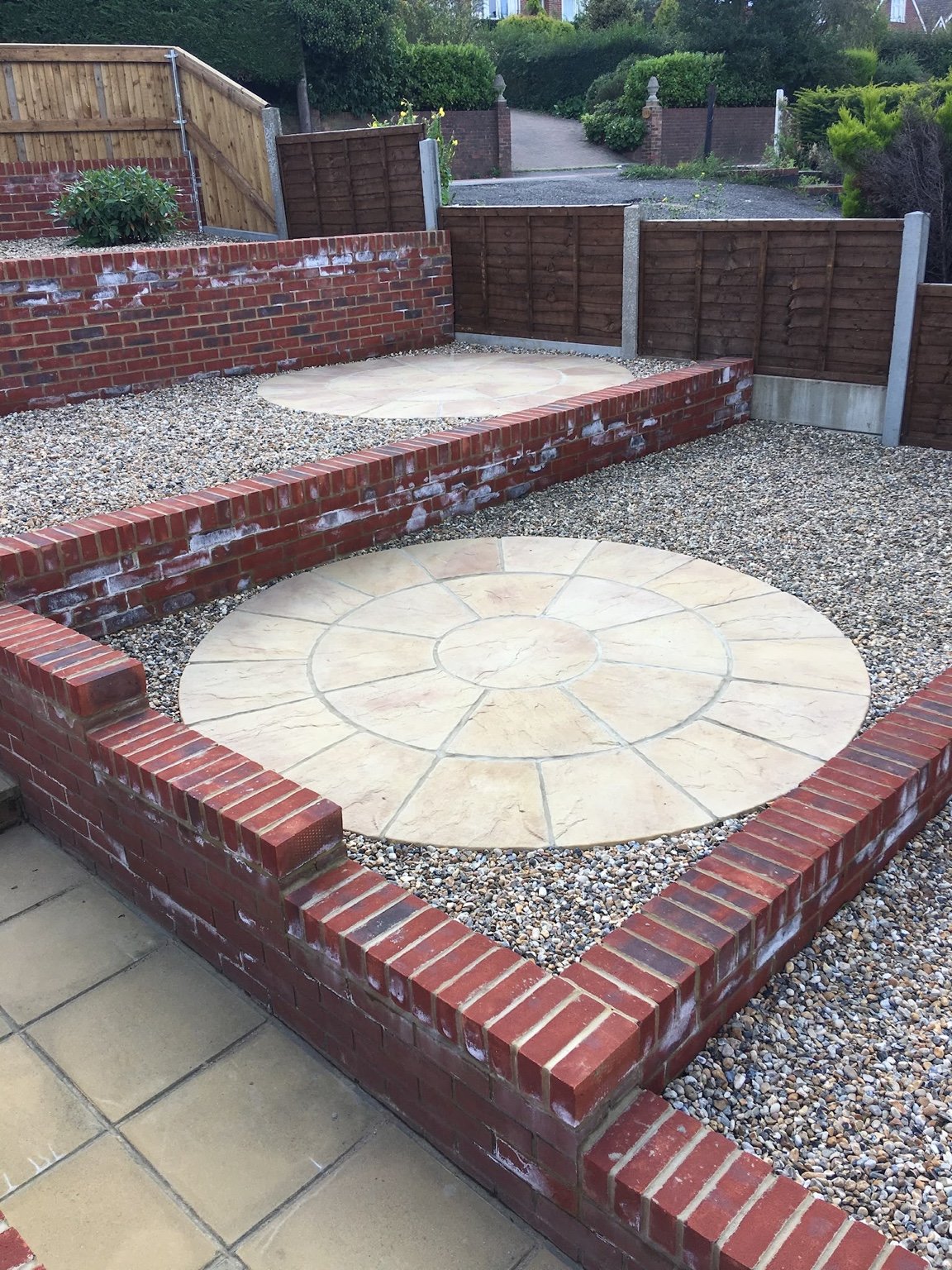
Retaining walls, shingle infill and riven buff slab circles across connected garden levels.
View Canterbury projectAshford
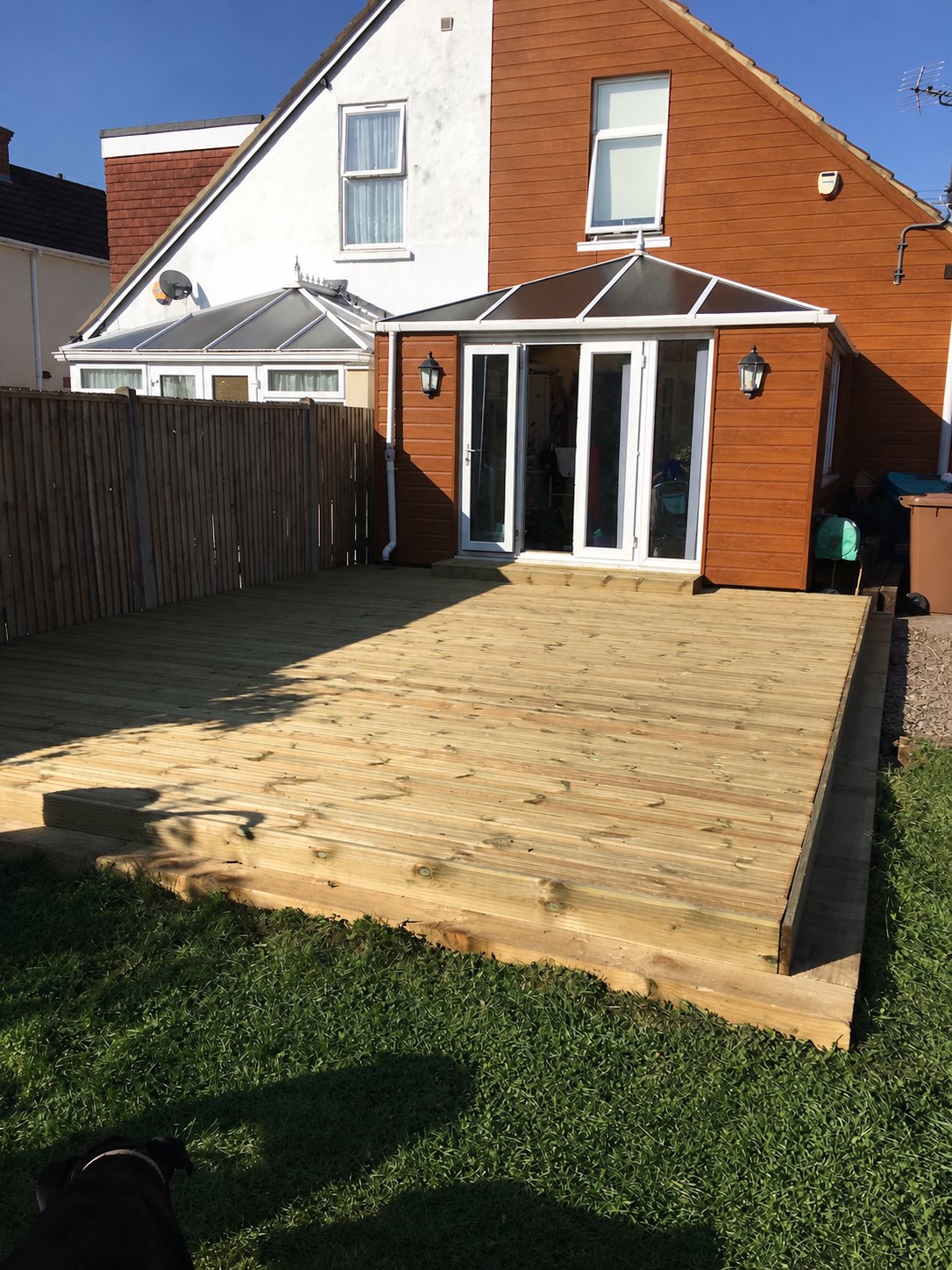
Before, during and after a timber decking replacement, from the old deck to the finished terrace.
View Ashford projectBorough Green
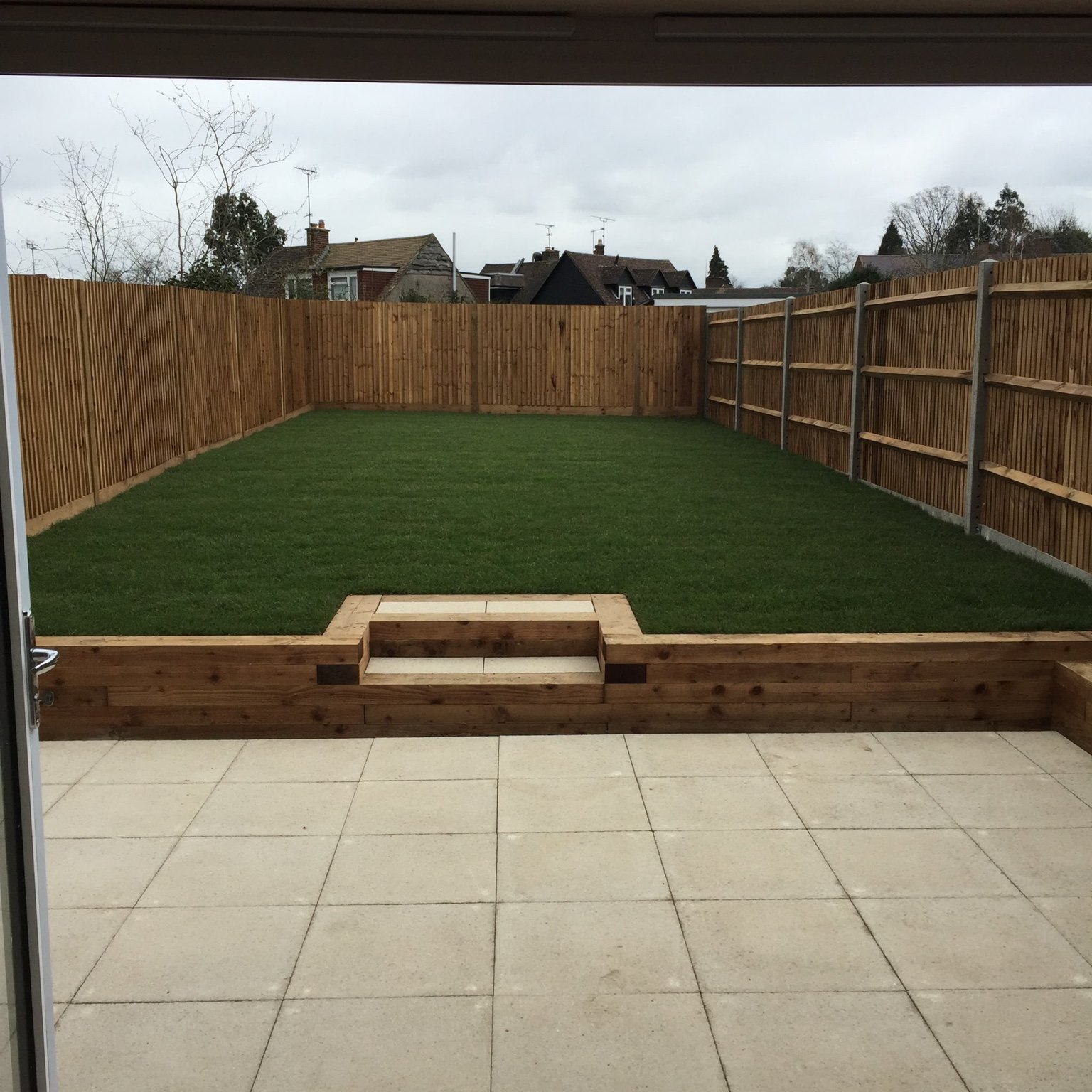
1800mm closeboard fencing, softwood sleeper planters, a 450mm buff slab patio and new turf.
View Borough Green projectCanterbury
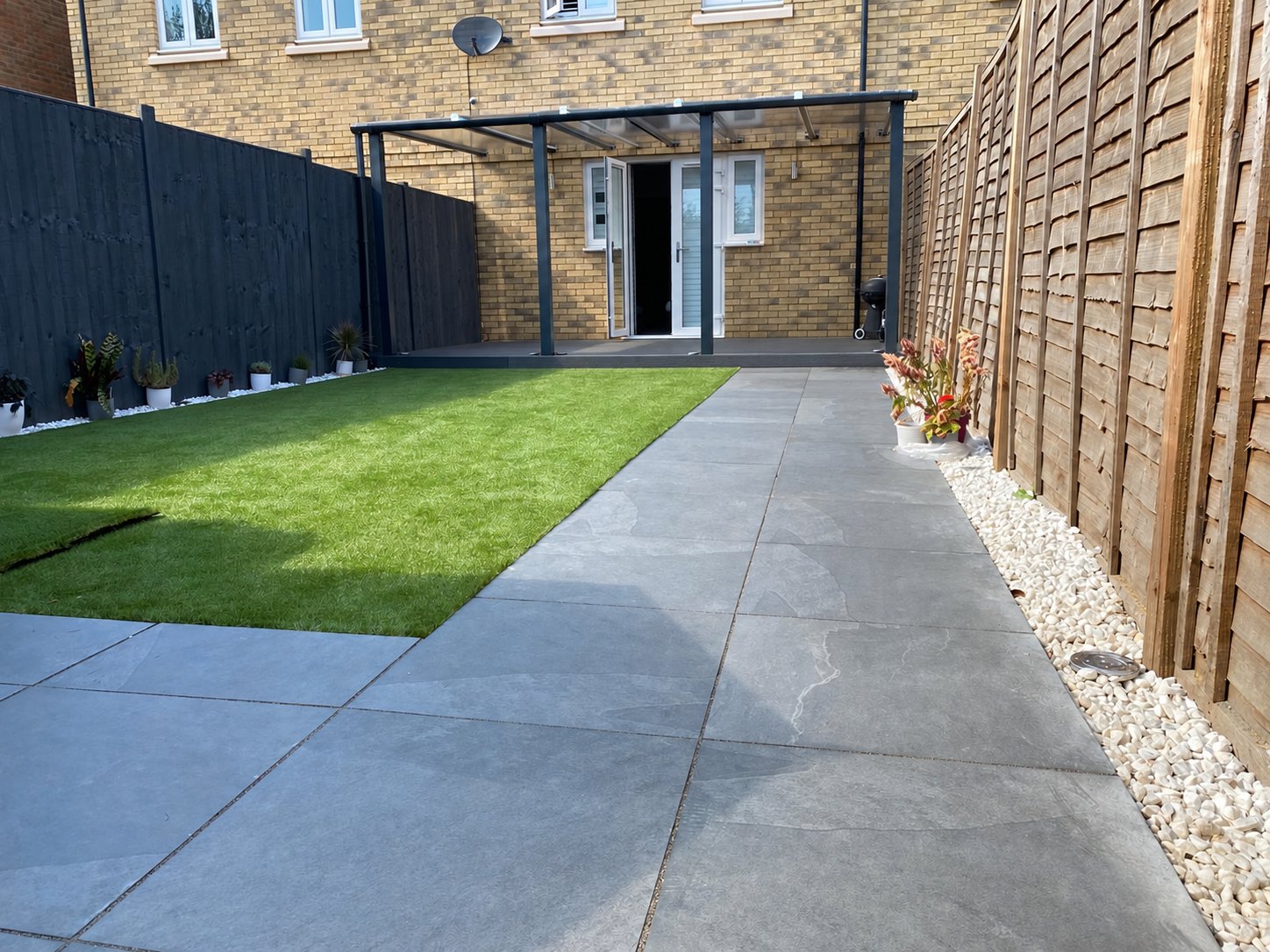
Porcelain paving, artificial grass and a custom steel-frame pergola with polycarbonate roof.
View Canterbury projectStrood
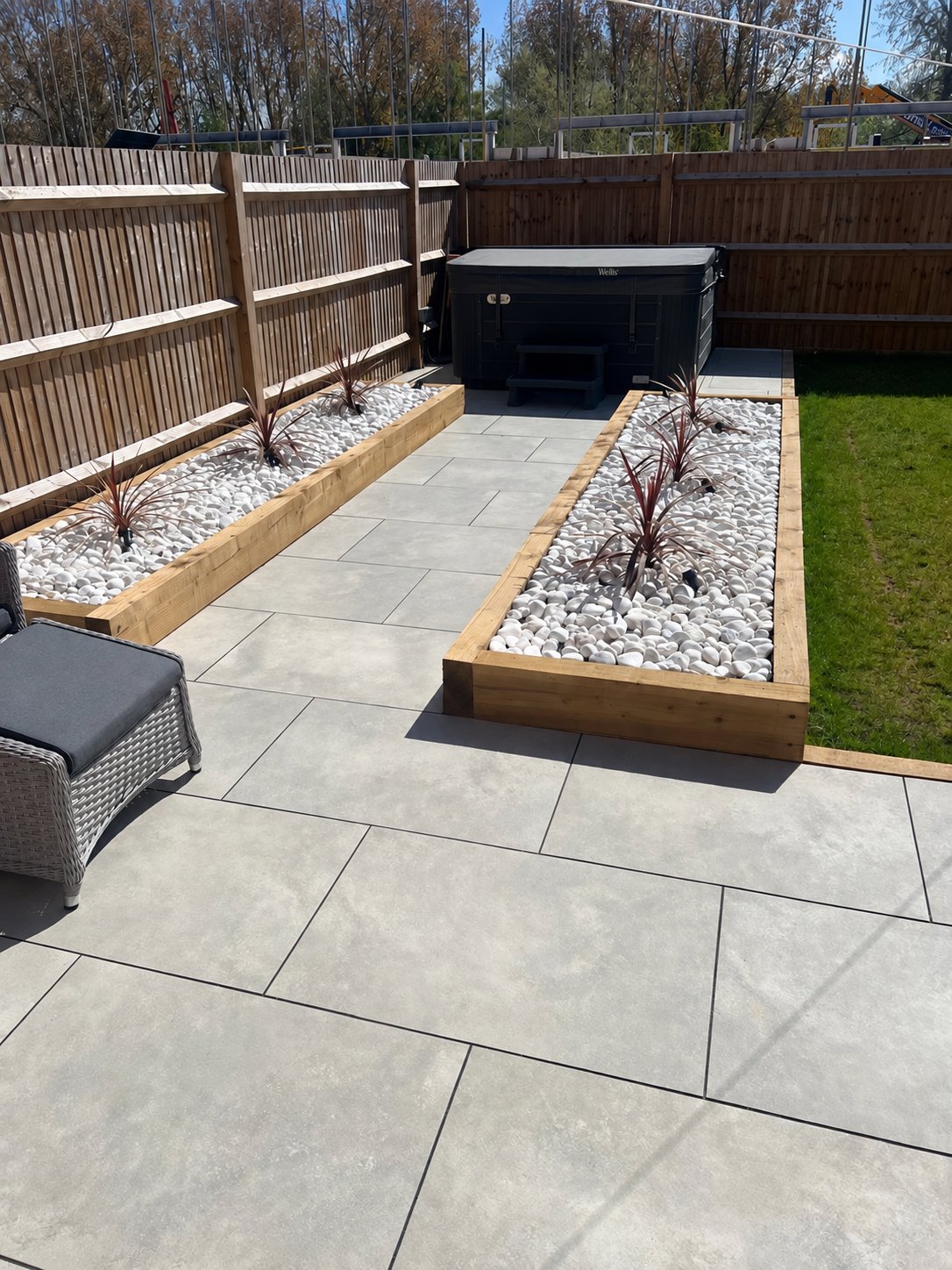
Grey porcelain paving framed by timber sleeper planters, white decorative stones and planting.
View Strood projectWest Malling
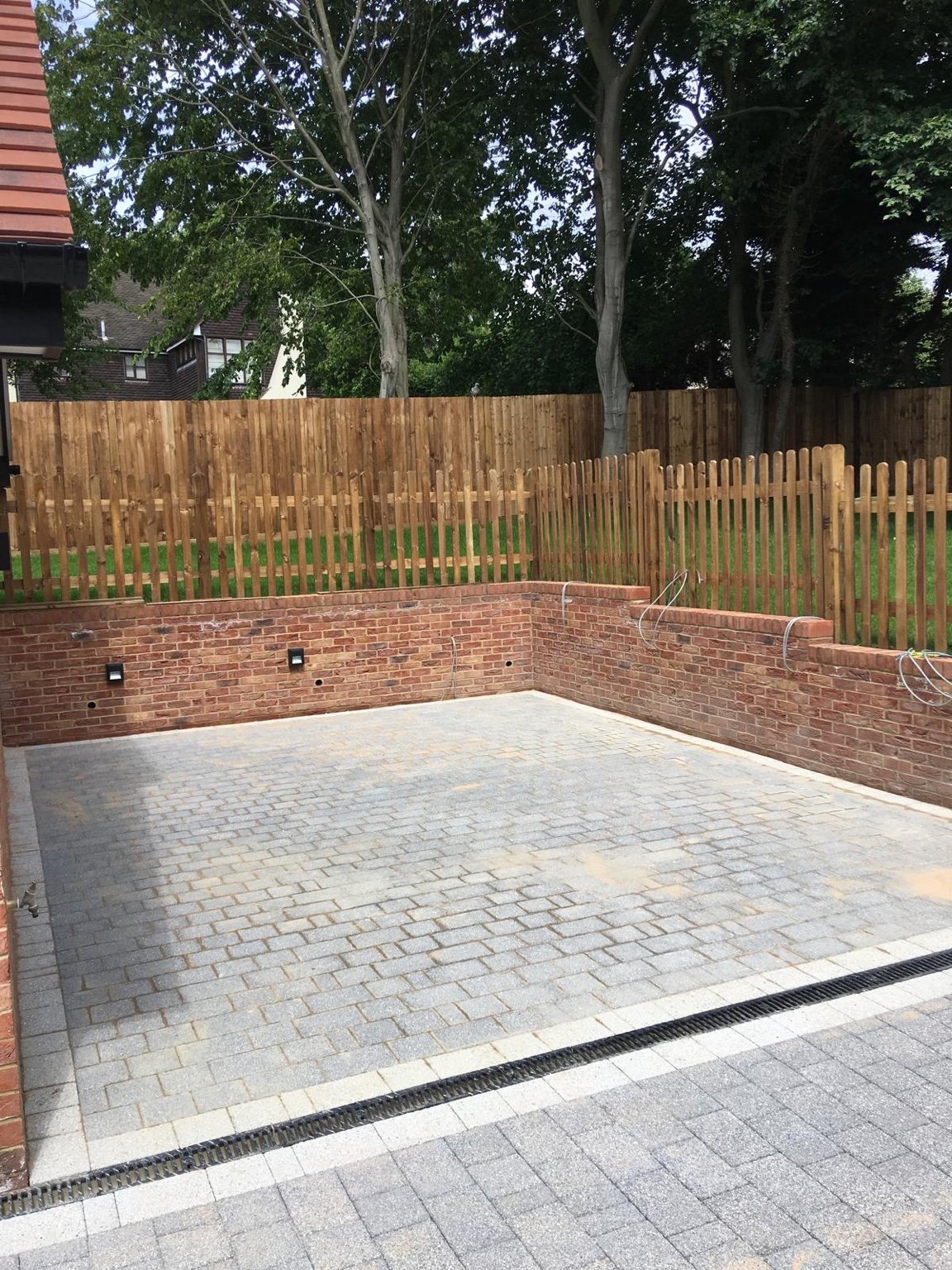
Block paving, porcelain patio, brick retaining walls and two styles of timber fencing.
View West Malling projectAshford
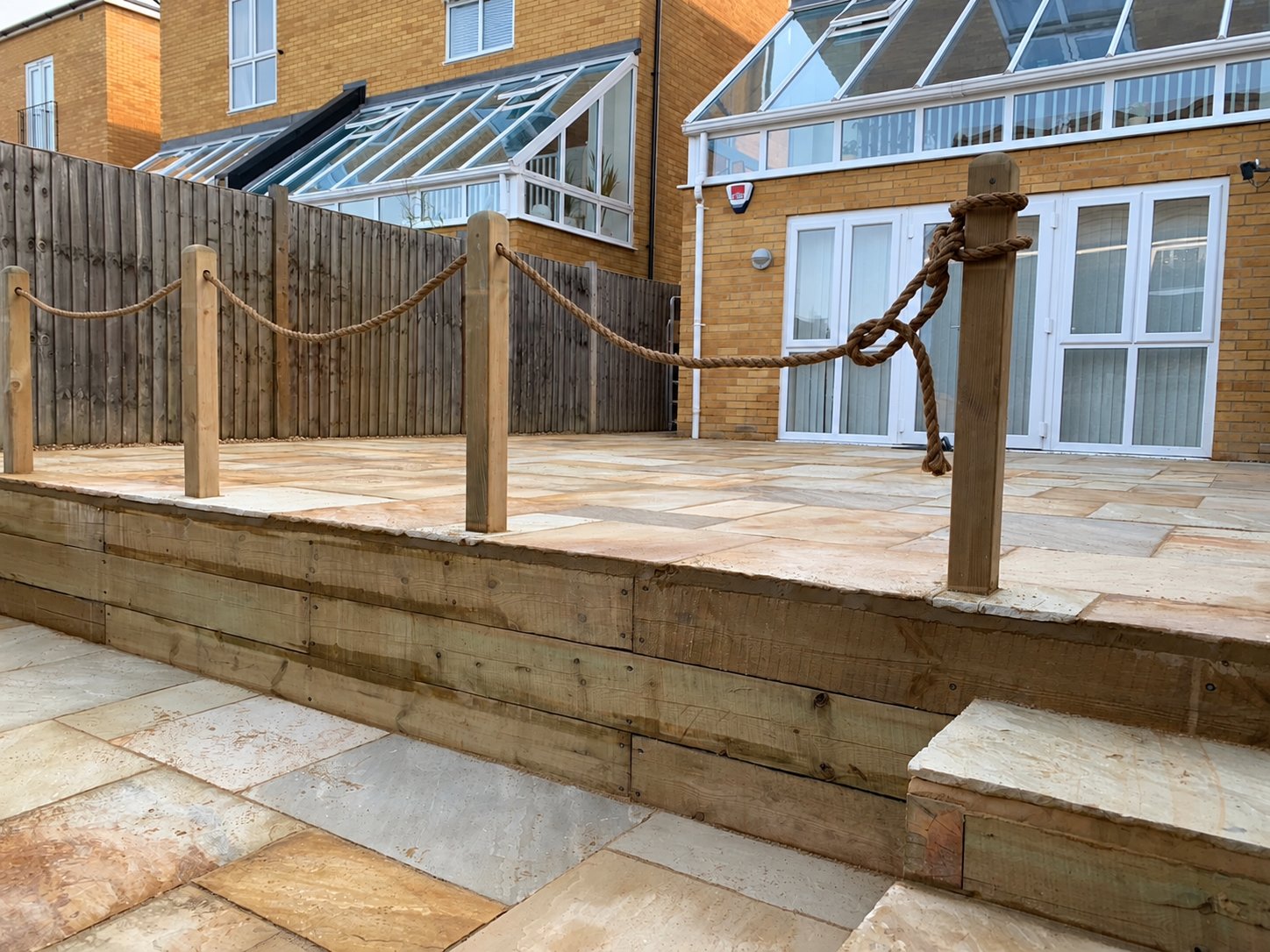
Sandstone paving across two levels, with timber sleeper retaining walls.
View Ashford projectDeal
A sandstone patio, ash-coloured composite decking, pitched-roof pergola and sleeper planters.
View Deal projectSevenoaks
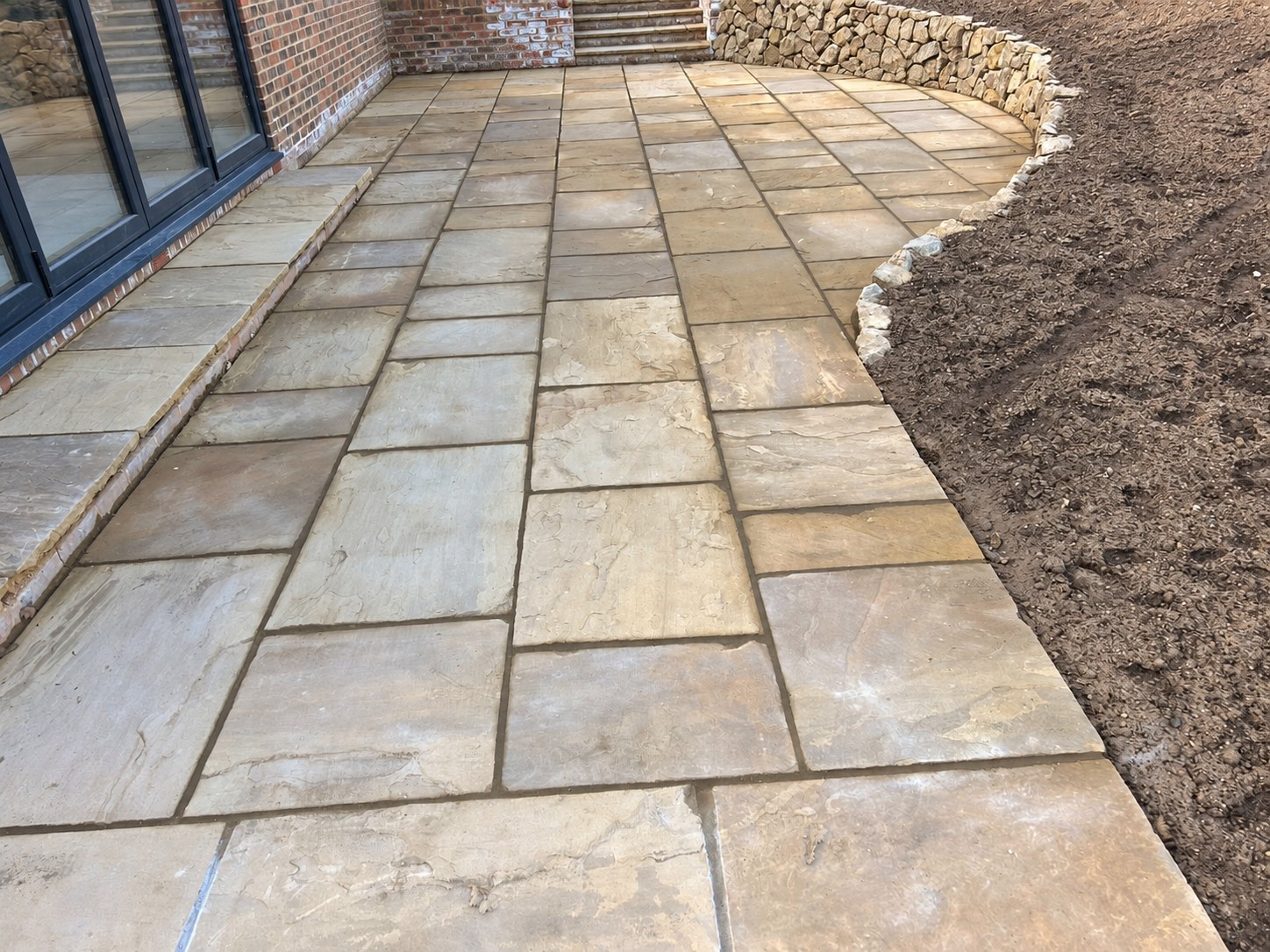
75mm thick York stone paving, curved paths, brick walls and Kentish ragstone walls.
View Sevenoaks projectHerne Bay
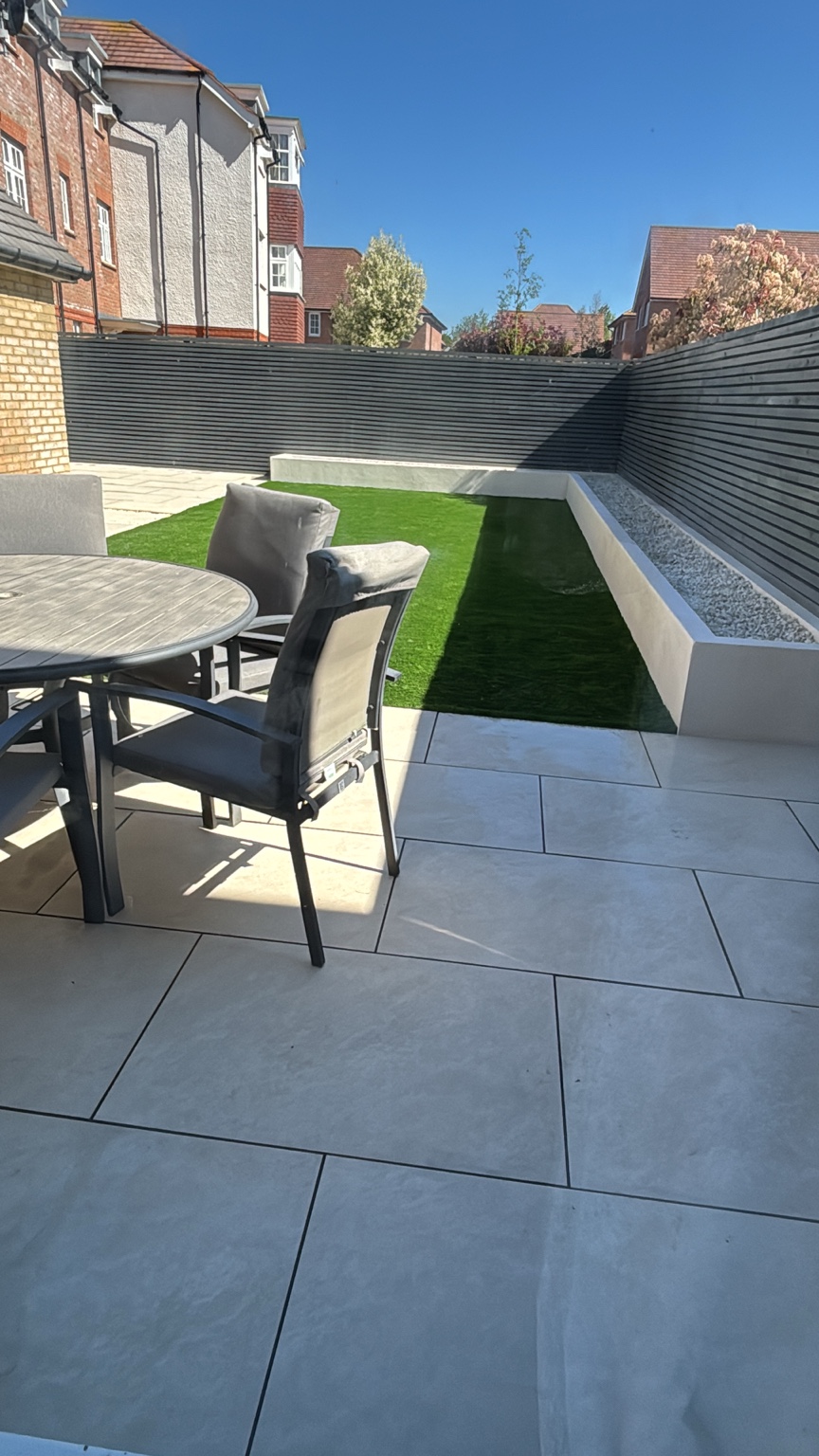
Porcelain patio, raised bed, artificial grass and slatted fencing. See the garden before and after.
View Herne Bay projectSittingbourne
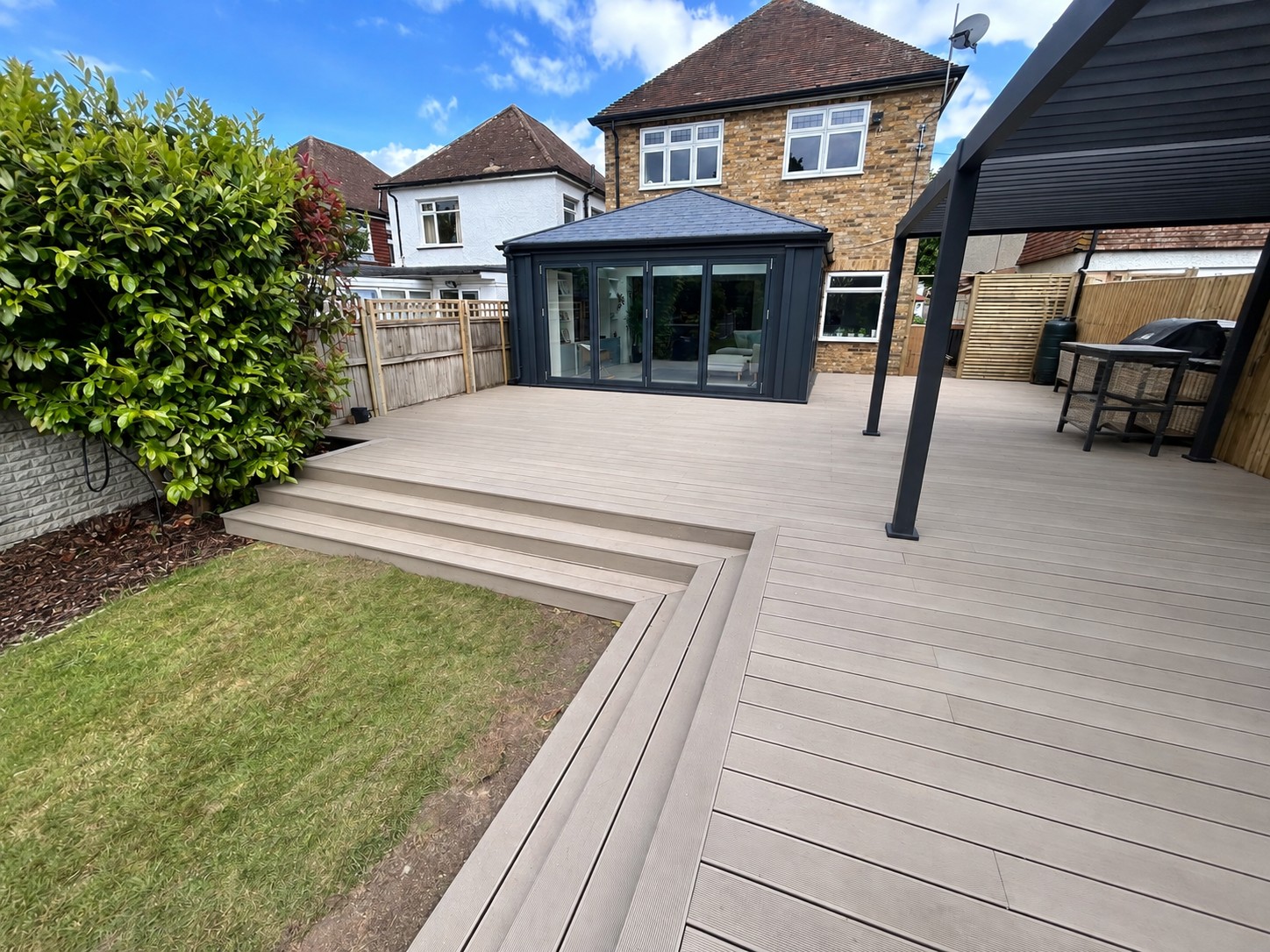
A broad decking terrace with defined board lines and steps connecting the house to the lawn.
View Sittingbourne projectDeal
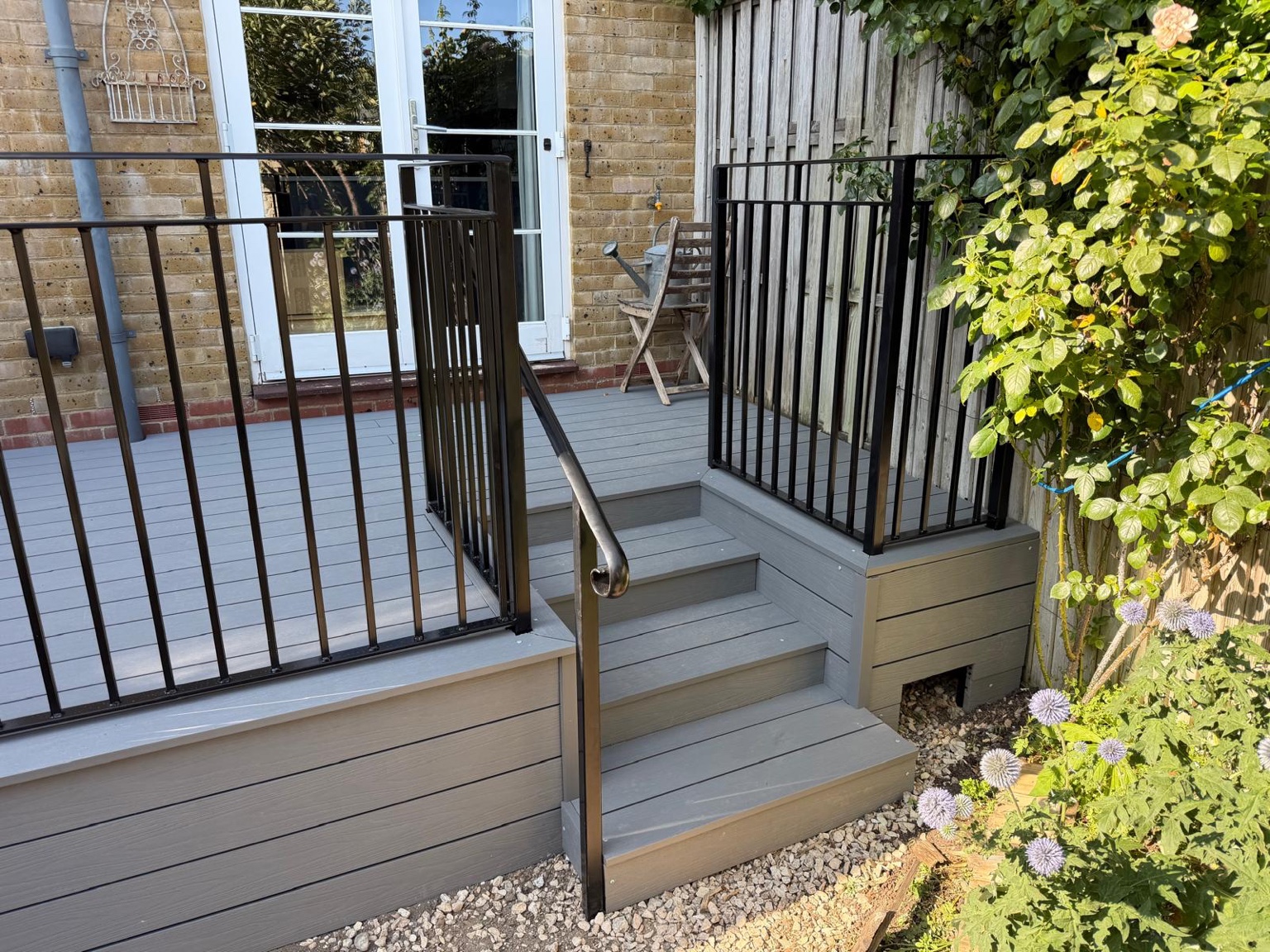
Raised grey decking with black railings, inset steps and a matching handrail.
View Deal projectYOUR BIRCHINGTON FENCE REPAIR
Send photographs and your postcode for a free, no-obligation repair quotation.