Natural timber
Consider timber for its grain and weathering. Include the selected timber’s cleaning and finishing requirements in the decision.
LANDSCAPING SERVICES IN KENT
Make better use of a raised or awkward part of the garden with a deck designed around the space and how you plan to use it.
LOCAL SERVICE PAGES
Choose your town for local details and the related landscaping services available there.
DECKING MATERIALS
Both can create a useful seating area, connect different garden levels or make better use of an awkward space. The best choice depends on the appearance you want and the upkeep you prefer.
NATURAL MATERIAL
Timber brings natural grain and a warm finish to the garden. Boards can be selected and laid to suit the shape of a terrace, steps or raised area, with edging and balustrades considered as part of the design.
It can be a good fit for a traditional garden or where natural materials sit alongside planting. Timber needs periodic cleaning and may need treatment or finishing to manage weathering. The exact maintenance depends on the timber and product chosen.
ENGINEERED MATERIAL
Composite boards offer a more consistent appearance and a choice of colours and textures. They are often selected when a homeowner wants less routine finishing than timber, while retaining the look of a deck.
Composite is not maintenance-free: it still needs cleaning, and performance varies between products. We can discuss board specification, slip resistance, heat in sunny spots, fixing details and the support structure before recommending a system.
THE STRUCTURE MATTERS
Whichever surface you choose, a suitable frame, secure fixings, drainage and ventilation under the deck all matter. We can assess ground levels, access and the way the deck will connect to the house and garden.
A deck can create a sitting area where a level change or awkward layout needs a different approach. Start with the size, position and connection to the house, then decide between timber and composite boards. Steps, edges and any balustrade should be included in the initial plan.
Timber gives natural grain and weathering but needs appropriate ongoing care. Composite offers a more consistent finish and generally avoids periodic timber finishing, but still needs cleaning. Product choice affects grip, temperature in sunshine, fixing details and support requirements. The chosen system should be installed to its manufacturer’s instructions.
Identify the intended deck height and the route underneath or around it. This layout needs a discussion about the supporting frame, inspection access and the junction with the garden as well as the board colour.
Kent coverage does not mean every site has the same access, ground or levels. The town pages help you find the relevant services; the specification should follow a survey of the individual property.
A decking quote should describe the supporting frame, board specification, fixings, ventilation and drainage, plus steps or protective edges included. Compare the whole structure rather than only the cost of the visible boards.
Send the location, approximate measurements and photographs of the existing area. Explain which features must stay and any restricted access. A written scope should identify included work, optional items and assumptions that need checking before the price is agreed.
A deck can provide a usable terrace across a change in level, subject to assessment of supports, height, steps and guarding. The underside, drainage and maintenance access belong in the design too.
Possibly, after checking the frame and supports. Different boards can require different support spacing and fixings. The quote should explain what is retained and whether any structural work is needed.
Debris, algae, shade and moisture affect grip on outdoor surfaces. Compare the selected board’s specification and follow its cleaning guidance. No material should be treated as permanently slip-proof.
Consider timber for its grain and weathering. Include the selected timber’s cleaning and finishing requirements in the decision.
Compare actual products for colour, texture, cleaning and fixing requirements. Lower routine finishing does not mean no maintenance.
Assess the frame as well as the boards. Replacing the visible surface is only sensible when the supporting construction remains suitable.
OUR WORK · KENT
St Margaret’s Bay
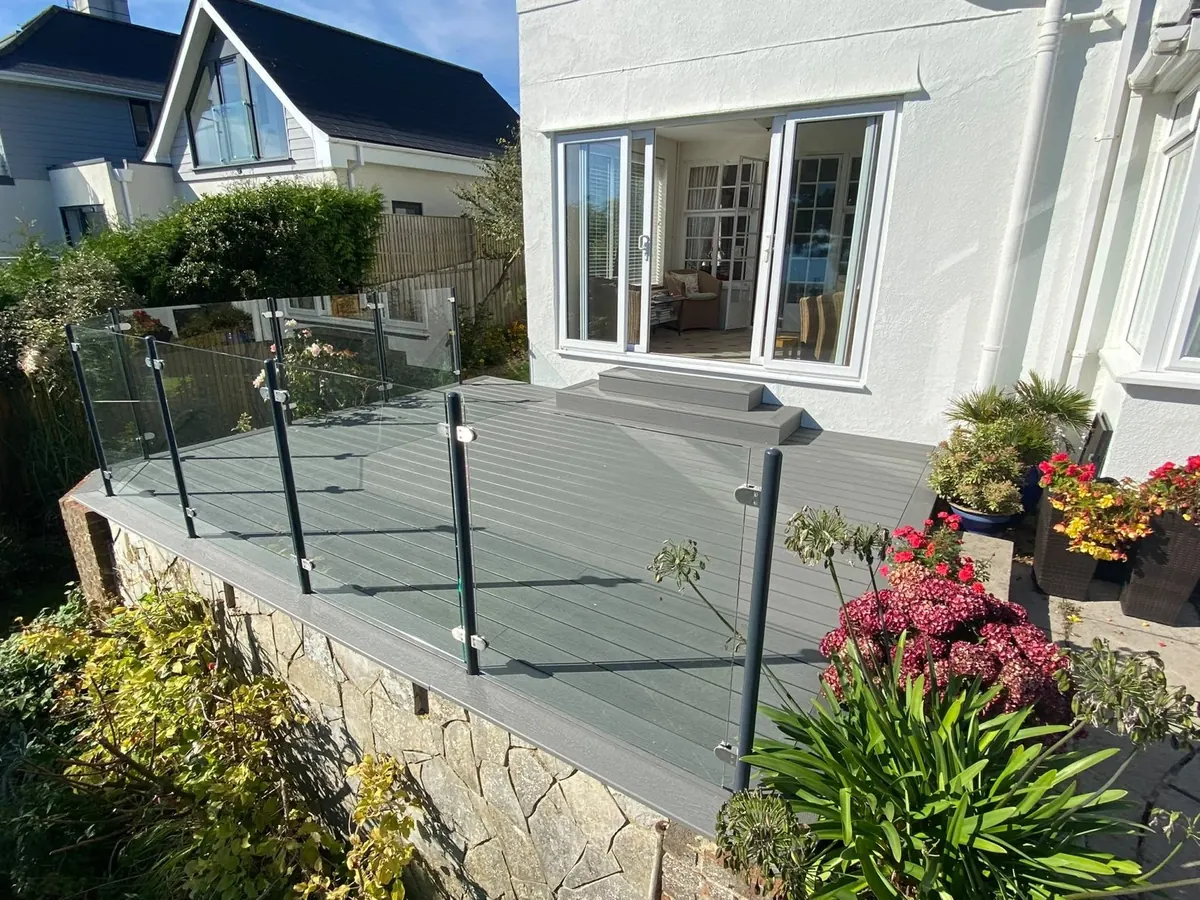
Grey composite decking, glass panels, powder-coated steel posts and matching steps.
View St Margaret’s Bay projectAshford
Before, during and after a timber decking replacement, from the old deck to the finished terrace.
View Ashford projectDeal
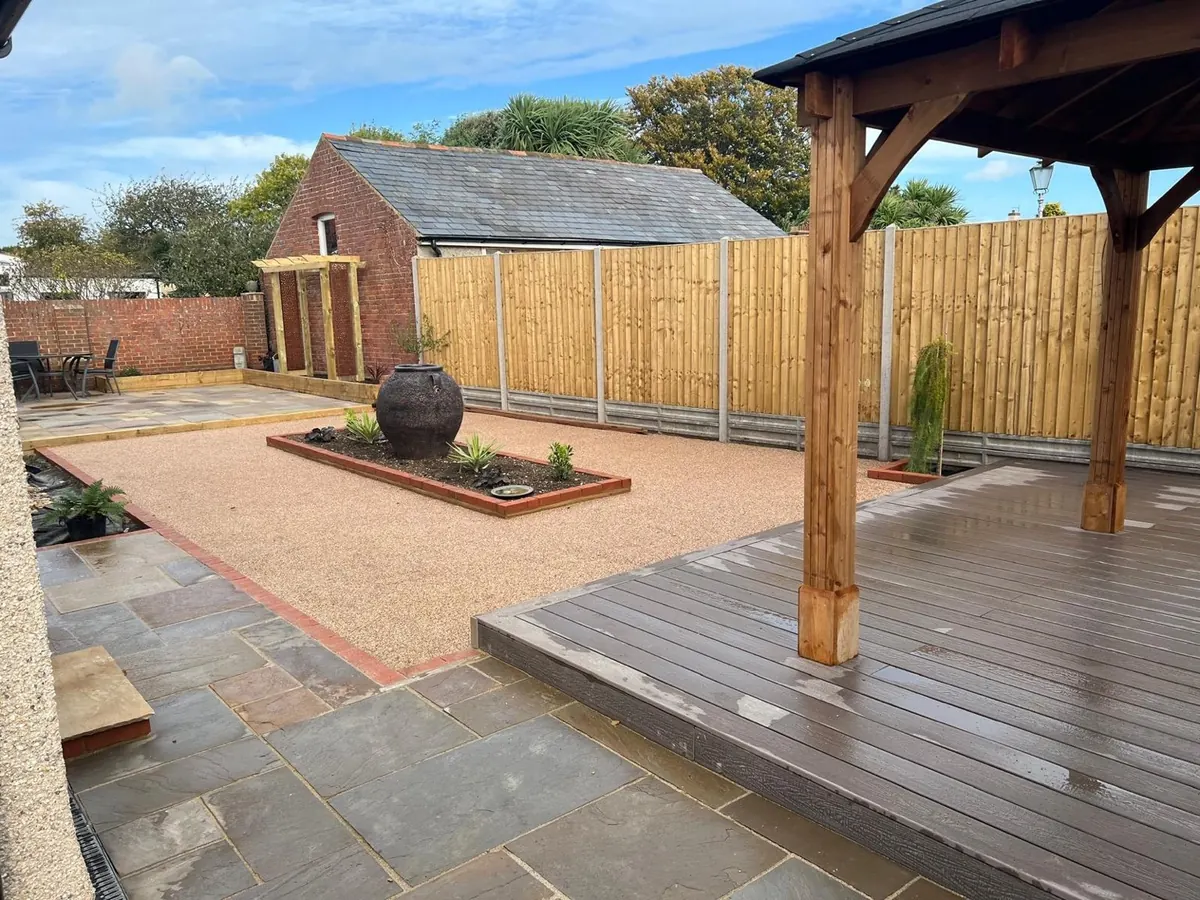
A sandstone patio, ash-coloured composite decking, pitched-roof pergola and sleeper planters.
View Deal projectSittingbourne
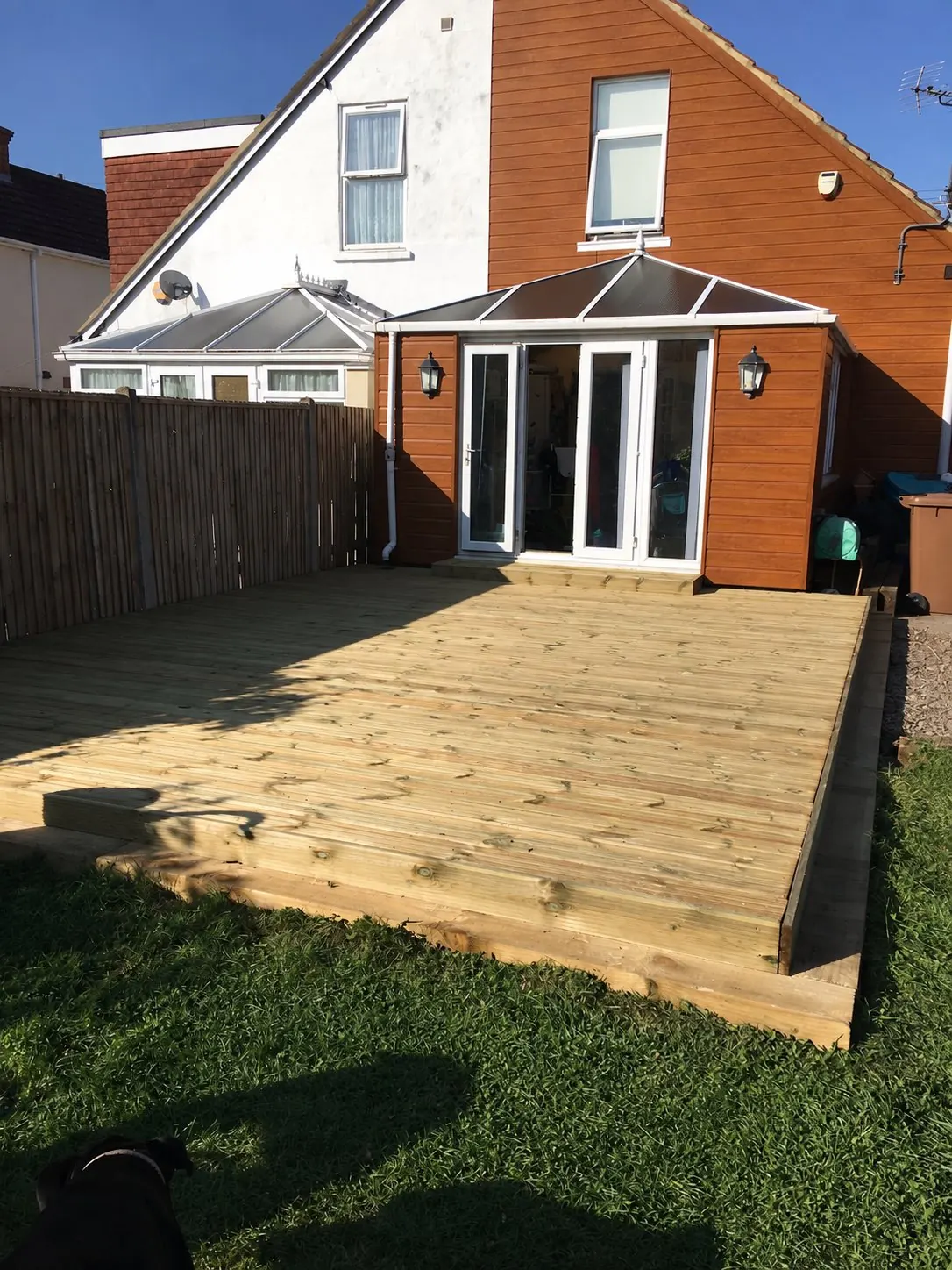
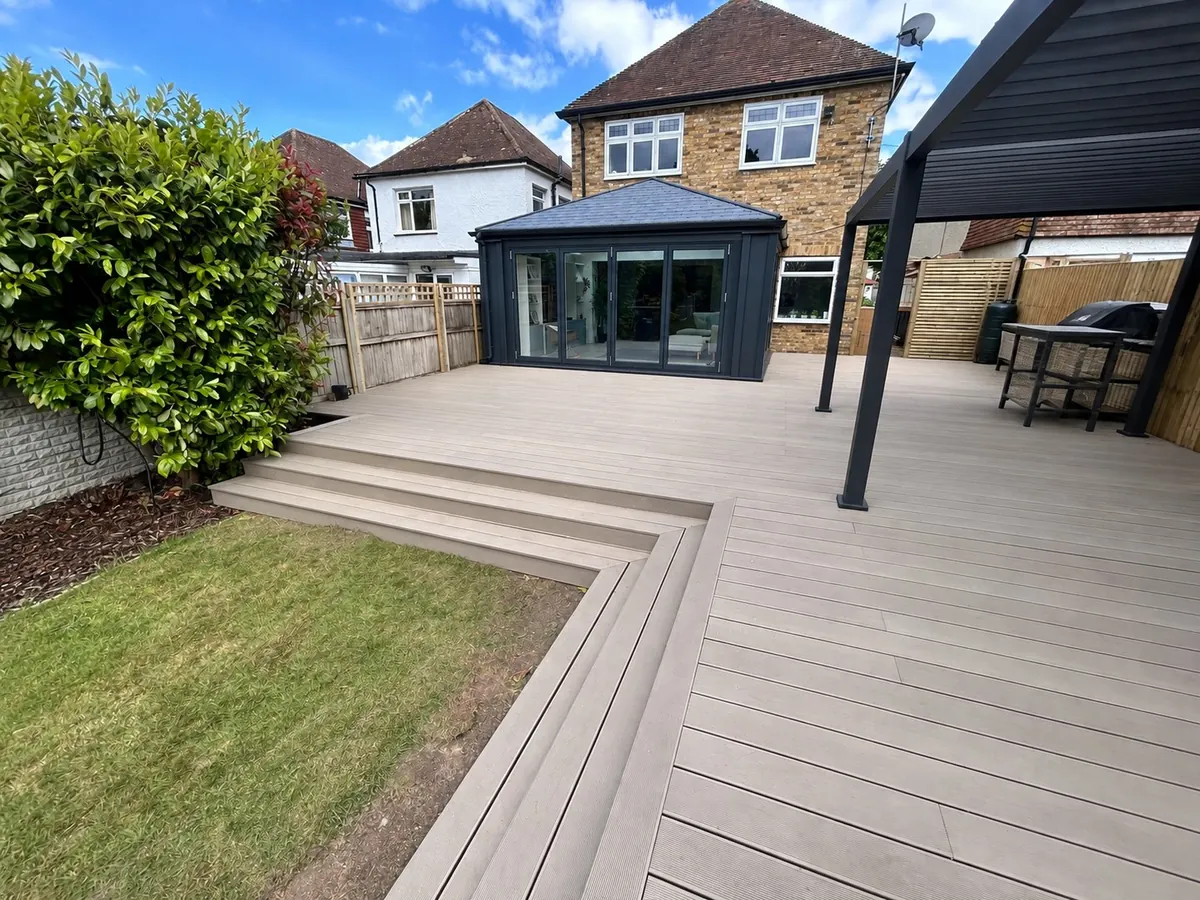
A broad decking terrace with defined board lines and steps connecting the house to the lawn.
View Sittingbourne projectDeal
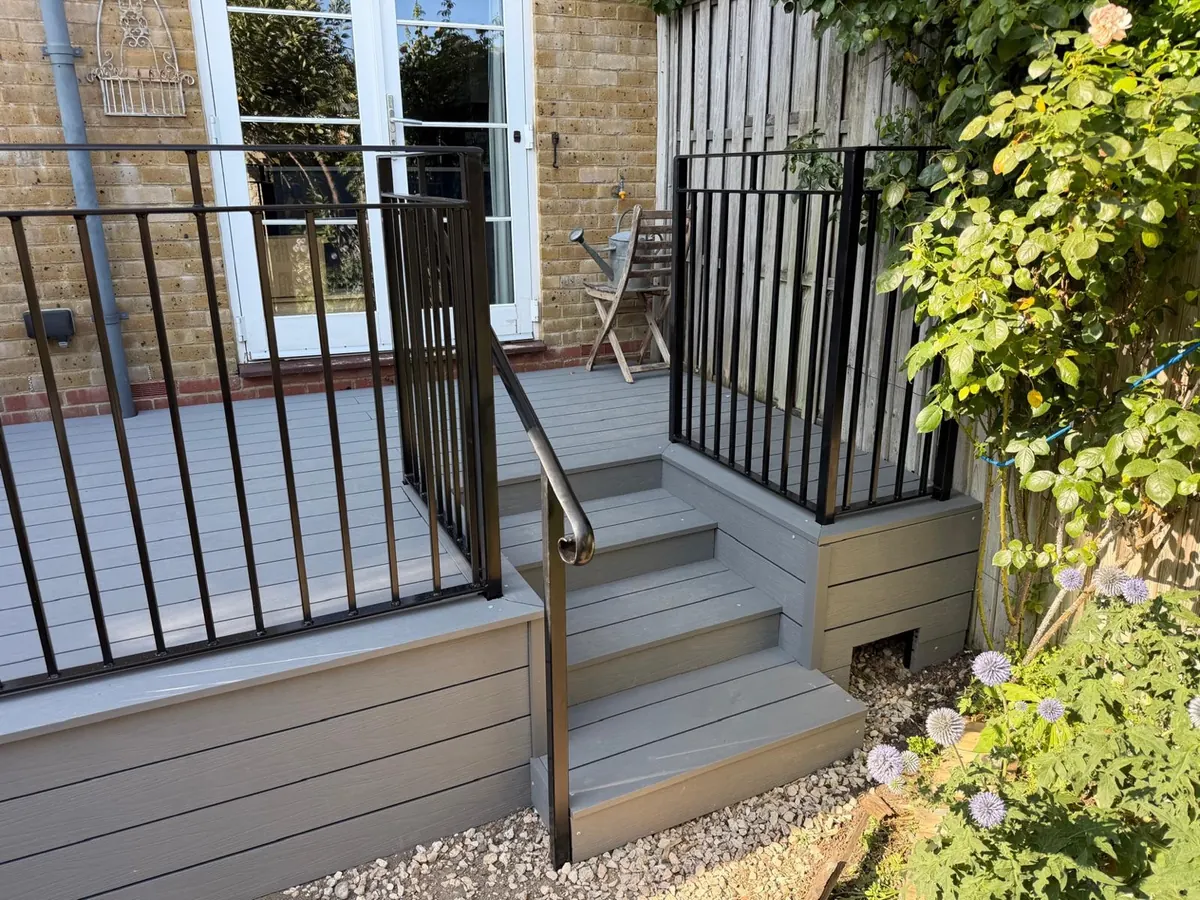
Raised grey decking with black railings, inset steps and a matching handrail.
View Deal projectSTART YOUR PROJECT
Share your location, the work you are considering and any useful dimensions. We can discuss the next steps and arrange a visit where needed.